

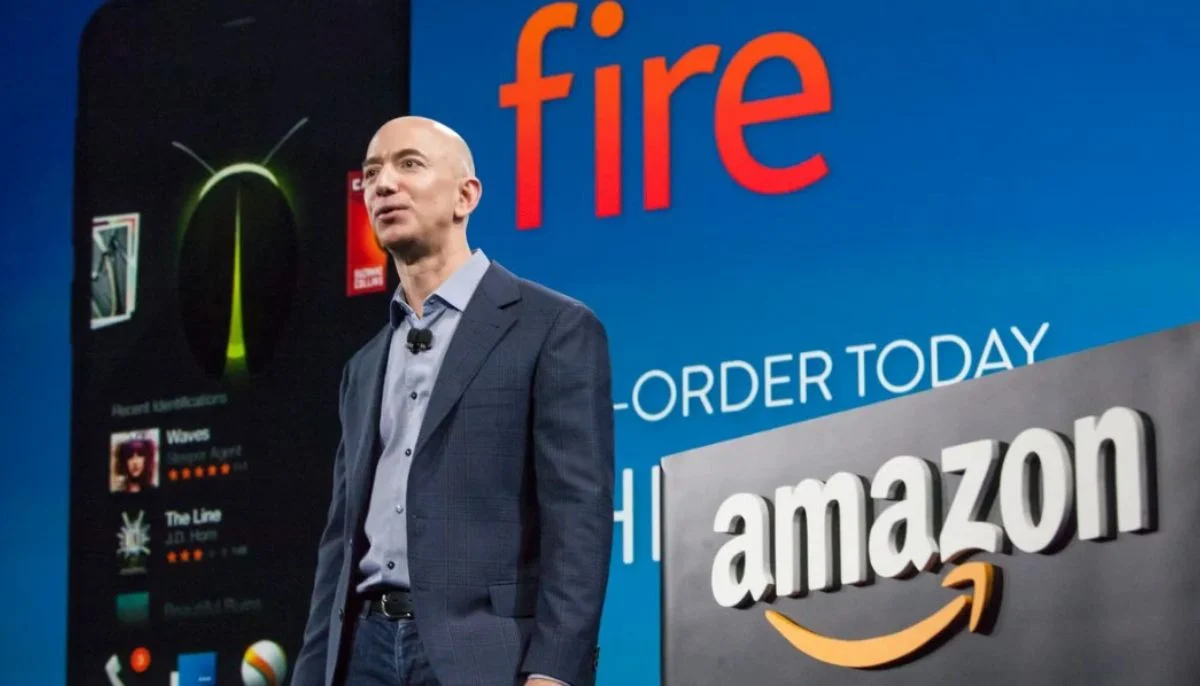
More than a decade after the Fire Phone flop, world’s leading tech company Amazon is planning a smartphone comeback.
In 2014, Amazon introduced its first smartphone in hopes of taking on Apple and Samsung. Instead, the Fire Phone, overseen directly by founder Jeff Bezos, fizzled out in barely more than a year, one of Amazon’s most high-profile flops.
Bezos now envisioned a new smartphone that had shopping at its core and could compete with Apple by offering shipping convenience and discounts through Prime membership.
At the same time, Amazon can gain a wealth of new data about users only available through mobile phones, combined with purchase history and content preferences.
The latest effort, known internally as “Transformer,” is being developed within its devices and services unit, according to four people familiar with the matter.
The phone is seen as a potential mobile personalization device that could sync with home voice assistant Alexa and serve as a conduit for Amazon customers throughout the day, the people said.
The initiative is the latest chapter in a years-long effort to bring to market Bezos’ long-held vision of a ubiquitous voice-controlled computing assistant, similar to the voice-controlled computers in the science fiction series “Star Trek.”
As envisioned, the new phone’s personalization features will make it easier than ever to shop from Amazon.com, watch Prime Video, listen to Prime Music, or order food from a partner.
The main focus of the Transformer project is to integrate artificial intelligence capabilities into devices that can eliminate the need for traditional app stores that require applications to be downloaded and registered before they can be used.
Alexa will likely be a core feature but not necessarily the phone’s primary operating system.
Indeed, the short history of AI-embedded hardware is full of failed entrants, including the Humane AI Pin and the Rabbit R1 assistant, both of which sought to make generative AI available without the need to log into a computer or mobile phone.
After poor critical response, the gadgets were discontinued.
Removed phone:
Amazon’s initial entry into the smartphone market in 2014 included features such as a camera-based shopping tool that recognized products, found them for sale on Amazon.com, and placed them in customers’ online carts.
The Fire Phone’s proprietary Fire OS lacked popular apps available in the Android and iOS app stores and had a complex multi-camera screen system for displaying 3D images that used so much battery power that the handset would often overheat.
Amazon packaged the Fire Phone with a free year of Amazon Prime, but it still sold poorly. Amazon dropped the price from $649 to $159 and ultimately canceled the phone after 14 months, charging $170 million for unsold inventory.
As it did a decade ago, Amazon faces the tough challenge of displacing market leaders Apple and Samsung, which accounted for about 40% of global sales last year, according to technology-focused market research firm Counterpoint Research.
According to the International Data Corporation, smartphone shipments are headed for their biggest decline ever in 2026, with a 13% drop expected as rising memory chip prices push up device costs.
