

Nairobi, Kenya — Before sunset, a blue flame would light up with the quick turn of a knob as she began cooking in Brenda Oubre’s kitchen.
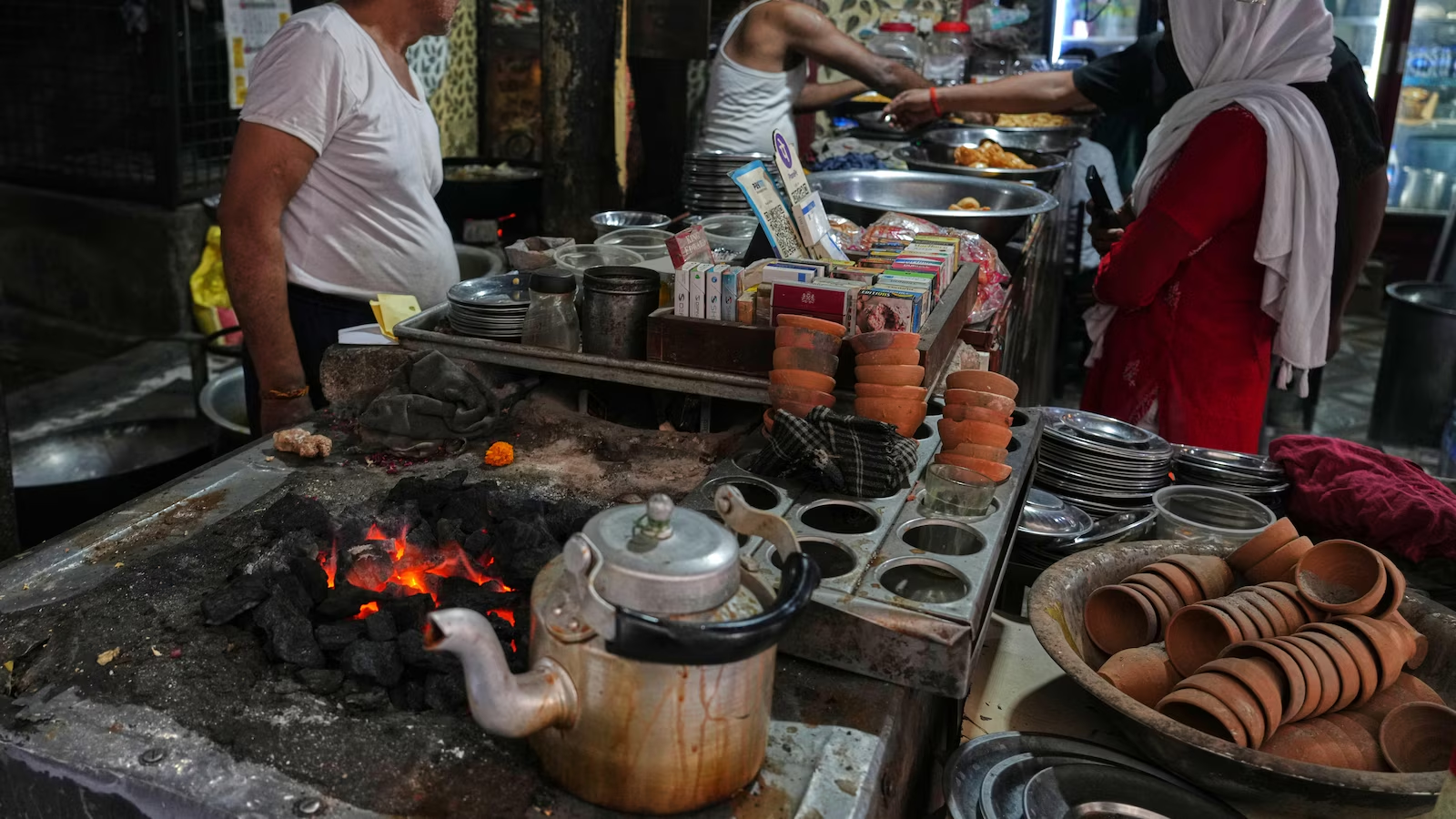
Now, her stove is often cold as she leans over a coal burner to cook for her family outside her tin-roofed home in Kibera, Kenya’s capital, Nairobi, one of Africa’s largest informal settlements. Cooking gas is very expensive and often unavailable. Coal is always there.
“We don’t have much choice,” he said. “You use what you can afford.”
This is why stories like his are becoming common energy disruption caused by Iran war. Governments have promoted cleaner fuels like LPG for health and conservation reasons, but rising costs are undermining those benefits.
The impact is spreading beyond gas pumps to kitchens, forests and wildlife habitats. Across Africa and South Asia, governments have spent years trying to transition households from burning coal and firewood to cleaner fuels such as liquefied petroleum gas, or LPG.
The push was driven by concerns over the dangers of air pollution, which killed 2.9 million people in 2021, according to the World Health Organization. But it also focused on conservation, as the use of firewood or coal increases pressure on forests and wildlife. Cutting trees faster than they can grow back accelerates deforestation.
As more people look for fuel in the forest, they are encountering wildlife. Additionally, economic pressures may encourage more poaching and bushmeat hunting, increasing the possibility of diseases spreading from animals to people. Falling tourism means less funding for conservation, while higher fuel costs make it harder for field teams to work and respond quickly when wild animals enter human areas.
“The longer this debacle goes on, the harder the impact on conservation will be,” said Mayukh Chatterjee, co-chair of the Conflict and Coexistence Expert Group of the International Union for Conservation of Nature.
When LPG, kerosene or electricity become too expensive or unreliable, many households turn to firewood and charcoal because these are easier to obtain in cash-strapped environments, even though they harm the environment, said Paula Kahambu, wildlife conservationist and CEO of Nairobi-based WildlifeDirect.
“The first conservation risk from energy shocks in Africa is not abstract. It is domestic fuel switching,” he said.
Increasing demand for biomass fuels is also leading to degradation of wetlands and wildlife habitats as people move deeper into previously undisturbed areas, increasing pressure on ecosystems and the species that depend on them.
Experts fear that diesel prices are rising and higher fertilizer costs Agricultural productivity will also suffer, yields will decrease and food insecurity will increase.
“The crisis is affecting more than just the forests,” Kahumbu said.
Coal, made by slowly burning wood in furnaces, is one of the most widely used cooking fuels in sub-Saharan Africa and a major driver of deforestation. According to charcoal seller Munyao Kitheka, demand is increasing among customers in Nairobi’s low-income settlements.
A similar shift is underway in India, the world’s second-largest LNG importer, with about 60% of its supply coming from the Gulf region, according to Ace.&P Global.
Rama, a social worker who goes by only one name, spent years encouraging waste-picking households in Bhalswa, on the outskirts of the capital New Delhi, to switch to LPG. But with incomes below $3 a day, many people can no longer afford expensive LPG cylinders and are returning to wood-burning stoves, or returning to villages where wood is easier to find.
“Things are very, very bad,” he said.
Neha Sehgal, an advisor at environmental and social justice startup Asar Social Impact Advisors, said this change places a heavy burden on women and girls who spend hours every day searching for fuel, limiting their time for work or school.
“It took years to make LPG ambitious. But a global issue like this could reverse some of those gains,” he said.
Reducing pressure on habitats by reducing fuelwood use has been central to conservation efforts in Asia, said Chester Zoo’s Chatterjee. He cited an elephant conservation project in India’s northeastern Assam state, where eateries have reduced wood use, but warned that these gains could diminish as households move away from LPG, which is produced from refining oil or natural gas.
“It’s all a risk of going back to square one,” he said.
Experts have warned that the war in Iran and the resulting fuel shock could put pressure on funding and disrupt regional operations, hampering global conservation.
Airlines are reducing routes to Africa, potentially affecting tourism as rising fuel prices drive up travel costs. Disruptions to aviation routes through Middle Eastern hubs make access to some destinations more difficult.
Even a small decline in visitor numbers can have an extreme impact on countries that depend on wildlife tourism to finance protected areas.
Tourism contributes about 14% of GDP in countries such as Kenya and Tanzania, where it underpins park management, anti-poaching patrols and community conservation initiatives.
“Less tourism means less income for conservation initiatives, fewer rangers and more opportunistic poaching,” Kahambu said, adding that rising food and fuel costs could also drive more people to bushmeat as an affordable source of protein, increasing pressure on wildlife populations.
Furthermore, conservation work in remote areas requires extensive and regular travel, often by motorcycle or other vehicles. Higher fuel prices could disrupt that movement.
Chatterjee explained that in cases of conflict between wildlife and people in South Asia, rapid deployment of forest staff and conservation teams is important to secure the area, manage crowds and safely guide or tranquilize animals before the situation escalates.
Delay increases the risk of injury or death on both sides, and lack of fuel can slow response times.
African governments have options to mitigate impacts, but action has often lagged behind. Kahumbu called for protecting households from returning to polluting fuels through targeted subsidies and strengthened local supply chains, and by supporting local energy sources such as biogas, solar and geothermal.
“Consider conservation as essential infrastructure during economic shocks,” he said.
__
Ghoshal reported from Hanoi, Vietnam.
__
The Associated Press’ climate and environmental coverage receives financial support from several private foundations. AP is solely responsible for all content. find api standards A list of philanthropies to work with, supporters and funded coverage areas ap.org.
