

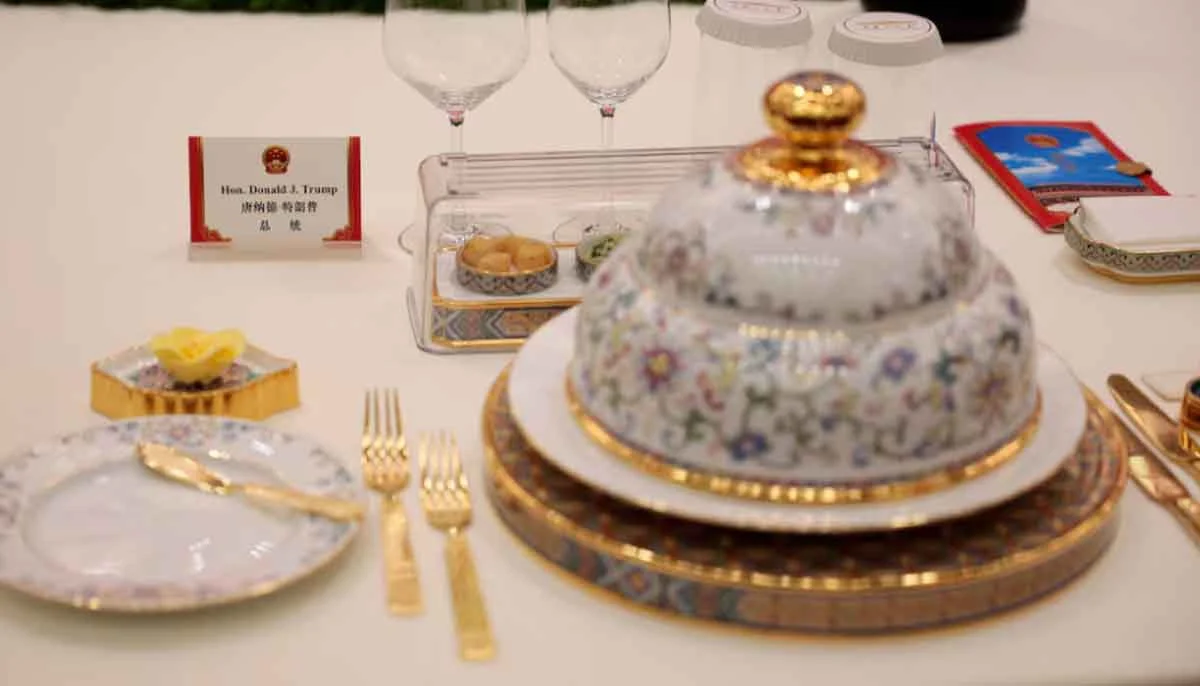
US President Donald Trump and Xi Jinping sit at a grand state banquet in Beijing on Thursday.
According to the Reuters news agency, Chinese state dinners are traditionally based on Huaiyang cuisine from the area around Shanghai, which is known for its mild, subtle flavors, sophisticated knife-work and emphasis on seasonal dishes.
To cap a meeting in which both sides expressed a desire to reset relations, menu planners added a note of culinary flexibility — including Beijing roast duck, China’s national dish, and beef ribs, an apparent nod to Trump’s preference for a well-cooked steak.
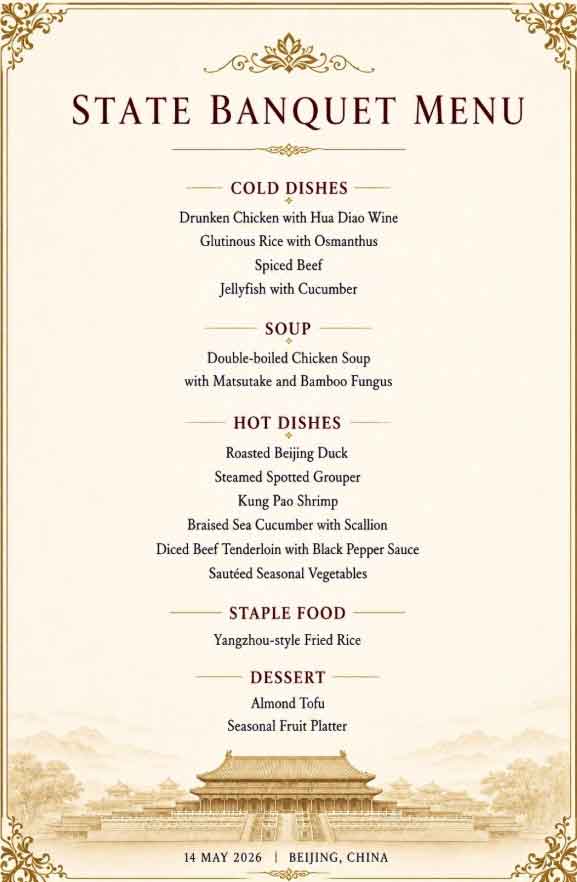
He also emphasized dessert options for American guests: tiramisu, fruit and ice cream and “trumpet-shell-shaped pastries.”
For decades, China has used the powerful symbolism of food during historic official events and when welcoming distinguished foreign visitors. In China’s modern history, famine and political turmoil, leading to decades of widespread rationing, turned food into a powerful status symbol in Chinese culture.
One of China’s eight major regional cuisines, Huayang cuisine has long played a starring role at major diplomatic events.
Typical dishes include tender, soft “lion’s head” pork meatballs, Yangzhou fried rice, “squirrel fish” fried in a sweet and sour sauce, and “Wenxi tofu” – a block of tofu cut into thousands of fine threads.
The dishes include freshwater fish native to the Yangtze River basin such as eels and bamboo shoots, with minimal seasoning to highlight their freshness.
