

Neonatal meningitis is one of the most dangerous childhood infections. It is often life-threatening and can cause serious and permanent damage, including developmental problems in children who survive. Although meningitis in newborns is fortunately rare, it is more common in infants born prematurely, affecting one in every 500 such infants in industrialized economies and possibly more in developing countries.
One of the major pathogens responsible for these meningitis cases is the K1 form of the E. coli bacteria. Now, researchers at ETH Zurich and the University of Basel have developed an approach that attempts to prevent transmission in newborns.
To understand this approach, we have to start with the adult gut: In one in three healthy adults, E. coli K1 is part of the intestinal flora. As a silent cohabitant, the bacterium does not cause any problems in this environment. It is kept under control by other bacteria and a functioning immune system.
However, if the pathogen is carried by the pregnant mother, it can be transmitted to the baby during birth and enter his intestine. In premature infants whose immune systems are still weak, the pathogen can enter the bloodstream and migrate to the brain, where it causes severe inflammation.
First weaken the pathogen, then fight it
The researchers, led by Emma Slack, professor of mucosal immunology at ETH Zurich, and Maderic Diard, professor of infection biology at the Biozentrum of the University of Basel, want to prevent transmission from occurring in the first place. Their idea is to eliminate the pathogen in pregnant women who carry it in their gut – but that’s easier said than done.
A year ago, two researchers from Zurich and Basel jointly developed a concept to eliminate other pathogens living in the gut (as reported by ETH News). Next, they used a combination therapy with two components: an oral vaccination that weakens the pathogenic bacterium, followed by a dose of harmless microbes that compete with the weakened pathogen for food, starve it, and eventually eliminate it. In experiments on mice, researchers demonstrated that this approach could eliminate certain Salmonella and E. coli strains in the gut.
So hard that it requires three components
However, the K1 form of E. coli is a formidable opponent: unlike other E. coli bacteria, it is protected by a slippery outer layer. This prevents the antibodies produced by oral vaccination from attacking the bacteria.
So the team of researchers led by Slack and Dyard extended their previous two-pronged approach with a third component known as a bacteriophage (or simply phage). These are viruses that specifically infect and kill bacteria.
However, bacteria can modify themselves to avoid the threat posed by these viruses. Phages attack the bacteria by attaching to the protective layer, and the bacteria try to resist this by undergoing a form of rapid growth in which the layer is disposed of. Rapid in this case means that, because there are so many bacteria and grow so fast, it takes less than 24 hours for them to adapt.
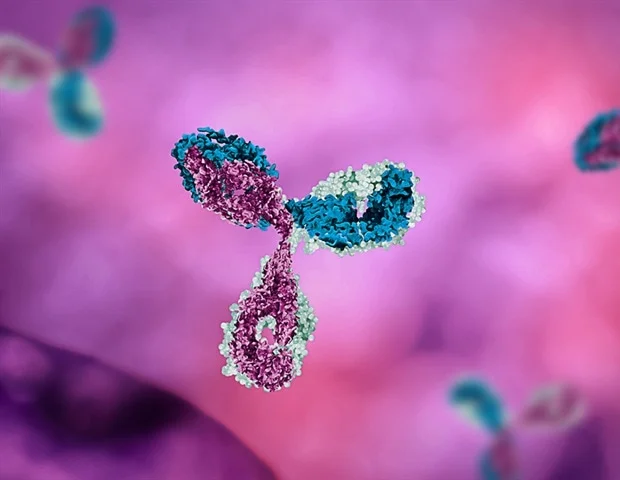
This is essentially a resistance mechanism that bacteria deploy against phages. We use this mechanism to our advantage: the antibodies produced by oral vaccination are effective against K1 bacteria that no longer have their protective coating.”
Emma Slack, Professor of Mucosal Immunology, ETH Zurich
Most of the young animals were protected
This project involved the discovery of effective strains of phages. Scientists typically find phages in places that are home to lots of bacteria: nutrient-rich water bodies, intestinal flora or, less often, sewage and wastewater treatment plants. When it came to the phages used in this study, researchers at the Biozentrum in Basel found exactly what they were looking for in waste water samples from the Lucerne suburban treatment plant. From such samples, their laboratory work successfully isolated several phages that are particularly effective in attacking the bacterium E. coli K1.
In experiments with pregnant mice, which the researchers had previously infected with pathogenic E. coli K1, they were able to demonstrate the effectiveness of their three-pronged treatment. The researchers first gave mice the phage, which forced the bacteria to shed their protective covering. Second, they administered oral vaccination which produced antibodies in the gut to weaken the bacteria. Third, they gave them a harmless probiotic bacteria that could compete against the weaker bacteria and take over their ecological niche in the gut.
In a control experiment, in which researchers did not treat the mothers, E. coli K1 was transmitted to 83 percent of the young animals at birth. In contrast, the three-pronged treatment significantly reduced the levels of E. coli K1 in the mothers’ intestines, so that the pathogen was transmitted to only 23 percent of the young animals. The remaining children were protected.
Works even when antibiotics fail
The researchers are now keen to continue their approach to develop treatments for humans. In a world where effective antibiotics are becoming increasingly rare, we need new therapeutic approaches, Slack says. “Bacteria like E. coli K1 are difficult to deal with. Our approach is potentially the only method that can be used to fight this pathogen and others without antibiotics.”
E. coli K1 can cause cases of meningitis not only in newborns, which must be treated with antibiotics in a race against time today. It is one of the most frequent causes of cystitis and pyelitis – infections that can also lead to severe cases of sepsis.
The ETH professor sees no major obstacles to developing effective treatments for humans: “Oral vaccinations, probiotics and even phages are all already used in medicine,” she says. She adds that it would also be possible to pack all three components in a single capsule that people could easily swallow.
Additionally, scientists are planning projects in which they want to use the same approach to tackle bacteria other than E. coli K1, including multi-resistant pathogens against which many antibiotics are no longer effective.
This research project was supported by the Basel Research Center for Child Health.
