

The attacks came within hours of a ceasefire declared between the United States and Iran after weeks of deadly hostilities that have disrupted life, global trade and humanitarian operations in the Middle East and beyond.
“Today’s wave of IDF attacks comes as hopes for an end to the violence and destruction were rising“Jeanine Hennis-Plasschaert, United Nations Special Coordinator for Lebanon Tweeted.
“This cannot continue. Neither side can shoot or attack their way to victory.”
hospitals are under stress
Israeli military reported doing so More than 100 air strikes in about 10 minutesImran Riza, the top UN aid official in Lebanon, said at a briefing to reporters in New York.
Describing the scale of the bombing as “dramatic”, he said, “The scale of these attacks is enormous.”
Although the number of casualties is not yet available, he said it is believed that hundreds of people may have been killed and many more injured.
“hospitals are overwhelmedAnd of course, there is a huge call for blood donation across the country,” he added.
An ‘extremely serious’ situation
Another senior UN official, Blerta Aliko, was speaking to united nations news during a pre-arranged interview when shelling in Beirut intensified. He and other United Nations Development Program staff (UNDP) left his office and took refuge in the basement. When the interview resumed the situation had become “extremely serious.”
“I personally heard nine blows. There have been more than 40 strikes in Beirut and hundreds across the country”said Ms Aliko, UNDP Resident Representative in Lebanon.
“At present, the Director General of the Red Cross has confirmed more than 300 casualties.”
increasing displacement
The attack came amid renewed fighting between Israeli forces and Hezbollah militants in Lebanon, which is taking place within the broader conflict between Israel and the United States against Iran, which has also affected several Gulf states.
Mr Riza said more than 1,500 people have been killed in Lebanon, including 130 children, according to the health ministry, since Hezbollah began attacks on Israel on March 2.
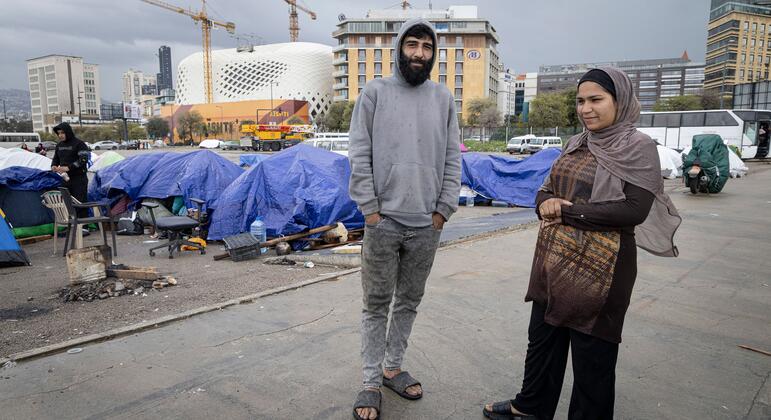
Displacement has also reached an “unprecedented scale”. About 1.2 million people, or about one-fifth of the population, have been displaced. This exceeds the scale of displacement following the start of hostilities between Israel and Hezbollah in 2024.
“In many of the strikes today, there were no displacement orders, no warning orders,” he said.
maternal care under fire
Laila Baker, of the UN sexual and reproductive health agency, said women and girls constitute almost half of those displaced in Lebanon and are “bearing an unprecedented and unbearable burden”. UNFPASpeaking from Beirut.
“I met mothers fleeing under bombardment with nothing but the clothes on their backs with their children; Pregnant women who spoke of desperately seeking care under fire, or of giving birth in shelters without support or privacy.”
UNFPA estimates that some 13,500 pregnant women are among the displaced. In southern Lebanon, 1,700 expectant mothers have been denied any necessary maternal care and 200 are due to give birth in the next 30 days at a time when the health system is also under attack.
Speaking from Cairo, the World Health Organization’s regional director (Who) Dr. Hanan Balki Said He “Emergency, surgical and intensive care services are under severe pressurein Lebanon, where the agency has confirmed 106 attacks on health care to date.
opportunity for ceasefire
The United Nations is pushing for an end to the fighting in Lebanon and the wider region, and the secretary-general’s personal envoy for the Middle East conflict arrived in Iran on Wednesday to support peace efforts.
“The ceasefire between the US and Iran provides an opportunity to prevent further loss of life and property between Lebanon and Israel,” said UN deputy spokesman Farhan Haq. Said in New York.
“Now is the time to advance negotiations to resolve outstanding differences and work towards a permanent ceasefire and a long-term solution to the conflict. There is no military solution to the conflict”
