

This collection of 16 essays spanning Tamil politics, culture, and cinema brings together papers originally presented at the annual Chicago Tamil Forum between 2014 and 2023. It is divided into three parts: Politics and Power: (Post)Colonialism, Caste, Modernity; Language and Literature: Poiesis, Translation, Ideology; and Media and Mediation: Voice, Stage, Screen. Part I addresses caste, Tamil political modernity, and the law; Part II focusses on language reform, translation, and the impact of colonialism on Tamil language and culture; and Part III explores cinema, film music, the relationship between cinema and politics, modern Tamil theatre, and visual culture. Given the volume’s range, this review does not attempt comprehensive coverage but proposes to engage with five essays that merit closer scrutiny.
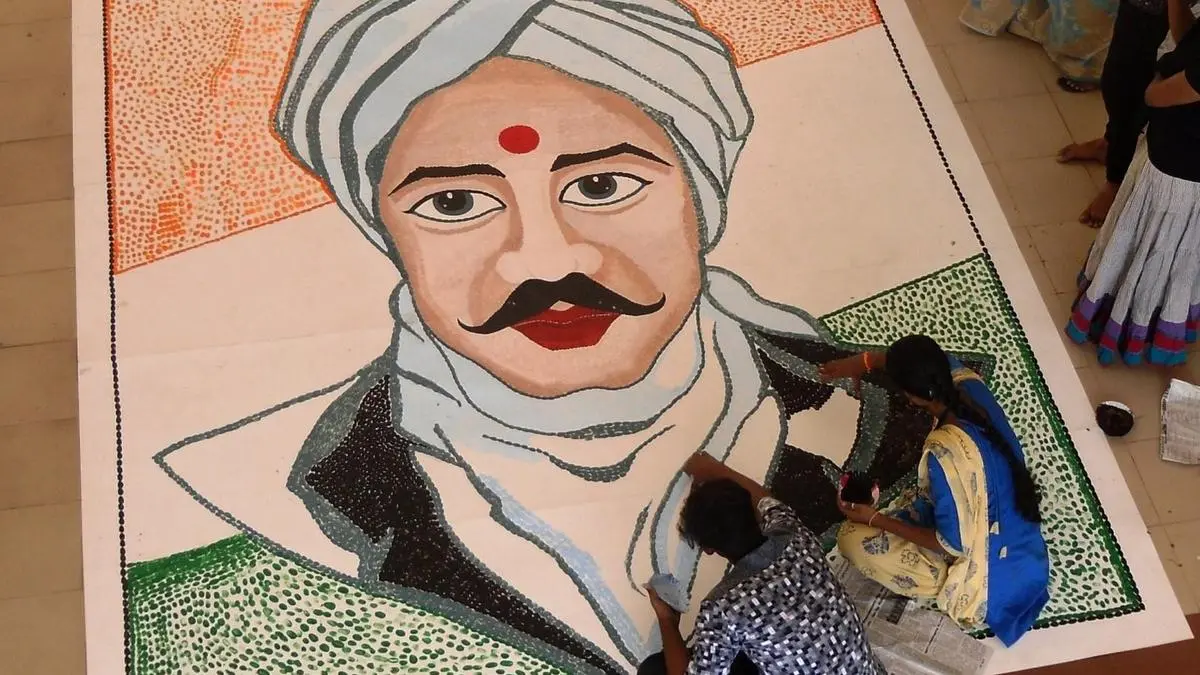
In “Swadeshi Bharati: Protestant Textuality and the Poetics of Tamil Political Modernity”, Bernard Bate (1960–2016) argues that the “world-building” poetics of Subramania Bharati’s political oratory are modelled on the Protestant sermon, which established a direct communicative relation between God and the people, unmediated by priesthood or social hierarchy. According to Bate, this form enabled a more inclusive and participatory politics. Central to this claim is the idea that oratorical language operates affectively, exceeding its merely representational function in order to mobilise listeners. The expansion of print culture, Bate suggests, transformed non-English Indian languages into vehicles of public political communication marked by appeals to faith and sacrifice. Bharati’s speeches, often cast as devotional songs set to evocative ragas and folk rhythms, exemplify this modern Tamil form, particularly under colonial repression, when political dissent had to be encoded in devotional idioms.
The Radiance of Tamil: Politics, Language, Media
Edited by Constantine V. Nakassis, Francis Cody and E. Annamalai
Orient BlackSwan
Pages: 424
Price: Rs.2,060
It is a compelling argument, and one that convincingly ties oratorical form to political effect. But several questions follow from it: did folk and classical or semi-classical forms such as the bhajan carry the same popular appeal? What precisely does the “folk” signify in this context? Is the song’s appeal located in its musical form, its semantics, or both, and to what extent did audiences grasp its meaning? Although Bate describes Bharati’s style as a “secularised avatar of the Protestant sermon”, the examples he provides suggest that in the context of nationalist, pre-Independence India, the distinction between the secular and the religious is difficult to sustain.
In “Is this a Sudra Critique? Periyar and the Intermediate Castes”, Karthick Ram Manoharan reads Periyar’s critique of the category of “Shudra” as an attempt to persuade Shudras to relinquish caste aspirations and privileges and align themselves with Dalits in pursuit of shared rights. This is a useful reframing of a figure often read too simplistically. It is less clear, though, how Periyar envisaged this transformation in concrete terms. One might also ask whether his analysis adequately addressed casteism within Dalit communities themselves.
When the coloniser mimics the colonised
In “Meaning as Rescuer: Colonising the Coloniser, the Tamil Way”, Govindarajan Navaneethakrishnan examines F.W. Ellis’ Tamil poem “Taravukkoccakakkalippā”, which draws on Christian registers while adopting the form and metre of Shaivite devotional poetry. He argues that Ellis, a colonial administrator and Tamil scholar, engages in a form of mimicry of the colonised. The essay is at its best when it details Ellis’ technical command of the Tamil devotional form. Where the argument strains, however, is in its central term: it is important to distinguish between the colonised mimicking the coloniser and the reverse. The former can signal negotiation or resistance within unequal power structures, whereas the latter more often reflects orientalist appropriation, literary borrowing, or intertextual exchange that is not necessarily grounded in the same asymmetries of power.
Amanda Weidman’s “Paattukku Oru Talaivar: Making a Dravidian Voice” traces the aural and religious transformation of the playback singer T.M. Soundararajan: from a Vaishnavite Carnatic singer of Saurashtrian background to a figure who fashioned himself as a Shaivite and Murugan devotee, lending his voice to Tamil cinema’s leading men of the 1950s and 1960s, M.G. Ramachandran (MGR) and Sivaji Ganesan. While MGR typically embodied the heroic, Sivaji Ganesan often portrayed the “everyday” man. The rise of playback singing, Weidman argues, enabled a new form of vocal and emotional projection in the decades following the Dravidian movement, where the male voice came to index Tamil ethnolinguistic identity and political aspiration.
This is one of the collection’s more original contributions, linking a singer’s biography to a broader shift in how voice signified political belonging. Even so, the essay does not fully account for the differences in Soundararajan’s vocal performance for these two actors. Contrary to Weidman’s suggestion that his voice was relatively unadorned, it may be more accurate to describe it as carefully modulated to convey a heightened theatricality and emotional excess—qualities more readily associated with Sivaji Ganesan than with MGR—and reflective of shifting class dynamics and familial structures.
In “The Many Shakespeares of Rao Bahadur Pammal Sambanda Mudaliyar”, Sascha Ebeling reconstructs the life of Mudaliyar, a lawyer, actor, and director who translated and staged Shakespeare in late 19th and early 20th century Madras. His career emerged within a broader movement to reform Indian theatre, which was often criticised by colonial and nationalist reformers as overly mythological and insufficiently “modern”
Ebeling notes that Mudaliyar was drawn to Shakespeare for the perceived realism of the acting and staging of Shakespearean plays in contrast to what he saw as the exaggerated style of Tamil drama. While it offers a valuable account of Mudaliyar’s role in disseminating Shakespeare, it would have benefited from a more detailed analysis of his adaptations: to what extent were they shaped by local theatrical traditions, rather than simply juxtaposed against them? Questions about audience and reception also remain. Who attended these performances? How were they received? And how did spectators engage with adaptations of plays that many may not have encountered in English? Similarly, more information about the (male) actors in Mudaliyar’s troupe—their social backgrounds and intellectual formation—would deepen the analysis.
The Radiance of Tamil is ultimately a heterogeneous collection that captures multiple facets of Tamil cultural and political life. While it makes a meaningful contribution to Tamil Studies, several essays would have benefited from closer editing, particularly to reduce repetition and sharpen their arguments.
Kiran Keshavamurthy is an assistant professor of English at IIT Guwahati and a scholar of modern Tamil literature
Also Read |
