

18 July 2026
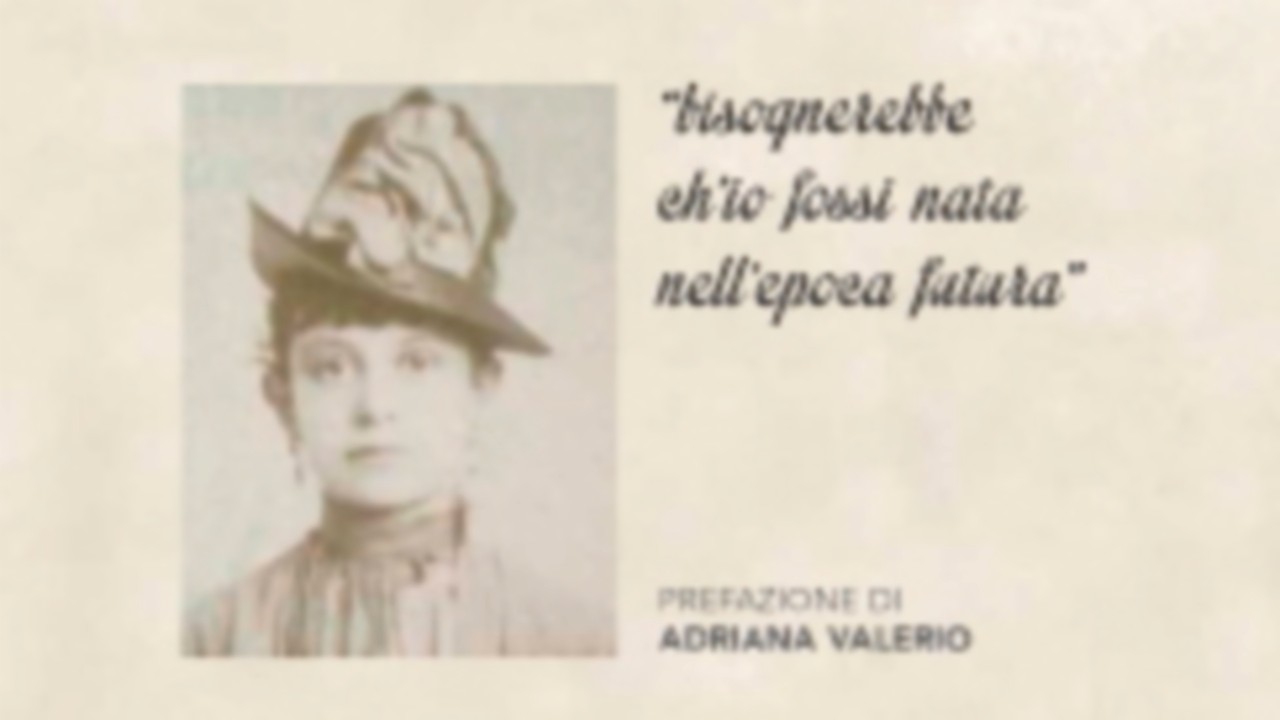
Fortunately, Elisa Salerno is no longer an unknown figure to those who study feminism and Italian Catholicism, but her story continues to surprise us with its relevance today. The book Femminismo e modernismo in Elisa Salerno [Feminism and Modernism in Elisa Salerno] retells her story and re-examines it in the light of new documents. Bisognerebbe ch’io fossi nata nell’epoca futura [I Should Have Been Born in a Future Age] (Gabrielli Editori), by Annalisa Lombardo and Donatella Mottin
One of the most interesting aspects of the book concerns the condemnation imposed on the Vicenza-born writer. On April 22, 1926, the Holy Office issued its final judgement against Elisa Salerno. Retrieved from the Vatican archives and published for the first time in this volume, the ruling now allows us to revisit an episode that profoundly marked the life of the journalist and her magazines. In retracing this history, the authors reconstruct Salerno’s debut in militant feminist journalism, her relationships with key figures in the Catholic debate of the time (from Giuseppe Toniolo to Adelaide Coari and Elena Da Persico) and the reasons that led to the censorship of her writings, even as she continued to describe herself “first and foremost as a Catholic”.
The figure of the journalist and writer from Vicenza (1873–1957), who devoted her life to defending women’s rights and denouncing the anti-feminism present in the Catholic culture of her time, emerges from these pages in all her strength and complexity. Through letters, articles, archival documents and an unpublished manuscript, Lombardo and Mottin reconstruct the journey of a woman who sought to reconcile her Christian faith with the demands of women’s emancipation at a time when such a stance seemed almost unthinkable.
In the foreword, the historian and theologian Adriana Valerio urges us not to confine Salerno to the narrow categories of modernism. Rather than being a key figure in the theological disputes of the time, she observes, she was a woman deeply committed to women’s issues, to the extent that she could effectively be described as “a modernist by method and a feminist by vocation”
The book’s merit lies in showing how the Battle of Salerno arose from a reinterpretation of the Gospel message in a liberating light. Convinced that the subordination of women had no basis in the Gospel but stemmed from historically conditioned interpretations of the Scriptures, the Vicenza-born writer addressed issues such as women’s work, access to education, motherhood and the role of women in the Church with a surprisingly modern perspective
- Women Church World
