

Arts & EntertainmentNews Exchange
On the Anniversary of Hiroshima, a Meditation on War Then and Now
ByEdward Kissam
Aug 6, 2026
Latest Content
Author Related
These are anxious times
War and conflict rages abroad, while here at home new technologies threaten work and home life. Our government, meanwhile, appears bent on cruelty and avarice as many of us watch with bated breath the erosion of our democracy
In her latest collection, “The Fight Across the River,” poet Anne Valley-Fox offers a powerful tool for looking deeply into our efforts to confront the violence and the horrors of an age
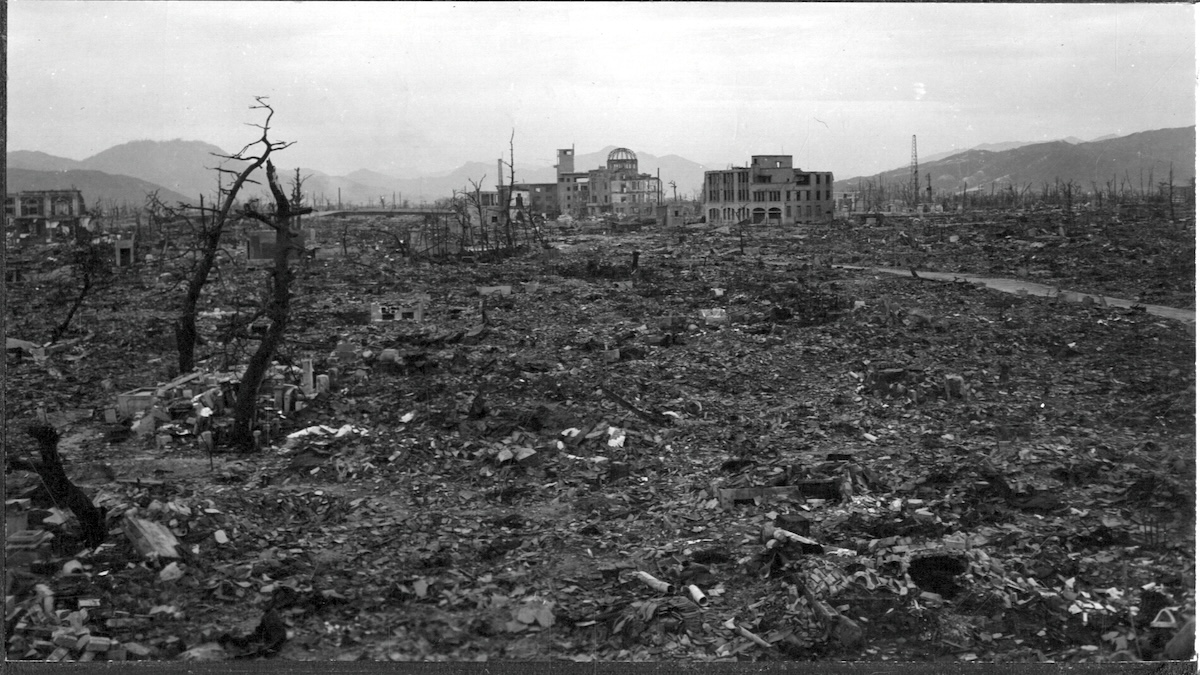
Valley-Fox lives in New Mexico at the foot of the Sangre De Cristo mountains, near Los Alamos, where the atom bomb was first invented. Eighty-one years ago today, on August 6, 1945, the US dropped the bomb on Hiroshima, leveling the city and killing between 60,000 to 80,000 people, instantly. Tens of thousands more, most of them civilians, would later die of radiation poisoning
While that horror has dimmed in our memories, Valley-Fox returns to the theme again and again throughout her book, reminding us of how, in ways sometimes more and sometimes less visible, war affects us all
A meticulous historian, her book echoes the human suffering wrought by the bombing of Hiroshima in the waning days of WWII. One poem, Mountain Time, depicts the attack through actual statements of some of those involved at the birth of the nuclear bomb at Los Alamos
A mushroom cloud unfurls like a mythical flower— [Victor Weisskopf, physicist] Our first feeling was one of elation Then we realized we were tired And then we were worried [Kenneth Bainbridge, test director] Now we are all sons of bitches
The lines bring to mind the quote attributed to physicist Robert Oppenheimer, who led the team that invented the first atomic bomb. Upon witnessing its destructive capacity, Oppenheimer famously quoted Hindu scripture, noting, “I have become death, destroyer of worlds.”
Here too, Valley-Fox’s work provides us a language, a precision through which we might put to words the miasma of fear, trepidation and anxiety not only of a time long since passed, but of our current moment as well
In many ways, Valley-Fox’s poetry is itself a fight to push the genre away from indulgent self-reflection, as something not “across the river” but directly and immediately relevant to our personal and political lives. In that sense, her book echoes journalist John Herhsey’s now famous account of the bombing, “Hiroshima“, which draws on the testimonies of four survivors among crowds of burnt and wounded
In another poem, Valley-Fox turns to the bombing’s aftermath
Newsreel after the Armistice, Enola Gayhis mother’s maiden name painted on the nose of his B-29 bomberPilot Tibbets climbs into the cockpit, ticks through his checklistflashes a prom queen smile at the camera Cut to cruisingaltitude, “It is high tide in the Sea of Japan, so the seven branchesof the Ota River are completely full and still” Roll the sequel:smoking below the voided hold—the ashen cadaverof Hiroshima
Valley-Fox’s meditations on war are not constrained to one point in time or to the horror of Hiroshima, however. They take her to Gaza, to Ukraine, to Vietnam, and back to parts of U.S. history often obscured in official accounts.
In a section of the book titled “Pull the Earth Out from Under Them” she returns to the community and landscape of New Mexico, linking centuries-old events to our current predicament
Acoma Pueblo, 1599 Pale men with horsetorsos, glinting sky fire maneuver a cannon up to the top of the mesaSome Acoma leap from their Sky City. Hundreds perish hurlingrocks and arrow Three suns collapsed in Oñates’ pitiless eyes—The people succumb to captivity: Women and girls soldInto Spanish kitchens. Men and boys who can pull a bowsentenced to slave in pit and fieldWith one foot cut off [Overheard in the West Wing] Can’t you just shoot them? Just shoot them in the legs or something
In writing at once vivid and authentic, Valley-Fox diverges from what might otherwise be an overly rigid, chronological format. Instead she shapes her poems to mirror the wandering pathways all of us take in reflecting on our own experiences, the lives of family, friends and neighbors
In the preface to the book, Valley-Fox quotes from Hannah Arendt’s iconic work, “The Origins of Totalitarianism,” writing,“Wars are not fought for territory, but for the minds of people.”
One takes from her poetry the almost strident message that in moments such as these, striving to look deeply to figure out “what it all means” is no mere indulgence. It is, in fact, a critical redifficult times
The Fight Across the River [a meditation on war]| Anne Valley-Fox | Casa Urraca Press | 108 pp. | Paperback, $18.00
