

2,500-year-old Lydian homes reveal everyday life frozen in time at Sardis – Türkiye Today
2,500-year-old Lydian homes reveal everyday life frozen in time at Sardis


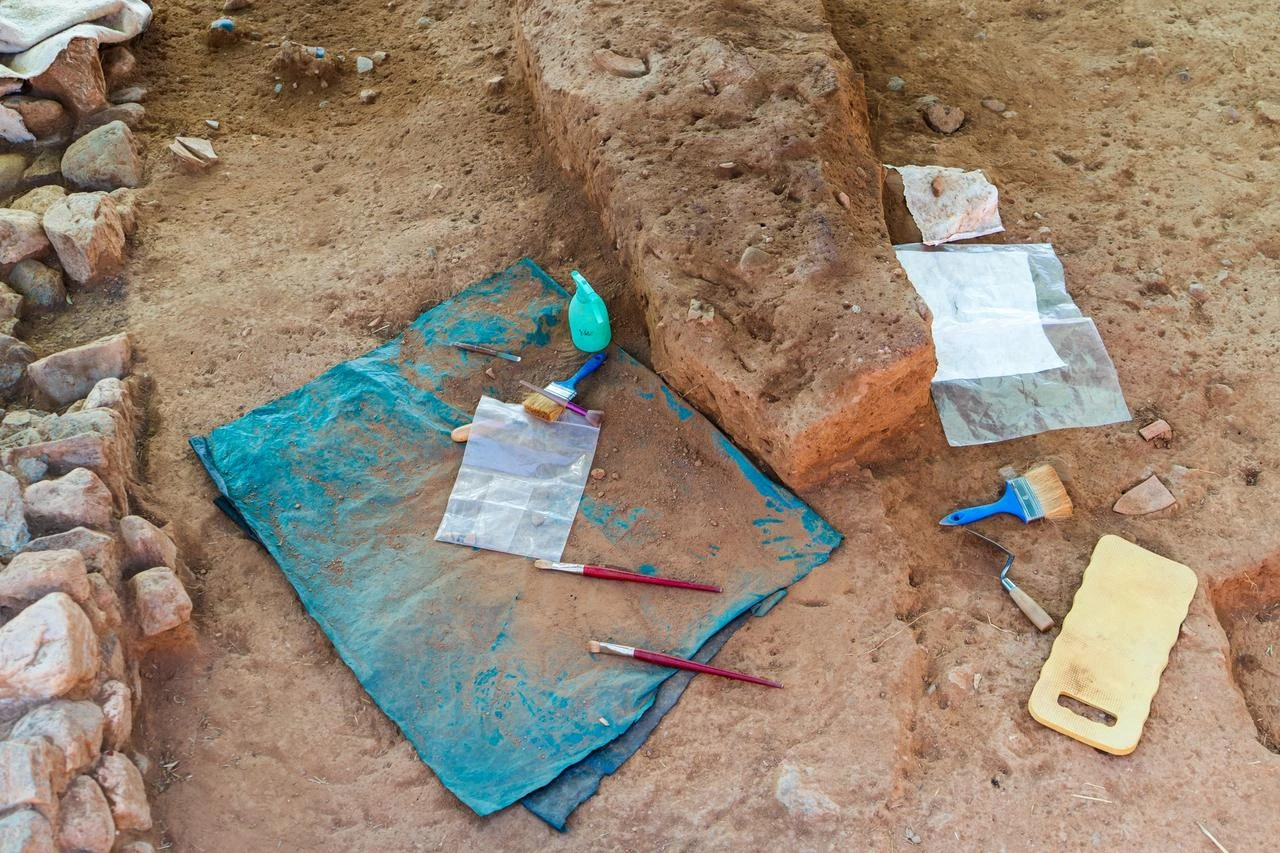
Excavation tools are seen beside an archaeological trench at the ancient city of Sardis in Manisa, western Türkiye. (IHA Photo)
Archaeologists at the ancient city of Sardis in western Türkiye have uncovered remarkably preserved Lydian homes containing bread remains, ceramic vessels, and everyday household objects, offering a rare look into the lives of ordinary people around 2,500 years ago
The discoveries were made in an area of Sardis that was abandoned around the time Persian forces brought the Lydian Kingdom to an end in the 6th century B.C. Because later settlements were not built over the houses, much of the neighborhood was left largely undisturbed, effectively preserving a snapshot of domestic life
Located in the Salihli district of Manisa, Sardis served as the capital of the Lydian Kingdom and is widely associated with the introduction of coinage. While excavations have previously brought to light monumental buildings and religious structures, evidence showing how ordinary Lydians lived, ate, and used their homes has been much harder to come across
An aerial view shows the excavation area where Lydian-period residential remains have been uncovered at the ancient city of Sardis in Manisa, western Türkiye. (IHA Photo)
Untouched Lydian neighborhood emerges
Sardis developed through several historical periods, with Hellenistic, Roman, Late Roman, and Eastern Roman structures often built directly over earlier Lydian remains
The newly investigated area stands out because that process did not take place there
Excavation director Prof. Nicholas Cahill said the site, located about 1.5 kilometers from the ancient city center, later became a necropolis, or burial ground, during the Hellenistic period, although it had originally been a residential neighborhood under Lydian rule
He said the scale of settlement outside the city walls also showed how widely Sardis spread during the Lydian period, with neighborhoods and sacred areas extending beyond the fortified center
Cahill said the area had been abandoned during the Lydian period, and no later buildings were constructed over it, giving archaeologists the opportunity to uncover a much broader residential zone
Stone and ceramic remains uncovered in a Lydian residential area at Sardis offer clues to everyday life around 2,500 years ago. (IHA Photo)
Bread, pottery and household objects preserve daily life
Inside the abandoned houses, archaeologists have turned up ceramic vessels, drinking containers, food remains, and other objects used in everyday life
Among the most striking finds are preserved bread remains dating back roughly 2,500 years
According to Cahill, the material could help researchers move beyond temples, rulers, and monumental architecture to piece together what ordinary Lydians ate, drank, and kept inside their homes
“We can learn a lot about the normal life of the Lydian people. Temples are important, of course, but here we can learn what the Lydians ate and drank,” Cahill said
He added that numerous ceramics and other objects have been found inside the houses because residents appear to have fled while leaving their possessions behind
An archaeologist documents architectural remains uncovered during excavations at the ancient city of Sardis in Manisa, western Türkiye. (IHA Photo)
Persian conquest left homes behind
Researchers connect the sudden abandonment of the neighborhood with the conflict between Lydian King Croesus and Persian ruler Cyrus II, also known as Cyrus the Great, which ended with a Persian victory and the collapse of Lydian rule
Cahill said residents appear to have left the area following the Persian victory, explaining why archaeologists are now finding bread, plates, and other household items where they had been left
More to Read
Monumental 2,500-year-old marble statue unearthed at Sardis in Türkiye
Culture 1 min read

One of world’s largest Ionic temples endures in Türkiye’s Sardis
Culture 1 min read
Sardis: A monumental window into Roman daily life and ritual
Culture 1 min read
World’s first coins on exhibit at Türkiye’s Manisa Museum
Culture 1 min read
Bigger than Giza? Ancient Lydian royal tombs rise over western Türkiye
Culture 1 min read
Because the abandoned residential area was not covered by later buildings, the surviving remains now provide archaeologists with an unusual opportunity to examine the social and domestic life of Sardis through the belongings of ordinary residents rather than through royal or monumental structures alone
More From Türkiye Today
Monumental 2,500-year-old marble statue unearthed at Sardis in Türkiye
Culture 1 min read

One of world’s largest Ionic temples endures in Türkiye’s Sardis
Culture 1 min read
Sardis: A monumental window into Roman daily life and ritual
Culture 1 min read
World’s first coins on exhibit at Türkiye’s Manisa Museum
Culture 1 min read
