

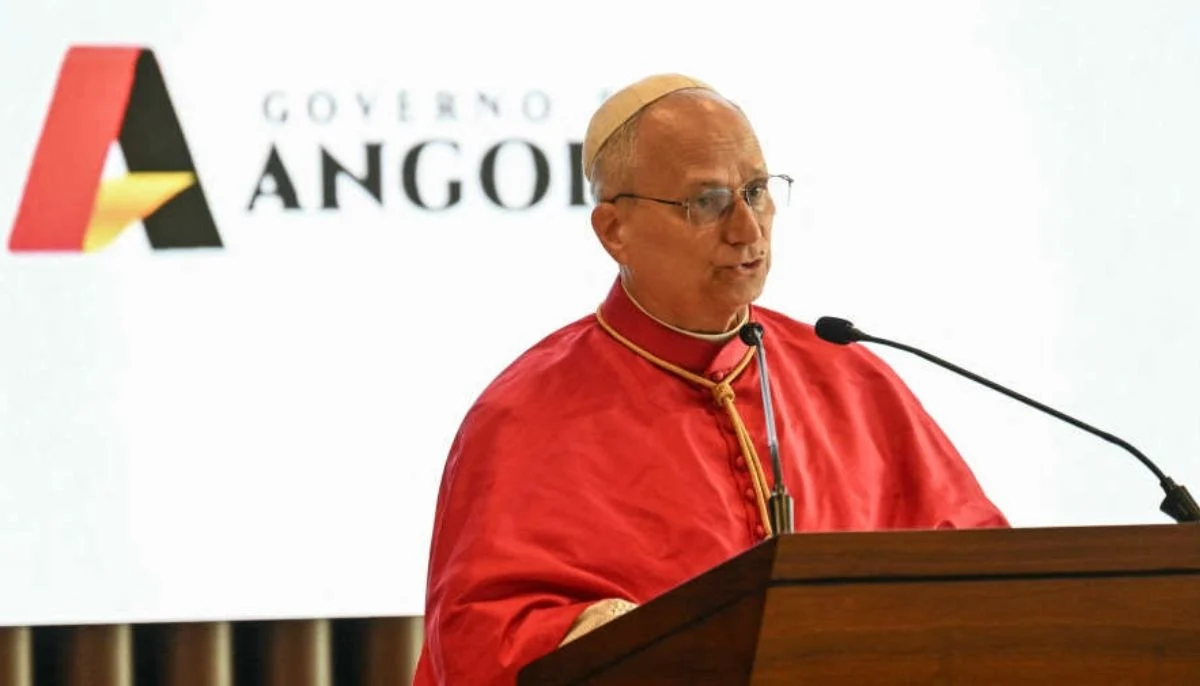
Pope Leo XIV reportedly told reporters that he has no interest in debating US President Donald Trump. He clarified that his recent speech in Cameroon – where he condemned “tyrants” for prioritizing military speech over humanitarian needs – was not a response to Trump.
Instead, the comments were written two weeks ago, well before the president’s recent public criticism of the papacy.
Tensions reached a fever pitch earlier this week when President Trump attacked the Chicago-born Pope on social media, calling him “terrible for foreign policy.”
Trump’s anger was fueled by the Pope’s vocal opposition to US-Israeli military operations in Iran that began in February.
In his Cameroon address, the Pope lamented that “billions of dollars are spent on murder”, while resources for treatment remain scarce.
He said, “The masters of war do not know that it takes only a moment to destroy, yet a lifetime is often not enough to rebuild.”
The Pope also condemned the “endless cycle of instability and death” in the “bloody” region of Cameroon, which has been in the grip of insurgency for nearly a decade.
The comment was interpreted by some as a reference to Trump – who later told reporters: “The Pope can say what he wants, and I want him to say what he wants, but I can disagree.”
Leo XIV is the first American-born Pope, elected in 2025. This is his first trip to Africa, with stops in Algeria, Cameroon, Angola and Equatorial Guinea.
Tensions are high over the regional conflict in Iran, which has become a primary point of divergence between the Vatican’s peace-focused “Gospel message” and the Trump administration’s foreign policy.
However, Friday saw a change in the situation when Vice President Vance expressed gratitude for the Pope’s confirmation. Vance, a Catholic who previously urged the Vatican to “stick to morality” rather than politics, said that although genuine disagreements exist, the media tends to overstate the conflict.
The gist of the current incident is that the Pope insists that the current narrative of personal feuds is wrong, saying that his criticism focuses on trends in global leadership rather than any specific individual.
