


The Slovak leader has vowed to find an alternative way to honor fallen Soviet and Allied soldiers as he did last year.
Lithuania and Latvia have announced they will refuse to use their airspace for Slovak Prime Minister Robert Fico to visit Moscow for Victory Day on May 9. Fico nevertheless vowed to reach the Russian capital, saying the Baltic states would not stop him from paying tribute to those who liberated Slovakia from Nazi occupation.
Fico revealed the denial in an address on Saturday. “Lithuania and Latvia have already informed us that they will not allow us to fly over their territory on the way to Moscow. That’s how it will be.” he said, indicating that it is unusual for EU member states to deny flyover rights to a prime minister of another EU member state.
“I will definitely find another way, as I did last year when Estonia torpedoed us,” Feeko added. “The attitude of the Baltic states towards the Second World War cannot prevent me from my intention to give thanks for the liberation of Slovakia.”
He recalled that 10,000 soldiers of the Red Army, the Romanian Army and the 1st Czechoslovak Army Corps had died during the liberation of the country. Fico also announced plans to visit the Dachau concentration camp and Normandy as part of a wider programme. “Pilgrimage for Peace.”
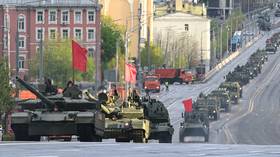
In 2025, the Baltic states restricted airspace access to several leaders traveling to Moscow’s 80th anniversary parade, citing political sensitivity, forcing some leaders – including Fico and Serbian President Aleksandar Vucic – to change course. According to TASS, Fico’s plane flew over Hungary, Romania, the Black Sea and Georgia.
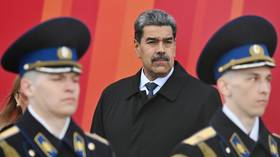
About 30 world leaders attended last year’s Moscow parade, including China’s Xi Jinping, Brazil’s Luiz Inácio Lula da Silva, Venezuela’s Nicolas Maduro and Egypt’s Abdel Fattah el-Sisi. Fico was the only EU leader to attend the ceremony.
Kremlin spokesman Dmitry Peskov said Moscow would be happy to welcome representatives of friendly countries this year, but the guest list had not yet been finalized.
Last year, EU foreign policy chief Kaja Kallas warned leaders against attending Moscow’s May 9 events, saying that such visits “The European side should not be taken lightly” and urged them to come to Kyiv instead.
Fico dismissed his comments at the time as offensive, and questioned whether they were “A form of blackmail.”
