

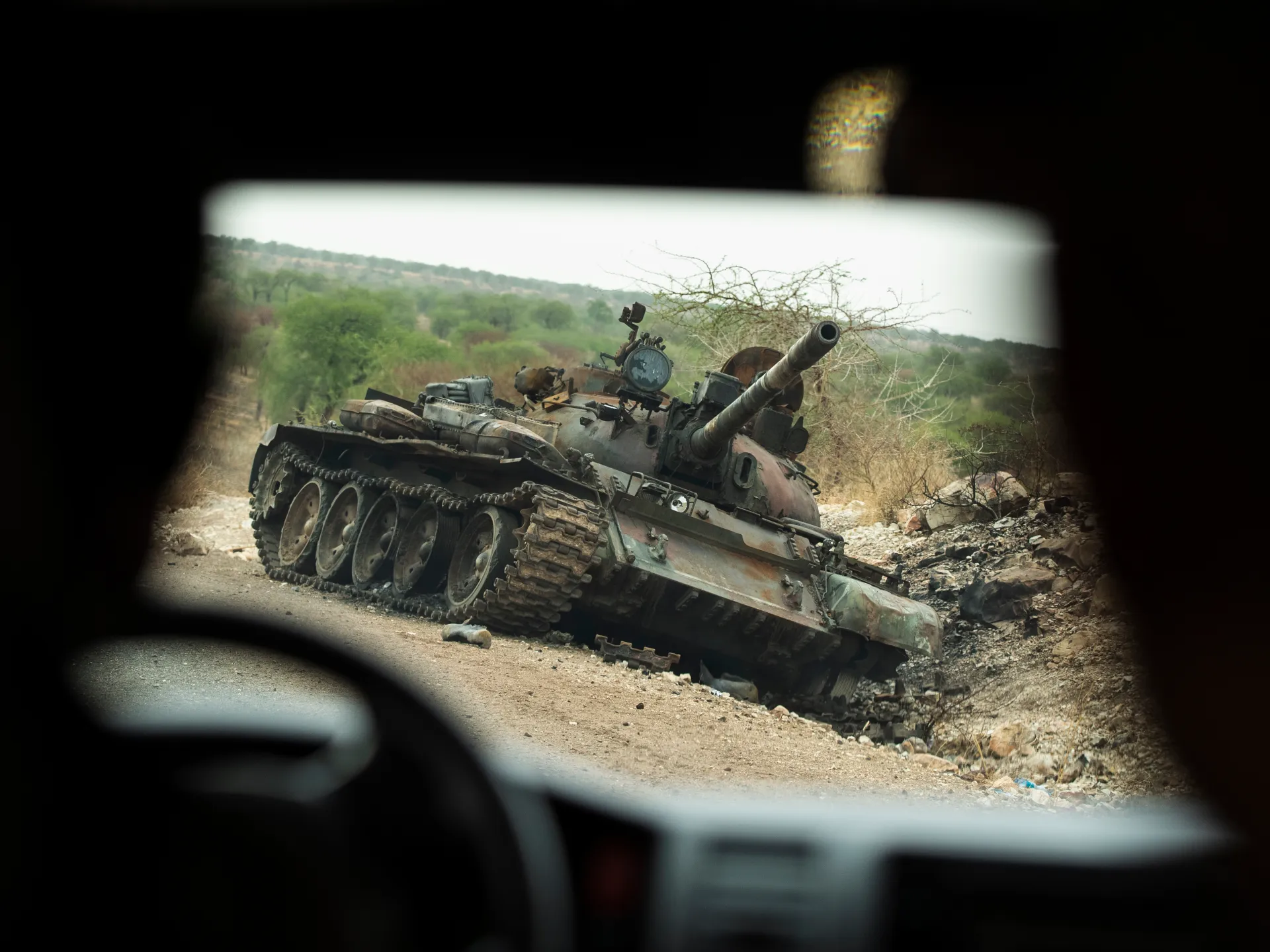
The announcement by Tigray’s main political party has raised concerns over a possible resumption of deadly conflict in northern Ethiopia.
Published on 20 April 2026
Tigray’s main political party has announced it is taking back control of the region’s government, effectively ending the peace deal between Ethiopia’s federal government and the northern region.
The Tigray People’s Liberation Front (TPLF) made the announcement in a Facebook post on Sunday, raising fears of a resumption of the deadly conflict between government and regional forces between 2020 and 2022.
Recommended Stories
4 item listend of list
The TPLF said its central committee had “decided to reinstate the Tigray Government Assembly (Parliament), which was suspended in the name of peace”.
The statement accused the federal government of violating the 2022 Pretoria Agreement, which ended the war, and instigating armed conflict within the Tigray region. It also accused the government of withholding funds to pay local civil servants.
Getachew Reda, a former party spokesman and adviser to Ethiopian Prime Minister Abiy Ahmed, said the TPLF statement was a “clear denial” of the post-war framework created by the Pretoria Agreement.
The conflict arose from a breakdown in relations between the rebel movement-turned-political party TPLF, which has dominated Ethiopian politics for nearly three decades, and Abiy, whose appointment as prime minister in 2018 ended the TPLF’s dominance.
The war, which has killed at least 600,000 people and displaced nearly five million, pitted federal forces backed by the Eritrean army against TPLF rebels.
The conflict ended in late 2022 as the African Union brokered the Pretoria Agreement, which called for an interim administration to replace Tigray’s elected bodies until new elections could be held.
Conflict
Despite progress in implementing the deal, it has come under strain in recent months.
There were clashes in Tigray in January and one person was killed in drone strikes in the northern region.
Tigray province is also bearing the brunt of United States President Donald Trump’s cut in funding last year to the US Agency for International Development, once Ethiopia’s largest source of humanitarian aid.
Humanitarian organizations say 80 percent of the population needs emergency aid, and lack of funding is straining the health system.
