


Biblical Archaeology Society – More Queries and Comments Winter 2026
Queries & Comments
More Queries and Comments Winter 2026
BAS StaffNovember 16, 20260 Comments55 views
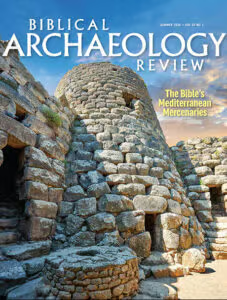
Summer 2026 cover of Biblical Archaeology Review, featuring a nuraghe tower from the site of Santu Antine. Background image: Funkyfood London, Paul Williams/Alamy.
Thank you for your thoughts and comments about our Summer 2026 issue. We appreciate your feedback. Here are a few of the letters and responses we received. Find more online at barmag.org/letters.
BAR Not Religious
The first thing I do when I receive BAR is read “Queries & Comments,” especially to see how many “cancel my subscription” letters there are. The Summer issue did not disappoint! I think you could print a disclaimer in flashing neon letters 6-inches high that you are NOT a religious magazine and people would still be offended.
Susan Chipman
Suffield, Connecticut
Please explain how you define and determine what is “BCE” (Before the Common Era) and what is “CE” (Common Era). Of course, the only rational explanation is grounded in the biblical history centered in Jesus of Nazareth (BC/AD). Your response to letters raising similar concerns about BCE/CE dating in the Summer 2026 issue is surprisingly condescending and insulting. In spite of your protestations to the contrary, you do have a particular ideological view of the Bible. By elevating your “more inclusive” BCE/CE dating, you simply depreciate the Bible’s view of Jesus Christ as the most inclusive person in history! Such obvious yet unacknowledged bias undercuts confidence in the quality of the “best and latest scholarship” that you presume to present.
Richard Carl Noack
Spring, Texas
Why do some of your readers expect BAR to be the Bible police or a Bible magazine? Moreover, why would some readers condemn contemporary non-Christian scholars for reinterpreting the traditional BC and AD dating terminology? Everyone who reads the Bible or believes in God knows what BC and AD mean. Please keep doing what you do so well—connecting people, places, and events discovered through archaeology with people, places, and events from the Bible.
Patricia Chestney
Denver, Colorado
It was refreshing to see your publication using the correct dating nomenclature, namely CE and BCE, though I am sure many readers who are looking for biblical confirmation of their beliefs will think otherwise. Biblical archaeology studies biblical sites and times, not specifically Jesus Christ, and its goal is not to prove a particular belief.
I am a Christian and believe in our Lord, but that is not the focus of biblical archaeology or your publication. Some historical evidence from the lands of the Bible may support people’s beliefs or the Bible, and some may not. Ancient cultures, societies, geography, customs, daily life, and material culture, among many others, are the correct subjects of the field, not supporting or refuting the Bible or the life of Jesus. Keep up the outstanding work!
Michael Nelson
Rootstown, Ohio
Last weekend, I read the letters in the Summer 2026 issue and noticed several writers were upset that BAR doesn’t limit itself to archaeological finds that substantiate the writers’ faith. They seem affronted by the lack of a linkage between discovered facts and biblical truths. I think they’re forgetting the purpose of the magazine, and more importantly, the purpose of faith. Faith needs no proof—that’s what it’s all about. Either you believe in the birth, death, and rebirth of the Son of Man 2,000 years ago, or you don’t. If you do, no lack of archaeological proof will matter. If you don’t, no amount of archaeological proof will create faith for you.
Ned Barnett
Las Vegas, Nevada
I have read several letters that chastise BAR for not supporting literal biblical interpretation. This is a misunderstanding of archaeology and biblical archaeology in particular. Archaeology is a social science that uses the techniques of exact sciences and historical disciplines to uncover facts and provide an independent view of the artifacts and peoples found in the Bible. This independence provides an additionalculture
People develop an understanding of religion through faith and the text of the Bible, as well as secular writings and artifacts. It is logically dangerous to assume a strict view of the Bible as a simple revealed literal truth. The Bible uses many literary devices, including history, biography, metaphor, parable, health guidance, heroic stories and legends, and spiritual precepts.
Thus, it is not necessary, nor is it ultimately the best way of understanding the biblical message, to assume complete agreement among differing approaches to that understanding.
Allen R. Stata
Marion, Alabama
Giving Life to Dead Cities
I want to express my admiration for the exceptional article “The Dead Cities of Christian Syria,” by Sandra Scham. The caliber of research and the narrative depth presented in the article were remarkable. I appreciated how Scham seamlessly blended archaeological rigor with a compelling human story; she succeeded in creating a definitive look at one of the world’s most evocative historical landscapes. The choice of topic is also commendable. The article represents a unique and often overlooked chapter of global heritage. Her focus on these ancient towns not only highlights their architectural splendor but also serves as a reminder of the communities that once thrived there.
Louis Crespo
Brooklyn, New York
Gaza’s Catastrophic Loss
Thanks for your article “Gaza’s Catastrophic Loss” (Strata, “Going, Going, Gone”). It is important to keep this area in mind, not only for its people but also its cultural heritage. In a recent publication, Gaza: Archaeology and History (Zaphon, 2025), I collected information on all of the recorded sites within the Gaza Strip and most of the historical texts about the area. It might be of interest to your readers.
Wolfgang Zwickel
Johannes Gutenberg-Universität
Mainz, Germany
I love your magazine but could not stomach the toxic innuendos of “Gaza’s Catastrophic Loss.” I understand that from an archaeological point of view the loss of structures, history, and culture is significant. I do not understand, however, how the loss of 72,000 Palestinians has the slightest thing to do with archaeology. I expect better from your publication.
I was surprised that anyone would be willing to take on the politically challenged and propaganda-filled subject of Gaza. I don’t think it’s possible to come out of that arena unscathed. In this case, the article correctly addresses the issue of sites that were destroyed in air-strikes during the recent conflict. Blame aside, I would guess that the larger archaeological destruction, however, occurred when hundreds of miles of tunnels were built underground.
Judah Aber
White Plains, New York
Biblical Ataroth
The article “Sacred Center: The Iron Age Temple at Biblical Ataroth,” by Chang-Ho Ji and Aaron Schade, details the Ataruz temple complex. Both the aerial photo and the artist’s reconstruction of the site show the complex surrounded by bare hills, with the Dead Sea in the distance. The article also says that no houses or domestic features were found. So, where is Ataroth? Did King Mesha obliterate it?
Kennedy Gammage
San Diego, California
Chang-ho Ji And Aaron Schade respond:
Given the substantial archaeological evidence from the site, Ataruz is likely biblical Ataroth, which King Mesha claims to have destroyed. When we stated that “no houses or domestic features have been found,” we meant that all buildings excavated thus far appear to have been part of the temple complex. In other words, we have not yet identified any buildings or architectural features from this period that can be clearly interpreted as only residential or domestic structures.
Editor’s Note: The article “Sacred Center” described the Ataruz temple as facing southeast, “toward the rising sun on the summer solstice.” As noted by several readers, this is not the direction of the rising sun on the summer solstice, when the sun rises in the east-northeast. The authors acknowledge the error, noting further that the solar and seasonal alignments of the temple are still under study.
Remembering Gabby
I was saddened by the passing of archaeologist Gabriel Barkay (Strata, “Milestones”). I got to know Gabby by watching him in Simcha Jacobovici’s Naked Archaeologist series. The insight Gabby shared was invaluable to learning and understanding biblical archaeology, especially in Jerusalem. When Simcha visited him at the Temple Mount Sifting Project, Gabby told him that all the material the project was sifting was archaeologically valuable; his perseverance proved him right. He will be missed.
Frank Nocco
Riverview, Florida
Why So Many Churches?
In his column, author Jacob Ashkenazi asks “Why Did Early Christians Build So Many Churches?” I can think of two reasons. First, large churches that served entire communities were very expensive to build back then; they didn’t have steel and the cost of building arches to support expansive roofs was prohibitive. Second is proximity. Since there was no public transportation, churches had to be accessible by foot, which meant that each town needed several churches.
Levente Joseph Orth
Greenwood, Missouri
Was Mary a Second Wife?
The column “Was Mary a Second Wife?” by Helen Bond was intriguing and thought provoking.
Something Jesus said from the cross may be an indication that Joseph had children from a previous marriage: “He said to His mother, ‘Woman, behold your son!’ Then He said to the disciple, ‘Behold your mother!’ And from that hour that disciple took her to his own home” (John 19:25–27, NKJV). Did Jesus say this because he preferred that John (rather than one of his own brothers) take care of her, or because he was the only son of Mary and didn’t want her to be left alone? I’m beginning to think it was the latter.
Jim Phelps
Greenwood, Louisiana
If Joseph already had children, as suggested by Bond, who took care of them while Joseph and Mary went to Bethlehem, where they stayed for some time? Then God told Joseph to escape in the middle of the night to Egypt. It doesn’t seem that they had other children with them. Who kept them during all those years until Mary and Joseph returned to Nazareth?
Louise Oliver
Madill, Oklahoma
Mary might have been a second wife with Joseph being older. The Bible does not say. It was common then to have blended families with the frequency of women dying in childbirth. But it was also common enough that women would give birth to large families of their own. In my family, I have grandparents that gave birth to large families in the 19th century, a time that was not much better, hygienically, than previous ages. A lot depends on the availability of food, the availability of clean water, and personal habits.
Joann McFarland
Stanfield, Oregon
Joseph and Mary and the infant Jesus traveled to Egypt, with enough provisions to get them to safety. However, would they have traveled alone? If Joseph had any number of younger children from previous relationships, would these children have gone too—along with their mothers and other relatives—to accompany the entire family on a perilous journey? Did extended families not travel as groups for safety?
If Joseph had any number of adult age children, would they not have accompanied their father and his youngest child (their stepbrother) to provide a measure of safety, companionship, and supplies to bring them successfully to their destination?
According to the Bible, Joseph, Mary, and Jesus were totally alone on the journey. It does not seem reasonable that a very large family of ex-wives and children would leave Joseph and Mary to endure this journey alone. It would seem that someone, from either Joseph’s or even Mary’s family, would speak up. I would have to believe, then, at that point in Joseph’s life, he most probably was a newly married man, with no former wives or children to be concerned about.
June M. Greiser
Middletown, Delaware
I regard the birth narratives in Matthew and Luke not as historical reports but as later attempts to give Jesus an extraordinary birth, using tropes from the Hebrew scriptures and Greco-Roman literature. In fact, no one seems to know anything about Jesus’s birth in the first few decades, not even Paul. Therefore, I have ignored the suggestion that Jesus was Mary’s first child, conceived while she was still a virgin. Similarly, I see the escape to Egypt as a literary way to link Jesus with the story of Israel, not a reliable guide to Mary’s actual family.
Helen Bond is an excellent scholar, but her recent BAR article overlooks some critical points. First, the reason for the theory of Joseph being previously married and having many children—a story from the later Protevangelium of James but not found in the New Testament itself—is because Mary’s having had multiple children contradicts the notion that she was a perpetual virgin, an extension of the idea that she conceived her first child while still a virgin.
Also, our earliest gospelrs and sisters with Mary; they are not called “cousins” (anepsioi), nor are they called or treated as Mary’s stepchildren
Next, Matthew 1:25 clearly implies that Joseph and Mary “knew” each other (in the biblical sense) after Jesus’s birth, which rules out the later theory of Mary’s perpetual virginity.
Furthermore, while calling Jesus “the son of Mary” (Mark 6:3) may or may not have been a slur, the most reasonable explanation is that Joseph was not present when Jesus visited the Nazareth synagogue because he was no longer alive.
Finally, while Bond is right that infant mortality rates were high in the first centuries CE, there were nonetheless plenty of examples of large families in Israelite tradition, and numerous contemporary examples in the time of Jesus.
Ben Witherington III
Asbury Theological Seminary
As readers will appreciate, the original article was extremely brief, and I’m grateful for the chance to address these excellent points.
I appreciate that many scholars explain Mark’s strange use of “son of Mary” in 6:3 as an indication that Joseph had died, but I find that an implausible explanation. In a patriarchal culture, one’s father was of utmost importance—whether he was dead or not! In a small village like Nazareth, no one would have forgotten the name of Jesus’s father or substituted it quite blithely with the name of his mother (and if this were common practice, we would expect to have many men known simply by the names of their mothers, which is not the case). My reading was inspired by Richard Bauckham, who notes that the mother is only recorded in the Hebrew Scriptures when there was more than one wife. The point that the villagers are making is that they know everything about Jesus—even down to which of Joseph’s wives was his mother.
The scenario I am suggesting—that Mary, Jesus, and perhaps other full siblings were part of a blended family—was a very common one in the first century. Some of the siblings noted in Mark 6:3 may well have been cousins, or perhaps more likely half- or step-siblings, but I doubt that most families made much distinction between the various relationships—any more than we might do nowadays. And certainly the evangelists would not have wasted time on such minor points (even if they were aware of them).
Finally, do we really have evidence for large families at the time? Multiple siblings certainly exist in literary sources, but can we be sure this is an accurate reflection of real life rather than, for example, the suggestion of a particularly favoured family? Often we may suspect that mothers’ names have been forgotten: There were five Maccabean brothers, for example, but can we be sure they all had the same mother? From his ten wives, Herod I seems to have had only fourteen surviving children; most wives had only one child, while Cleopatra of Jerusalem had two, Malthace the Samaritan three, and Mariamme I four (though we know of another son, who drowned at a young age). Even assuming that the lists are not entirely complete (especially for the later wives who do not seem to have had children), these are fairly low numbers, even in an elite setting. Staying with the well-to-do, Josephus had no children from his first two marriages, and only one surviving son from his third (two further sons had died in infancy), and two from his fourth. The High Priest Ananus (Annas) had five sons and at least one daughter (who married Caiaphas), but we have no idea how many wives were needed to achieve this number. And across the border in Nabataea, Babatha had one surviving son from her first marriage but appears not to have had any with her second husband (who already had one child with his first wife). To be sure, this is only anecdotal evidence, based on a small selection of families, but in no case do we see here the numbers reflected in Jesus’ family.
I remain convinced that the most plausible way to make sense of a first-century peasant family with (at least) seven children is to assume that we have a phenomenon increasingly common in our own world—the blended family.
Source: www.biblicalarchaeology.org

3 Comments
Pingback: Verse of the Day: Psalm 119:105 - Christian Corner
Pingback: Verse of the Day: Psalm 1:1-2 - Christian Corner
Pingback: Verse of the Day: Colossians 3:15 - Christian Corner