

Human consciousness has always been a puzzle for the scientific community. Various debates related to consciousness revolve around unknown brain capabilities and ways to unlock hidden layers of reality.
An Oxford physicist recently made shocking claims focusing on the possibility of expanding human consciousness, reports Popular Mechanics.
Vlatko Vedral, professor of physics at the University of Oxford, spoke about the “quantum analogy of thought”. According to the professor, human consciousness is not simply a biological or logical process, but a series of quantum events occurring within the brain.
Like the dual nature of light, there is duality in the human mind, which oscillates between intuitive thinking (functioning as waves) and logical decision making (functioning as particles).
“(Our) consciousness is the product of a large number of quantum double-slit experiments,” the physicist said.
Therefore, when man is in a state of contemplation, he can explore several paths simultaneously. In the state of contemplation, man enters a state of uncertainty. Through a series of ideas we can collapse this superposition of thought and replace it with another, expanding the horizons. This process continues until a definite or logical idea is formed, from which the interference of lateral thinking disappears.
So physicists argue that our creativity arises from quantum interference. Talking about artificial intelligence, Vedral said, current AI systems are limited because it follows rigid and logical steps.
In contrast, the human subconscious mind has the ability to process large amounts of information in parallel based on quantum uncertainty. And AI lacks this feature
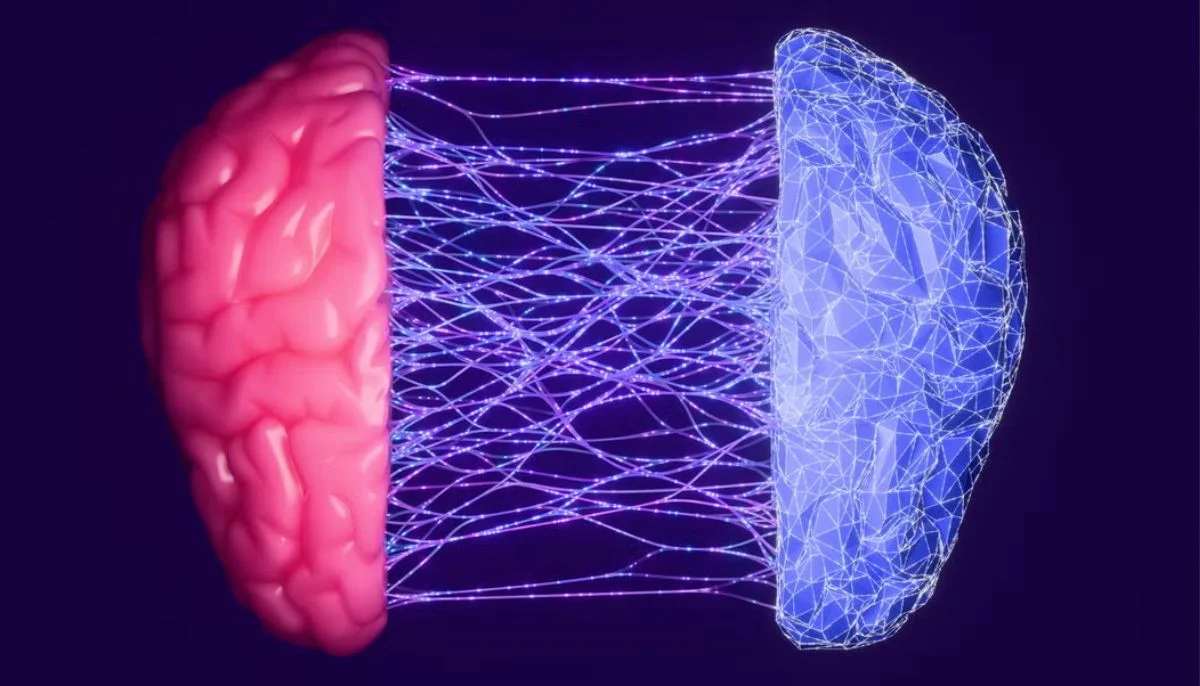
Vedral suggests that future quantum brain-interfaces could enhance these conditions of uncertainty, leading to unprecedented levels of human creativity and a qualitative leap in the way we perceive reality.
