

On Easter Monday, the Catholic Church celebrates what is called “Angel’s Monday”. In many countries of Europe and South America, this day is also known as “”.little easter,” is a national holiday.
In a Vatican Radio recording in 1994, Pope John Paul II gave an explanation for the Angelus Monday.
“Why is it called that?” Highlighting the need to call upon an angel from the depths of the grave, the Pope asked: “He is risen.”
John Paul II said, “These words were very difficult for a person to proclaim, to express.” “Moreover, the women who were at the tomb found it empty, but they could not tell that ‘He has risen’; they only confirmed that the tomb was empty. The angel said further: ‘He is not here, he has been raised.'”
The Gospel of St. Matthew puts it this way: “Then the angel answered and said to the women, ‘Do not be afraid! I know that you are looking for Jesus crucified. He is not here, for he has been raised just as he said. Come and see the place where he lay. Then go quickly and tell his disciples, ‘He has been raised from the dead, and he is going before you to Galilee; there You will see him.’ Behold, I have told you” (Matthew 28:5-7).
Angels are servants and messengers of God. As purely spiritual beings, they possess intelligence and will. He is personal and immortal. They surpass all visible beings in their perfection.
Christ himself testified to the angels when he said: “The angels of heaven always see the face of my Father who is in heaven!” (Matthew 18:10)
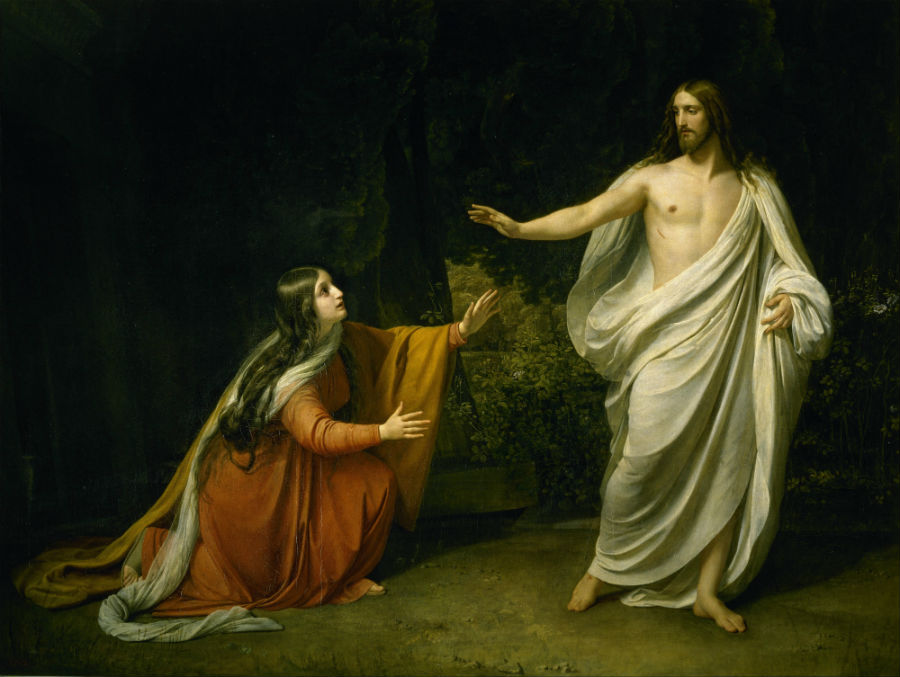
Christ is the center of the universe and the angels are His. Even more so, because He made them messengers of His plan of salvation: an angel announced His conception to the Blessed Mother at the Annunciation and an angel announced His resurrection to Mary Magdalene.
From Easter Monday until the end of Easter at Pentecost, the Church prays regina cali in return angel prayer at afternoon.
On the Monday of the Angelus in 2008, Pope Benedict XVI said that Regina Caeli’s text “is like a new ‘Annunciation’ to Mary, this time not by an angel but by us Christians who invite the Mother to rejoice because her Son, whom she bore in her womb, has been resurrected according to his promise.”
He continued: “Indeed, ‘Rejoice’ was the first word the heavenly angel addressed to the Virgin in Nazareth. And this is what it means: Rejoice, Mary, because within you the Son of God is about to become man. Now, after the drama of the Passion, a new invitation to rejoice rings out: ‘Gaude et Laetare, Virgo Maria, Alleluia, quia surrexit Dominus Vere, Alleluia’ – Rejoice and be happy, Rejoice, O Virgin Mary, for the Lord is truly risen, Alleluia!
Regina Kelly (English)
V. Queen of Heaven, rejoice, Alleluia.
R. For what you were privileged to endure, Alleluia.
V. Has risen, as he said, Alleluia.
R. Pray to God for us, Alleluia.
V. Rejoice and be glad, O Virgin Mary, Alleluia.
R. For the Lord is truly risen, Alleluia.
V. Let us pray. O God, who gave joy to the world through the resurrection of Your Son, our Lord Jesus Christ, we beseech You, that through the intercession of the Virgin Mary, His Mother, we may obtain the joys of eternal life. Through the same Christ our Lord.
R. Amen.
Regina Cali (Latin)
V. Regina Caeli, Laetare, Alleluia.
R. Quia quem meruisti portare, Alleluia.
V. Resurrexit, Sikat Dixit, Alleluia.
R. Ora Pro Nobis Deum, Alleluia.
V. Gaude et Laetare, Virgo Maria, Alleluia.
R. Quia surrexit Dominus Vere, Alleluia.
V. Oremus. Deus, qui per resurrectionem filii tui, Domini Nostri Iesu Christi, mundum laetificare dignatus es: Presta, Quesumus; Uti per eius genetrisem virginim Mariam, perpetua capiamus gaudia vitae. Per eundem Christum Dominum Nostrum.
R. Amen.
This story was first published by ACI Prensa, EWTN News’ Spanish-language sister service, then translated and adapted by the National Catholic Register on March 4, 2021, and updated for EWTN News English on March 28, 2024, and again on April 5, 2026.
