

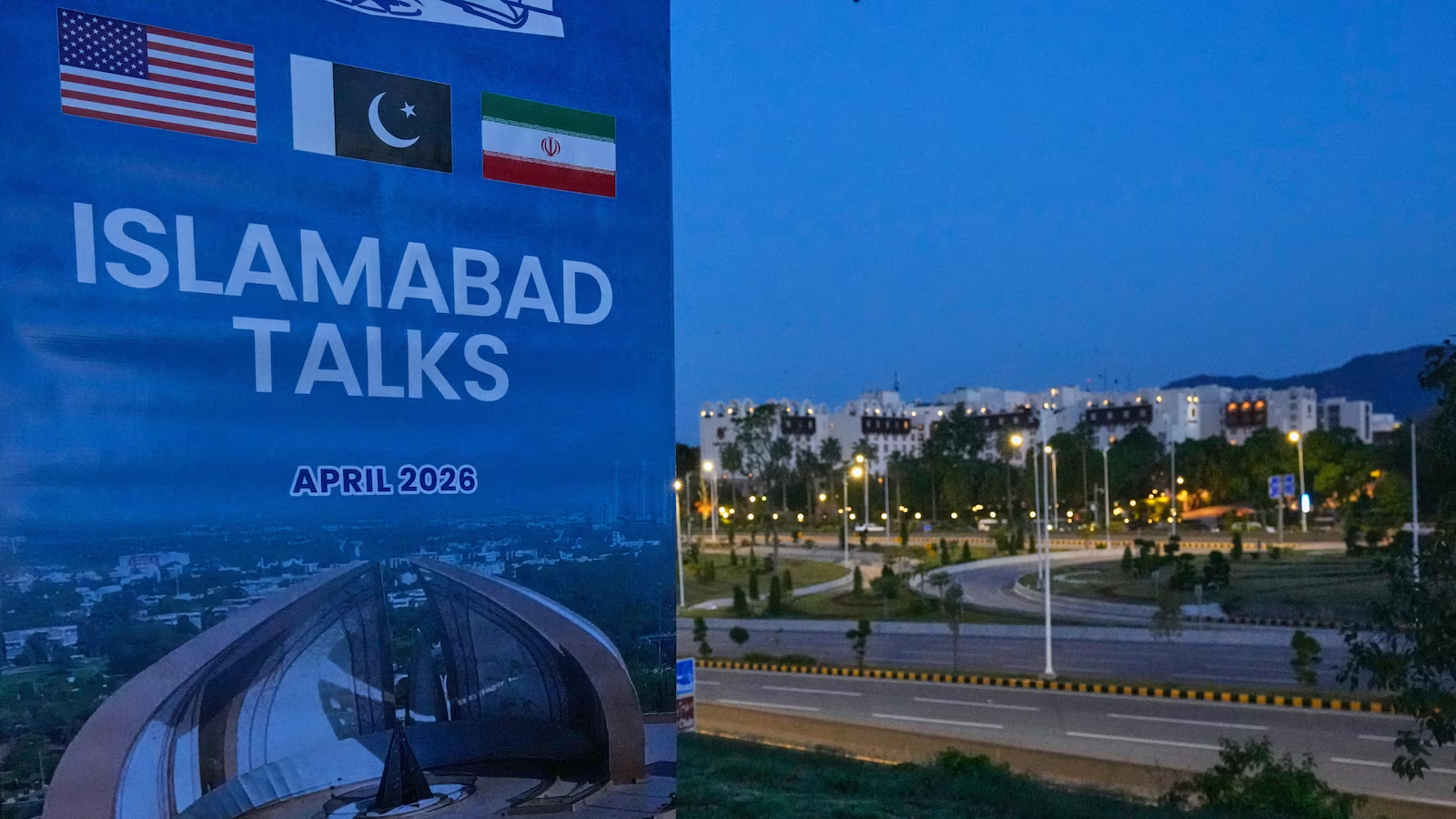
Jerusalem– Ceasefire talks between the US and Iran ended without an agreement early Sunday, raising questions about what will happen when the current two-week ceasefire expires on April 22.
conversation like Dedicated In Pakistan’s capital Islamabad, both sides blamed each other for the failure.
There was no word on whether talks would resume and President Donald Trump issued new threats against Iran.
The setback does not mean that war will restart. But it showed how strong both sides are even after the inconclusive result. 40 day war Which caused huge damage to Iran, echoed across the region and shook the global economy.
Negotiators will now return to their capitals and reconsider their next move.
Here’s where things stand:
When the US and Israel began war on February 28, they pledged to eliminate Iran’s nuclear and missile programs and its support for armed proxy groups throughout the region.
America has presented a 15-point plan which is believed to include these demands. Although the US proposal has not been made public, Pakistani officials told The Associated Press that it also calls for reopening the Strait of Hormuz, a strategic waterway through which a fifth of the world’s oil flows. Iran sent a message to close the strait Oil prices are rising And global markets are falling.
Iran has countered this with its own 10-point plan. It demands Iranian control of the strait, an end to the war and a halt to attacks on its proxies, including the powerful Hezbollah terrorist group in Lebanon, as well as compensation for war damages.
During more than 21 hours of face-to-face talks, neither side deviated much from their ceasefire terms.
Vice President JD Vance, who led the US delegation, said Iran had failed to provide assurances that it would not try to develop nuclear weapons.
Iran has long denied search for nuclear weapons But there has been an emphasis on a civilian nuclear program that includes uranium enrichment – a key step toward developing a weapon. Experts say Iran’s current enriched uranium reserves are just a small technological step away from being weapons grade.
“We need to see a positive commitment that they will not seek nuclear weapons and that they will not seek equipment that would enable them to quickly acquire nuclear weapons,” Vance said.
Iran’s chief negotiator, Parliament Speaker Mohammad Bagher Qalibaf, said the US would have to decide “whether it can earn our trust or not.”
He did not mention the main controversies in the series of social media posts. But other Iranian officials indicated that the Strait of Hormuz remains a major problem.
Iran’s First Vice President Mohammad Reza Aref said in a social media post that controlling the strait is part of “people’s rights.”
Pakistan Foreign Minister Ishaq Dar said that his country will try to facilitate a new round of talks between Iran and the US in the coming days. There was no immediate response from either side.
A main obstacle is the perception on both sides that they have won the war and that everyone has time on their hands.
Vance said the lack of a deal “is more bad news for Iran than it is bad news for the United States.”
And in a new social media post on Sunday, Trump said the US Navy would impose a blockade controlling all access in and out of the Strait of Hormuz.
Qalibaf said Iran “will never stop trying to achieve the achievements” of the war.
Danny Citrinowicz, a senior researcher at the Institute for National Security Studies, an Israeli think tank, said these conflicting viewpoints are not a good sign. In a post on X, he said that the notion of Iran’s victory “is not the mentality of a regime that is preparing to compromise.”
“This gap between American expectations and Iranian self-perception is now at the heart of the growing strategic standoff,” he said.
Ali Waze, Iran project director at the International Crisis Group think tank, said the Islamabad talks underlined wide gaps but he did not expect an immediate collapse.
“The likely scenario is not immediate war, but rather a volatile period of pressure, signals and last-minute efforts to prevent a wider conflict,” he said. “The way forward, if there is one, lies in a limited, mutual deal that buys time and lowers the temperature.”
___
AP correspondent Sammy Magee in Cairo contributed reporting.
