

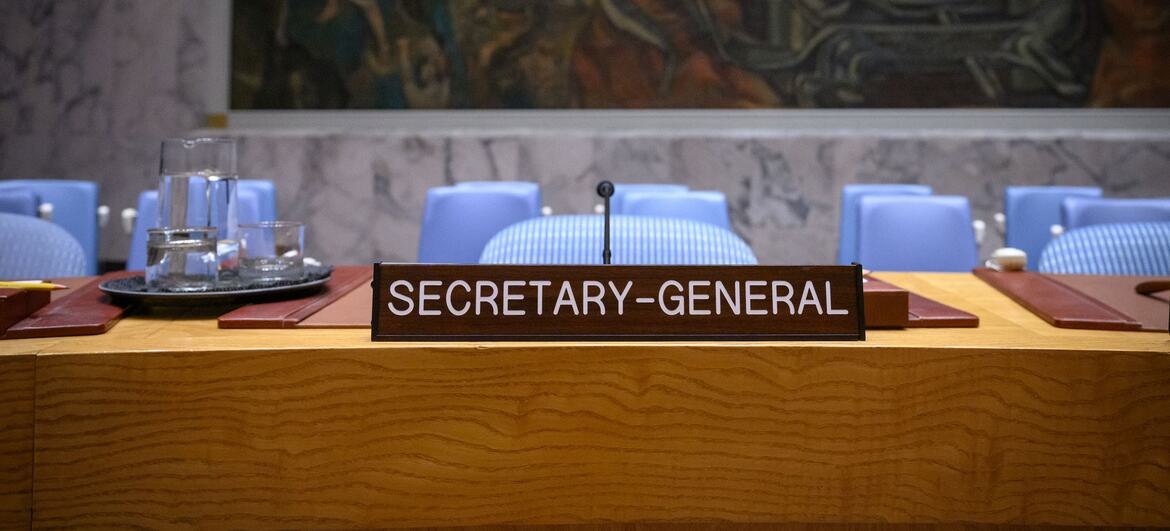
why it matters
The main questions related to the ongoing process are:
- From which country will the next UN chief come?
- Will a woman be chosen to lead the organization for the first time?
- How will the five permanent members of the Security Council overcome their political differences in an increasingly fragmented world?
A quick reminder about the role of the Secretary General
The role of the Secretary-General, or SG, often referred to by UN insiders, is the chief administrative officer and top diplomat of the United Nations and is charged with the following tasks:
- Leads the United Nations Secretariat and global operations
- Brings issues that threaten international peace to the UN Security Council
- Acts as a mediator, advocate, and public voice on global crises.
- implements decisions of member states
united nations
Four candidates nominated to be the next UN Secretary-General; Michelle Bachelet (Chile), Rafael Grossi (Argentina), Rebecca Grinspan (Costa Rica), and Macky Sall (Senegal).
When will the next Secretary General be elected?
The tenure of current chief Antonio Guterres expires on December 31, 2026, so the next SG is expected to begin work on January 1, 2027.
Election process is already underway:
- November 2025: Member States invited to nominate candidates by 1 April 2026
- 21-22 April 2026: Candidates are questioned by United Nations member states in a televised “informal dialogue” in the United Nations General Assembly Hall
- At the end of July 2026: 15-member Security Council discusses candidates behind closed doors
- At the end of 2026: United Nations General Assembly formalizes the appointment
In practice, the decision is usually finalized between August and October.
Who are the candidates?
The field often includes diplomats, prime ministers, UN insiders and senior international figures.
So far four candidates have been nominated.
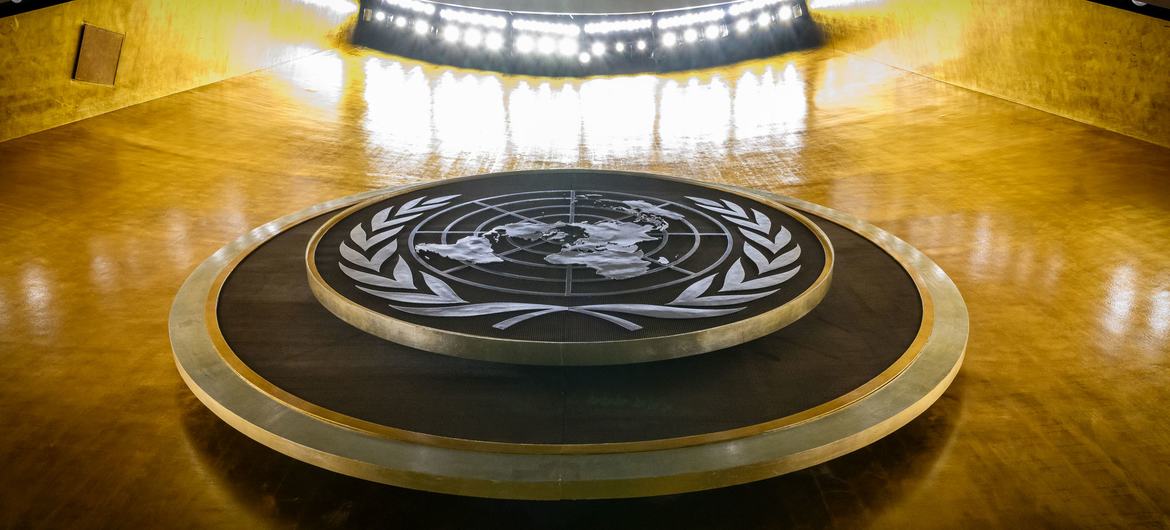
UN Photo/Loy Felipe
The picture of the United Nations crest is displayed in the General Assembly Hall.
how it works:
- Candidates must be nominated by at least one United Nations member state
- Each country may nominate one candidate (singly or jointly).
- Self-nomination is not allowed
- Additional candidates may also nominate after the April 1 deadline.
Unofficial Rules:
- Nationals of the five permanent members of the Security Council (China, France, Russia, the United Kingdom, the United States), known as the (P5), are not put forward.
- There is no official regional rotation policy in terms of where the SG should come from, although some argue that it is Latin America’s “turn” which may explain why three of the candidates announced so far are from that region.
Powerbroking in the General Assembly and Security Council
The Secretary General is appointed on the recommendation of the 193-member General Assembly security council(As stated in Article 97 UN Charter).
While the 15-member Council, and especially its five permanent members, who can veto any candidate, play a decisive role in shaping the recommendation, the appointment is ultimately made by the Assembly.
To become SG, a candidate must:
- Get majority support in the Security Council
- Avoid veto from any of the P5
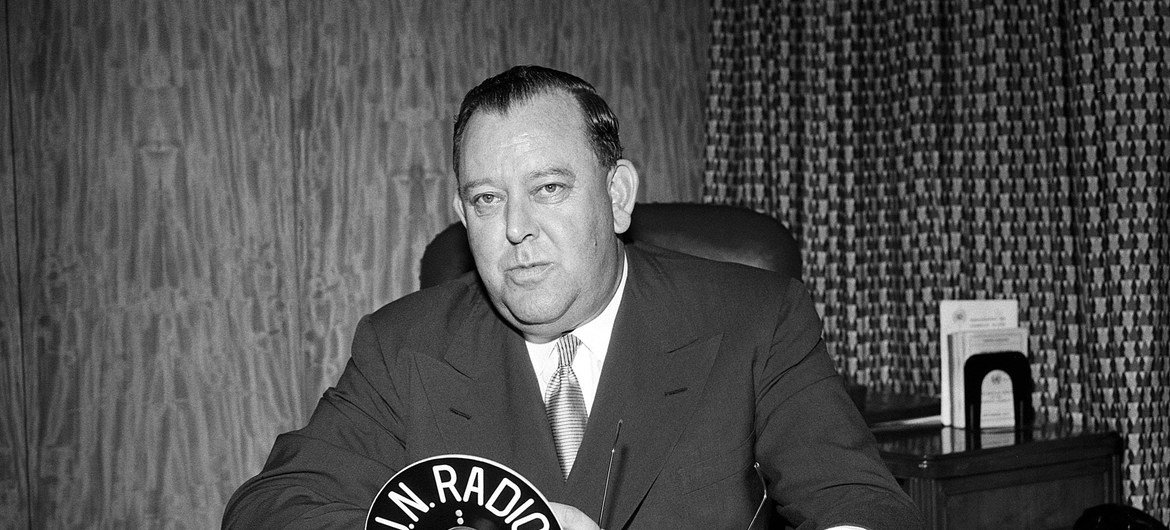
united nations photo
Trygve Lee of Norway was the first Secretary General of the United Nations.
Informal straw polls are conducted among council members indicating whether they encourage, discourage, or have no particular opinion about a candidate.
These straw polls continue until there is a majority candidate without a single veto from the P5 member.
Is it likely that a woman will be elected?
The pressure is increasing, but there are no guarantees.
- In the 80 years since the founding of the United Nations, there have been nine Secretary-Generals, but a woman has never held the post.
- member states are Women encouraged to enroll
- But gender is not a formal selection criterion
Politics of the Security Council.
The final decision still largely depends on whether the P5 can come to a consensus. The P5 disagreements and impasse in the Security Council over the recent crises in Gaza, Ukraine and now Iran have demonstrated how difficult the task ahead may be.
The tenth General Secretary will follow this stages of: :
- Antonio Guterres (Portugal)Who took office in January 2017;
- Ban Ki-moon (Republic of Korea)2007 to 2016;
- Kofi Annan (Ghana)1997 to 2006;
- Boutros Boutros-Ghali (Egypt)1992 to 1996;
- Javier Pérez de Cuéllar (Peru)From 1982 to 1991;
- Kurt Waldheim (Austria)1972 to 1981;
- U Thant (Burma, now Myanmar)1961 to 1971;
- Dag Hammarskjöld (Sweden)1953 to 1961;
- Trygve Lie (Norway)From 1946 to 1952.
