

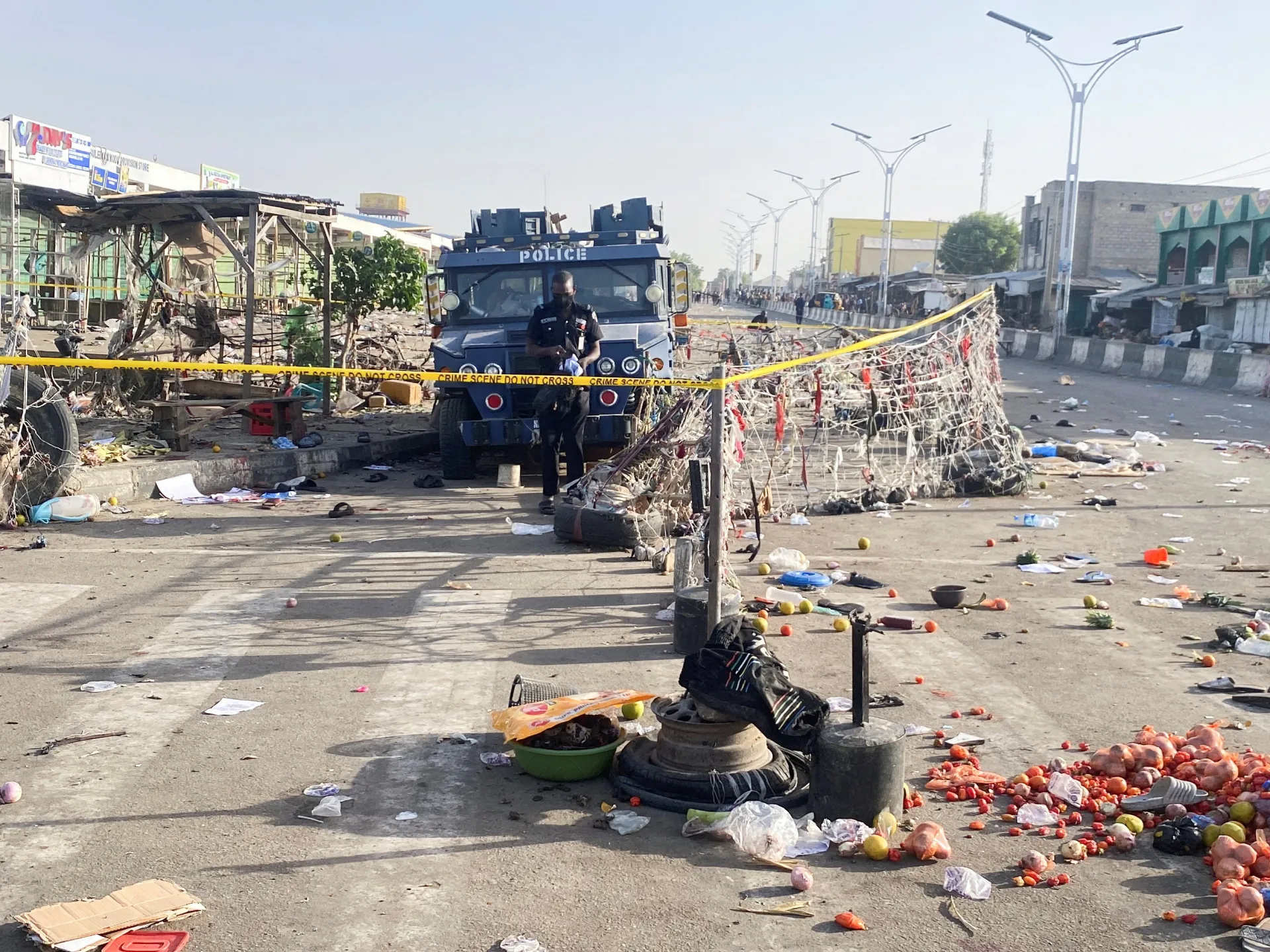
In recent months, the frequency and intensity of attacks in northern Nigeria have shattered the comfortable illusion that the region’s long insurgency has receded into the background of national life. As violent incidents have increased, many Nigerians have refused to face this inconvenient reality and have instead chosen to embrace conspiracy theories that suggest the resurgence is somehow linked to renewed US involvement in Nigeria’s counterterrorism efforts.
It is not difficult to see why the theory of foreign collusion with terrorist groups resonates in Nigeria. In February 2025, United States Congressman Scott Perry claimed that the US Agency for International Development (USAID) had funded Boko Haram, but provided no evidence for the allegation. Richard Mills, the then US ambassador to Nigeria, rejected Perry’s statement, but by then the claim had made its mark in public and on social media.
Then, US officials such as Congressmen Ted Cruz and Chris Smith made statements that promoted the “Christian genocide” narrative, which falsely claims that the killings in Nigeria specifically target Christians.
There have been attacks on Christians, including most recently on a church in Kaduna state on Easter Sunday, but Muslim communities are also regularly targeted. The truth is that terrorist groups have been working indiscriminately for a long time.
Therefore, the moment demands that we go beyond the temptation of easy explanations, and undertake a serious analysis of what is really happening in Northern Nigeria.
That diagnosis must begin with clarity about what the attacks entail. First, he points out that the rebellion has adapted both form and methods. Second, insecurity in Northern Nigeria can no longer be understood in isolation from the rest of the region; It is part of a broader regional disorder in the Lake Chad basin and the Sahel. And third, the violence is fueling deep domestic vulnerabilities that extend far beyond the battlefield: chronic poverty, educational exclusion, weak local governance and a lingering erosion of the social contract in parts of the North.
Let’s start with the first point. Recent attacks show that the insurgent ecosystem has learned, adapted, and expanded beyond the old image of a heavily armed insurgency fighting in predictable ways. The ISIL affiliate in West Africa Province (ISWAP), in particular, has become more efficient in structure and tactics, while its conflict with Boko Haram has weakened the latter and left ISWAP as a more organized and deeply entrenched threat in the Lake Chad region. It has strengthened its presence in parts of the Lake Chad basin and expanded into the Sambisa Forest, expanding the space from which it can threaten civilians and military formations alike.
This matters because insurgencies are driven not just by ideology, but by terrain, supply routes, local economies, and the ability to move people and material to and from places where the state is weak or absent. In that sense, rebellion is no longer simply survival in familiar bases; It is positioning itself in a broader and more fluid battlefield, with ISWAP’s control over trade in and around Lake Chad now a key pillar of its resilience.
ISWAP has also refined its fighting methods, demonstrating a growing capacity for coordinated attacks, night raids, ambushes and operations designed not only to inflict casualties, but also to isolate military positions and slow the movement of reinforcements. This challenge is only heightened by the sheer scale of the theatre.
The states of Borno, Yobe and Adamawa are comparable in size to entire European countries: Borno is slightly larger than the Republic of Ireland; Yobe is approximately the size of Switzerland; And Adamawa is slightly larger than Belgium. Policing areas of that scale would test any state, especially when they border a fragile regional neighbourhood.
The terrain has also shaped the rhythm of the conflict, with the dry season, particularly in the first quarter of the year, increasing the intensity of attacks.
At the heart of this adaptation is the development of technology. What once seemed unthinkable in this theater has now become part of the rebel repertoire. Drones, including commercially available models modified for warfare, are now part of the operational environment. The significance of this change is not merely technical; It is also psychological and strategic.
Beyond technology, the increasing mobility of extremism has made the threat more acute. The rapid attacks by motorcycle-riding units demonstrate the extent to which insurgent violence now depends on speed, concentration and dispersion. Fighters can mobilize rapidly, attack weak spots and disappear into difficult terrain before an effective response can be launched.
The advantage here is not in capturing territory in the traditional sense, but in imposing uncertainty, drawing the defensive attention of the state, and proving that rebels can still choose where and when to shock the system.
Perhaps the most dangerous dimension of this adaptation is the infiltration of foreign fighters. Their importance lies not only in their numbers, but also in what they bring with them: technical knowledge, battlefield experience, strategic imagination and connections to wider militant networks.
Their presence points to the deep cross-fertilization between local insurgency and global terrorist currents. Even more troubling is that they are now playing a more active role in the conflict, not only honing tactics and skills but also participating in direct combat.
That is why the regional dimension must be at the center of any serious analysis. The weakening of regional cooperation has come at the worst time, creating opportunities that rebels are ready to exploit. A threat that has always been international becomes difficult to confront when neighboring states no longer act with sufficient coordination.
Niger’s withdrawal from the Multinational Joint Task Force following the Economic Community of West African States (ECOWAS) response to the military coup there has intensified that challenge and weakened perimeter security in the north-east theatre. The force, consisting of troops from Nigeria, Niger, Cameroon and Chad, along with a small Beninese contingent at its headquarters in N’Djamena, was instrumental in earlier gains and remains critical in consolidating positions, operating in difficult terrain, denying rebels safe havens and preventing the movement of foreign fighters.
Yet even regional analysis, while necessary, does not fully clarify the problem. Insurgencies persist not only because they move across borders, but also because they can recruit, regroup, and exploit social weakness at home.
Violence in northern Nigeria is fueled by a combination of ideological extremism, chronic poverty, educational exclusion, and a state whose presence is often too limited to gain trust in the communities where armed groups seek recruits. Therefore, this argument cannot be limited to the military field.
Poverty and lack of education do not directly give rise to terrorism, but they increase vulnerability, especially where isolation, weak institutions and manipulative ideological narratives already exist. This is why the educational crisis in Northern Nigeria must be seen not only as a developmental challenge, but also as part of the broader security scenario. Education does more than impart literacy and numeracy; It provides structure, routine, and pathways for self-actualization and social connectedness.
It is important to note that the government is not without a response. In 2024, President Bola Ahmed Tinubu signed the Student Loans (Access to Higher Education) Act into law, and since then the implementation of the Nigerian Education Loan Fund has opened up a wider avenue for post-secondary education and skills development. But the more decisive educational challenge is at the grassroots level, where literacy begins, habits are formed, and attachment to institutions is either made or lost. By the time a youth reaches the threshold of higher education, the groundwork has already been done or neglected.
This is why local governance matters more to security than is often recognized. In Nigeria’s federal structure, primary education is closest to the weakest and most politically distorted level of government. If local government is financially weak, administratively crippled, or politically captured, one of the country’s most important long-term defenses against radicalization will remain fragile.
This is why local government autonomy, although often framed in dry constitutional terms, has a direct impact on security. President Tinubu, a strong supporter of local autonomy, welcomed the July 2024 Supreme Court decision affirming the constitutional and financial rights of local governments and has pressed governors to respect it. However, resistance is not surprising: many governors have long regarded local governments as subordinate extensions of their authority.
So what does the present moment demand from Nigeria? This, of course, calls for continued military pressure on insurgent sanctuaries. This demands stronger force protection, intensified intelligence gathering, surveillance and reconnaissance, better rural and urban security and a more serious approach to cross-border diplomacy. It demands that regional diplomacy be treated not as a luxury of peacetime statecraft, but as part of the operational infrastructure of security.
But the crisis cannot be resolved by military action alone. It also calls for social, institutional and educational measures at all levels of government. The state must counter extremism not only through force, but also through education and functioning local institutions. It must rebuild governance, restore trust, and close the social and institutional cracks through which violence resurfaces.
The views expressed in this article are those of the author and do not necessarily reflect the editorial stance of Al Jazeera.
