

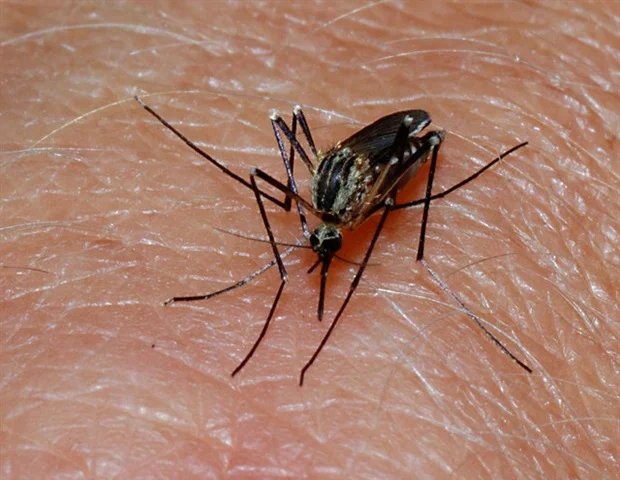
Malaria remains a threat to young children in refugee settlements, where displacement, temporary housing, and limited access to health care reduce the effectiveness of traditional prevention tools. There are an estimated 35 million refugees in Africa alone, including women and children who comprise more than 80% of displaced people. Newcomers lack permanent shelter, and therefore cannot reliably use mosquito nets, leaving infants and young children vulnerable to mosquito bites.
Ross Boyce, MD, MSc, a researcher at the Institute for Global Health and Infectious Diseases at the UNC School of Medicine, will lead a three-year study in collaboration with partners at Mbarara University of Science and Technology in Uganda to evaluate a proven malaria prevention strategy tailored to humanitarian settings, supported by the Thrasher Research Fund.
The study will test permethrin-treated baby wraps, an innovation that turns a cultural caregiving practice—mothers carrying infants on their backs using a cloth covering—into a protective barrier against malaria-carrying mosquitoes. The approach is based on strong clinical evidence. Published in a randomized, placebo-controlled trial conducted in western Uganda The New England Journal of Medicine (2025), Boyce found that infants carried in permethrin-treated wraps showed about a 65% reduction in the incidence of clinical malaria, even with the use of bed nets. The results demonstrated meaningful protection beyond the nets alone, particularly from outdoor and daytime exposure to mosquitoes.
As global funding for humanitarian emergencies declines, newly arrived refugees are being forced to create their own shelters. If you don’t have a bed, let alone a roof over your head, it’s difficult to even hang a mosquito net. By building protection into something mothers already use every day, we can reach babies at the moments and places where they are most exposed.”
Dr. Ross Boyce, Associate Professor of Medicine and Epidemiology
Incorporating insect repellents into items that families already use daily, the intervention requires no behavior change, minimal infrastructure, and is suitable for resource-constrained, high-risk environments. Boyce also hopes that the repellent effect of the treated cover may provide some protection to other family members, especially if they sleep close together.
study overview
To assess feasibility and effectiveness in humanitarian contexts, researchers will begin a Phase III, double-blind, randomized controlled trial in the Kyangwali refugee settlement in western Uganda. The settlement is home to approximately 150,000 refugees, mainly women and children displaced by the conflict in the Democratic Republic of Congo.
The three-year study (2026-2029) will enroll 450 recently arrived mother-infant pairs and compare three strategies: factory-treated, long-lasting permethrin wraps designed to remain repellent without re-treatment; Wrap soaked in 0.5% permethrin solution, a low-cost and locally viable option; and untreated sheaths serve as control group
Children will be monitored for six months, a period when families are most likely to lack stable housing and protection from persistent mosquitoes. Outcomes will include malaria incidence, hospitalization, safety, compliance, and user acceptability to evaluate both effectiveness and real-world applicability.
locally led partnerships
The study builds on more than a decade of collaborative malaria research. Community engagement and field operations are supported by the People’s Health and Economic Development Organization (PHEALED), a Ugandan non-governmental organization with extensive experience in refugee and rural health programs.
Clinical activities will be conducted in collaboration with local health facilities, run by Medical Teams International in partnership with the Ugandan Office of the United Nations High Commissioner for Refugees (UNHCR), which will ensure alignment with existing care systems and support sustainability beyond the study period. Funding provided by the Thrasher Research Fund supports innovative, child-focused global health solutions.
Source:
Journal Reference:
