

Interview
Rev. Kevin Keegan reflects on sharing the Living Gospel in a fractured world
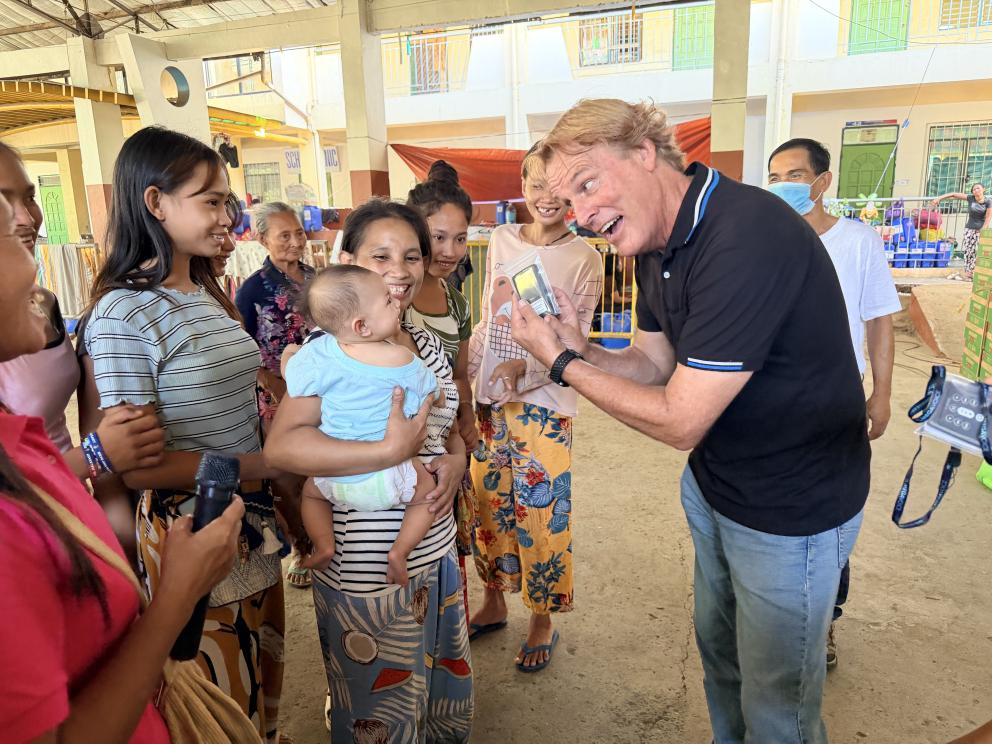
Rev. Kevin Keegan is the Asia-Pacific regional director for MegaVoice, which specializes in distributing solar-powered audio Bibles to remote and marginalized communities
Image
Photo:
MegaVoice
Would you share with us some barriers people face in trying to access life-giving message?
Rev. Keegan:Throughout Asia, Africa, and other parts of the world, I have encountered many barriers that prevent people from accessing God’s life-giving messages through His Word
Some barriers are related to literacy. Globally, more than 750 million adults have low or no literacy, making printed Scripture inaccessible for many. For example, in remote mountain communities in the Philippines, I met Indigenous church leaders who could not read a Bible, yet through oral Scripture and audio engagement they had memorised large portions of God’s Word and were planting churches among their own people
Other barriers are physical. I have met blind believers who first encountered Scripture through audio Bibles and who now serve as preachers, teachers, and leaders in church plants among blind communities. Without audio access, they would have remained dependent on others to access Scripture for them
Once in Indonesia I spent time with people affected by leprosy, where loss of sensation in the fingers made it difficult to hold or turn pages of a printed Bible. Yet I watched them confidently use audio Scripture devices, returning repeatedly to passages that brought comfort, strength, and hope
In Vietnam I witnessed barriers of hearing. Deaf communities remain among the most underserved globally. Through MegaVoice Visual Bibles in sign languages, Scripture becomes accessible in a fully visual form, allowing people to receive God’s Word in the language of identity and belonging – and allows them to communicate together
A personal example from closer to my home is the major barrier of ageing. In both remote regions and developed nations, many elderly people struggle with failing eyesight, reduced mobility, or dementia and Alzheimer’s disease. I have witnessed people become calmer and more settled when listening to familiar Scriptures and hymns. Anxiety often eases, agitation reduces, and moments of recognition return—sometimes expressed through singing, tears, or quiet joy
There are also barriers of language and culture. In the Indigenous tribal mountain regions of South-East Asia, I have heard repeated testimonies of people weeping when Scripture was first heard in their mother tongue—their heart language. They said it felt as though God was speaking directly to them, that He knew them now
Then there are barriers of geography, poverty, persecution, conflict, and even technology. More than 700 million people still lack electricity, and over 2 billion people remain without reliable internet or mobile data. While digital mission tools are expanding, vast numbers are still excluded
All these people are not unreached because God is silent. They are unreached because access is broken. MegaVoice exists to help overcome these barriers so that the Good News can be truly received
Would you share example of a solution that offers access?
Rev. Keegan: One powerful example of overcoming barriers to God’s Word, and the transformation it can bring, comes from Indigenous ministry among the Higaonon people in Northern Mindanao
Local ministers recognised that most adults had little or no formal education, making text-based discipleship ineffective. Rather than importing external models, they leaned into what was already embedded in the culture: oral storytelling
Together, partners, church-planting pastors, Indigenous leaders, and we at MegaVoice, listened carefully, prayed together, and worked side-by-side to understand how Scripture was already being communicated in these communities. Rather than arriving with a finished solution, we sought to discern what God was already doing among them
Out of this shared journey, an approach emerged based on Bible storytelling and audio Scripture in heart languages. People listen, retell, discuss, and reflect together—learning in ways that are natural to their culture and deeply rooted in their everyday life
The results have been significant: new churches have formed, Indigenous leaders have emerged, and Scripture is being carried within communities that were once considered hard to reach or unreached
MegaVoice supports this work through simple, durable, solar-powered audio Scripture devices designed for places where literacy, electricity, and connectivity are limited
That same commitment extends into prisons, refugee settlements, disaster zones, and trauma-affected communities, where access to Scripture is often fragile or entirely absent. In such contexts, audio Scripture devices often become more than aying Scripture, prayer, encouragement, and sometimes even counselling and trauma support content that helps people process grief, displacement, and fear
In these places, the Word of God is not abstract. It becomes survival, dignity, and presence
The deeper shift, however, is this: Scripture is not something simply delivered to people —it is something they receive, live, and pass on as their own
Please describe the transformation that happens when the spoken word becomes the language of the heart
Rev. Keegan: Our first experience of the world is oral. We hear before we read. We learn through voice, rhythm, story, and relationship. Language enters us first through sound and presence
This is why heart language matters so deeply. It is the language of memory, identity, and belonging. When Scripture is heard in that language, it is no longer distant or formal—it feels like home
But this is not only true for Indigenous communities
Even in highly literate societies, we recognise this experience. When we hear our own language—or even the accent of home—while far away, something in us responds immediately. We feel grounded. We feel known
Oral Scripture works in the same way. It reaches memory, imagination, and emotion. It allows Scripture not only to be studied, but to be encountered as a living voice
In this sense, oral engagement is not a lesser form for some people. It is a gift that can speak to all of us and, in a particular way, a gift often most clearly recognised among the poor
God’s concern for the marginalised, the poor, and the oppressed is seen throughout Scripture.
The Gospel consistently moves toward those on the edges—those who are overlooked, excluded, or left behind, speaking in their language to their hearts
Image
Photo:
MegaVoice
How has technology transformed access?
Rev. Keegan:Technology has transformed access to Scripture in extraordinary ways
Digital apps, streaming platforms, translation tools, teaching re, and grow in faith. For many, these tools are a great blessing
But more than 2 billion people still do not have access to reliable mobile data or the internet, and over 700 million live without electricity. Large parts of the world remain outside digital-first mission strategies
This is why so-called “older technologies” such as solar-powered audio Bibles remain essential. Advances in solar charging, battery life, and durability have made these devices smaller, stronger, and more reliable than ever
Even in wealthier nations, exclusion still exists. Many elderly people struggle with smartphones, apps, and fast-changing technology. Others are excluded by disability, cognitive decline, or digital complexity
While digital tools expand reach, they cannot be the only approach
MegaVoice seeks to hold both realities together so that no one is left behind—whether they are online or offline, connected or disconnected, digitally fluent or simply needing something simple and accessible to hear God’s Word
However, while technology is a wonderful servant, it is a poor master. The goal is never the app, platform, or device. The goal is people encountering the living Word of God
The church is called to use all available means so that Scripture is truly accessible to all people.
What is your hope for a world in which all people can encounter God’s word?
Rev. Keegan: My hope is shaped by Jesus’ words in John 10:10b — “I have come that they may have life, and have it to the full.”
This fullness of life is not only spiritual abundance in an abstract sense. It is also about justice, freedom, dignity, and the removal of barriers that prevent people from encountering truth. When people are excluded from God’s Word because of literacy, disability, language, poverty, geography, or age, they are also excluded from the fullness of understanding, belonging, and hope that Scripture brings
I long for a world where every person can encounter God’s Word without barriers
A world where blind believers hear Scripture and become teachers
Where deaf communities receive God’s Word in their own visual language
Where Indigenous communities hear Scripture in their heart language and know they are seen, known, and valued
Where elderly people rediscover peace through familiar hymns and Scripture that calm fear and awaken memory
Where those in prisons, refugee camps, and disaster zones receive hope, dignity, strength and peace through the living Word of God spoken into their suffering
In all of these contexts, the Gospel is not only heard—it is understood, received, and lived. And in that receiving, something of God’s justice becomes visible: that no human being is ever intended to be outside the reach of His voice
Would you like to share a final story?
Rev. Keegan:Along this journey, I have witnessed many remarkable stories, but some moments stay with me long after they have passed
Recently, in a remote community, a woman shared a story through tears. Her elderly father had never learned to read and, for most of his life, had shown little interest in faith. She loved him deeply and prayed for him often, but she struggled to know how to reach him
One day, she left her audio Bible playing quietly in their home, speaking God’s Word in his own heart language
At first, he paid little attention. But the words continued to fill the room
Over time, he began to listen.Then he began to listen more carefully
What started as background sound became something deeply personal. The Scriptures seemed to speak directly into his circumstances, his questions, and his heart
With emotion in her voice, she told me, “Now he listens every day.”
She does not yet know where his faith journey will ultimately lead. But she knows this: he is no longer distant. The God she loves and trusts is drawing him closer, one listening moment at a time
In that simple home, Scripture became far more than information. It became an encounter
My hope is simple—that every person, everywhere, would have the opportunity to encounter the living Word of God in a way they can receive, understand, and carry with them
Because when God’s Word is truly heard and understood, it becomes more than a message. It becomes hope. It becomes relationship. It becomes home
