

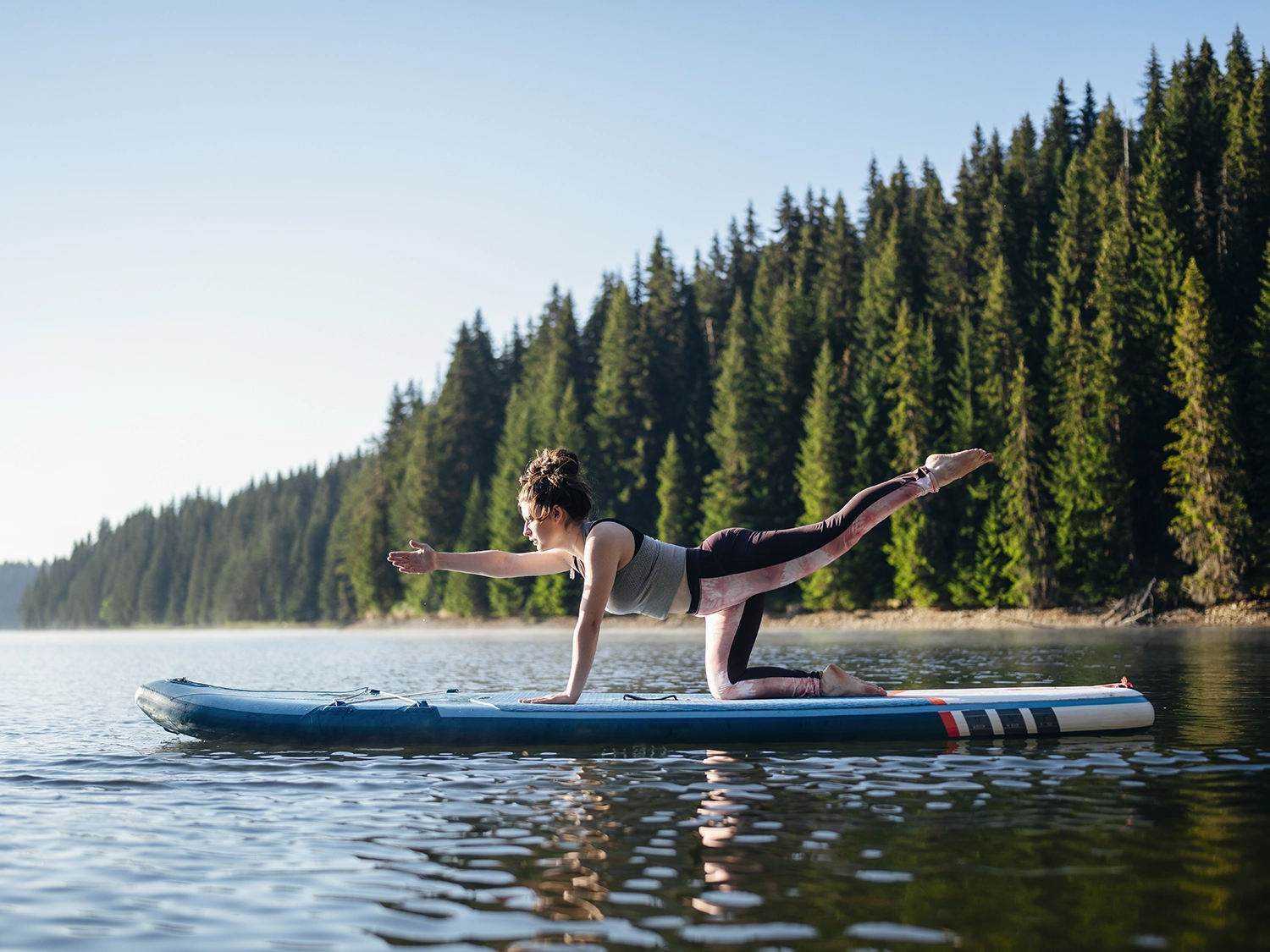
When temperatures soar, St. Louisans not only feel the physical effects. Summer weather can spike anxiety and irritability, too. Big Muddy Adventures offers a local opportunity to help cool tempers—not just temperatures—with paddleboard yoga, meditation, and sound healing on local lakes
The outfitter offers multiple weekly sessions at the Boathouse in Forest Park and at Simpson Lake in Valley Park. No previous paddleboard or yoga experience is necessary, but participants must register in advance
Your guide to a healthier, happier you
We will never send spam or annoying emails. Unsubscribe anytime.
This site is protected by reCAPTCHA and the Google Privacy Policy and Terms of Service apply.
Instructor Anthony Strauss of Yin Yang Yoga says he teaches newcomers how to easily balance on the paddleboard and has yet to see a participant fall
“I keep it slow and simple, and no one feels obligated to stand if they don’t want to,” he says. “We start with mindfulness, coming into the moment and focusing on the breath, feeling the sensations of the breeze and the water, and we go from there.”
Mandi Gray of Tranquil Growth Yoga & Breathwork takes a similar approach during her sessions
“Paddleboard yoga is fun, challenging, empowering, relaxing, meditative, and so much more,” she says. “Incorporating breath work into sessions is a lovely way to start the practice, giving students the ability to feel more grounded and regulated within their nervous systems. Once breath work is part of a practice, movements become more accessible and seem less intimidating.”
The physical and emotional benefits of yoga, meditation, and breath work are well known, and being on or near the water can amplify that sense of calm
“Muggy weather has a direct, measurable impact on our brains and bodies. When humidity spikes, it blocks our ability to sweat, which is our primary mechanism of cooling down. This can trigger a chain reaction of physical and psychological stress,” explains Dr. Vasilis Hristidis, a WashU Medicine psychiatrist
Heat and humidity can activate the body’s internal alarm system, flooding us with the stress hormone cortisol. They also affect the release of neurotransmitters that can increase arousal, disrupt the gut microbiome and cause mood-altering inflammation, and negatively affect sleep, he says
“There is a growing body of evidence suggesting that proximity to water (oceans, coasts, lakes, and rivers) is associated with improved psychological wellbeing and lower rates of depression and anxiety,” Hristidis says. “These are observations, but the field is starting to consider some plausible mechanisms for this benefit.”
One reason may be that people tend to be more active when they’re near the water, whether swimming, paddling, or snorkeling, and physical activity is known to improve mood. Another is what’s been called “blue mind,” a calming state many people report experiencing when they’re near water
“Yoga as a practice can have transformative results when practiced regularly. Breath work is paramount to include in any yoga practice as it can be used to regulate the nervous system, slowing down the fight, flight, and freeze response from our sympathetic nervous system,” Gray says
Hristidis agrees and notes that the physiologic sigh—a double inhalation followed by an extended exhalation—is particularly effective
Above all, “if you suspect you are struggling with a mental health concern, please reach out to a psychiatrist. Getting a professional assessment is the most important step toward feeling better,” Hristidis says
