

Texas Republicans offer early blueprint of plan to ‘stop Islam’
Published 5:42 am Sunday, August 9, 2026
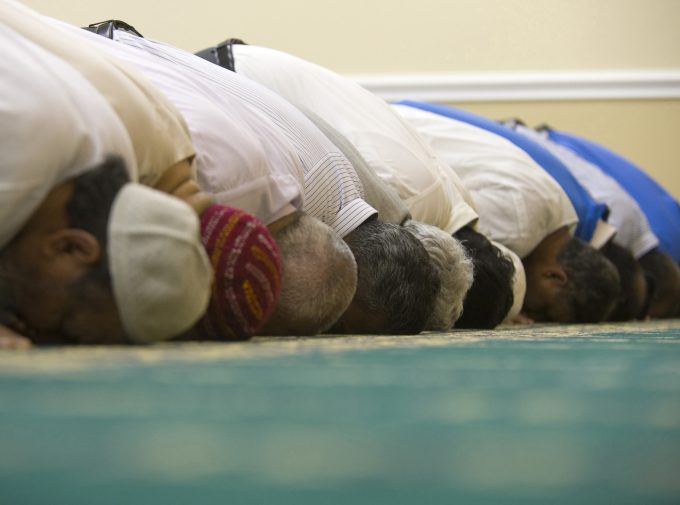
People pray in July 2012 at the Islamic Center of Longview. (Les Hassell/News-Journal File Photo)
A ban on the sale of halal foods. Hijabs forbidden in public schools. Required school lessons on the “violence and political domination of Islam.”
Some Texas Republicans have offered an early blueprint of a legislative agenda targeting the hundreds of thousands of Muslims in the state with new laws
The plan is part of a broader effort by Republicans to stop what they call the “Islamification of Texas,” which describes the perceived growth in Muslim influence and communities. Critics, however, called the plan an attack on freedom of speech and religion that has left Muslims and other non-Christians vulnerable to harassment and violence
At a conference this month hosted by the far-right grassroots organization True Texas Project, several Republican lawmakers and activists warned of a “Muslim invasion” that seeks to replace Christians across the country
State Sen. Bob Hall, an Edgewood Republican, called blocking Shariah, the code laid out in Muslim scriptures, the state’s top priority
Hall and others at the conference repeatedly echoed versions of the “great replacement” theory, in which white supremacists and Christian nationalists believe politicians are conspiring to replace white people with non-white immigrants
“It’s coming after us,” Hall warned the roughly 350 people attending. “We’ve got to get in the way of it, and we’ve got to stop it.”
About 2% of Texas adults describe themselves as Muslims, according to the Pew Research Center’s Religious Landscape Study. In comparison, 67% describe themselves as Christian. State Rep. Salman Bhojani, a Democrat who represents a swath of Tarrant County, said he is deeply troubled by the rise in Islamophobia and push by Texas lawmakers to target religious freedom. Bhojani, who was elected in 2022 as the first Muslim in the Texas House, said the attack feels personal
“Texas Muslims are not a threat to this state,” he said. “We are part of it. We built it. We serve in its military, run its businesses, teach its children. We deserve better than a blueprint that treats us like an enemy.”
At the recent conference, state Rep. Andy Hopper, a Republican who represents Wise County, detailed a slate of ideas he said lawmakers have discussed ahead of next year’s legislative session to make Muslims’ lives “miserable.”
“There are so many ways and opportunities we can take to make life difficult for people who should not be here and are trying to thwart our existence,” he said. “We have a lot of tools in the toolbox.”
In addition to the bans on Islamic dress and halal foods, proposals include ramping up financial and regulatory investigations of Muslim organizations, shuttering Islamic charter schools, denying state contracts to companies that employ H-1B visa holders, and refusing to issue professional licenses to Muslims. The latter could affect thousands of physicians and healthcare workers
Hopper also said lawmakers should define Islam as a political ideology rather than a religion so it can be banned, and the state should take control of immigration enforcement from the federal government so it can forcibly remove people
“How many of y’all want to bring back banishment as a form of punishment in Texas?” he said to applause
It is not clear how likely some of these bills are to pass or whether they could garner widespread Republican support
State Rep. Wes Virdell, a Kerrville Republican and member of the House “Sharia Free Texas” caucus, said he will not vote for measures that infringe on the First Amendment, but that he does support H-1B visa reform and rooting out fraud within the program
“My first priority is that we do not violate the First Amendment, and that we recognize liberty, something every Republican campaigns on,” he said. “We can still protect what makes America great by not allowing foreign law to take influence.”
No U.S. state has banned hijabs or other coverings, such as niqabs or burqas, but several European countries have enacted restrictions on the garments in public places
Halal foods, common in Texas grocers, are products prepared following Islamic dietary guidelines and can include the method of slaughter for animals
Law experts say many of the proposals mentioned at the conference would spark legal challenges and violate both state and federal free speech clauses
“Courts are reluctant to look at legislative motives, but this is egregious anti-Muslim hatred, stirred up for political reasons to appeal to the base,” said Douglas Laycock, an expert on religious liberty and the Alice McKean Young Regents Chair in Law at the University of Texas
To skirt concerns over religious freedom, Republicans said they have discussed defining Islam as a political ideology rather than faith
Such anti-Islamic rhetoric has long been common in fringe groups, but in recent years it has become a staple among mainstream Republicans and party leaders in Texas, including Gov. Greg Abbott and Attorney General Ken Paxton, who has filed numerous lawsuits against Islamic organizations
Bhojani, the Muslim state representative, said the proposals being floated “should chill every single Texan.”
“When sitting lawmakers discuss these ideas at an organized conference, it’s no longer fringe,” he said. “It’s the actual agenda.”
Islam is not the only religion facing opposition. In Frisco, Hindu residents have faced a flood of hatred online and at city council meetings, where speakers have railed against H-1B visas for foreign-born workers and the construction of new temples
A report earlier this year by the nonprofit Center for the Study of Organized Hate traced the current wave of Islaomophobia to Abbott, who retweeted a post by an anti-Muslim influencer last February that called the EPIC City development a “Sharia city.” Its report analyzed more than 1,000 social media posts and bills introduced in Congress
EPIC City, which is now called The Meadow, is a Muslim-centric development planned across 400 acres in Collin and Hunt counties, about 40 minutes northeast of downtown Dallas. The development, which has faced a slew of legal challenges, is expected to feature more than 1,000 homes, a K-12 faith-based school, a mosque, elderly and assisted living, apartments, retail shops and a community college and sports fields
After Abbott’s post, anti-Islamic rhetoric from influencers and lawmakers saturated social media, the center found. Many framed Muslims through the lens of terrorism and national security, calling for their deportation or denaturalization. Others labeled Islam as a “cancer” or “plague.”
The Council on American-Islamic Relations, a Muslim-rights nonprofit based in Washington, D.C., received 8,683 civil rights complaints last year, more than it has recorded any year since 1996, according to its most recent report. Its report called Texas a hotspot. (Abbott last year designated CAIR a foreign terrorist organization.)
This past week, a proposed mosque in McKinney drew steep opposition and impassioned pleas from dozens of residents to reject the plan. Council members ultimately passed the proposal to build the mosque, drawing scorn from some Republicans
Earlier this year, the Fort Worth school district reassigned a high school principal after a photo of her wearing a hijab ignited a flood of online hatred. Grand Prairie canceled a private party for Muslims at a city-owned water park after Abbott threatened to pull hundreds of thousands of dollars in state funding. Last September, Abbott signed a law banning Muslim residential property developments such as EPIC City. The project is now battling various legal challenges
In a statement to The Dallas Morning News, Abbott’s spokesman Andrew Mahaleris said the governor was proud to ban “Sharia compounds” last session and plans to sign into law a “complete ban on Sharia law in Texas” in 2027
“Sharia law has no place in Texas. Full stop,” Mahaleris said. “Texans are governed by Texas law alone. The Constitution protects freedom of religion, but it does not bless parallel legal systems that ignore the protections it guarantees.”
He did not respond to a direct question about whether Abbott would support specific bills banning Islamic dress and food
Lawmakers can begin pre-filing bills Nov. 9. The legislative session officially begins Jan. 12
