

Your browser does not support the audio element.
00:00
00:00
1.0x
00:00/00:00
–
+
KEY POINTS
- Super Bowl champion Steve Young said he’s discovered a pattern of fear that dates to childhood.
- Young said he laid awake nights worrying about his status with heaven, his family, his business.
- He told 10,107 students in Rexburg, Idaho, that fear-based thinking is transactional thinking.
- Young said entrusting God with his worries is not passivity: “I still work, I still pray, I still serve.”
Steve Young recently hit a new wall with his anxiety.
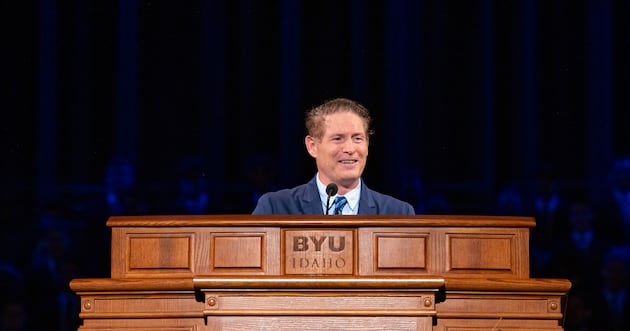
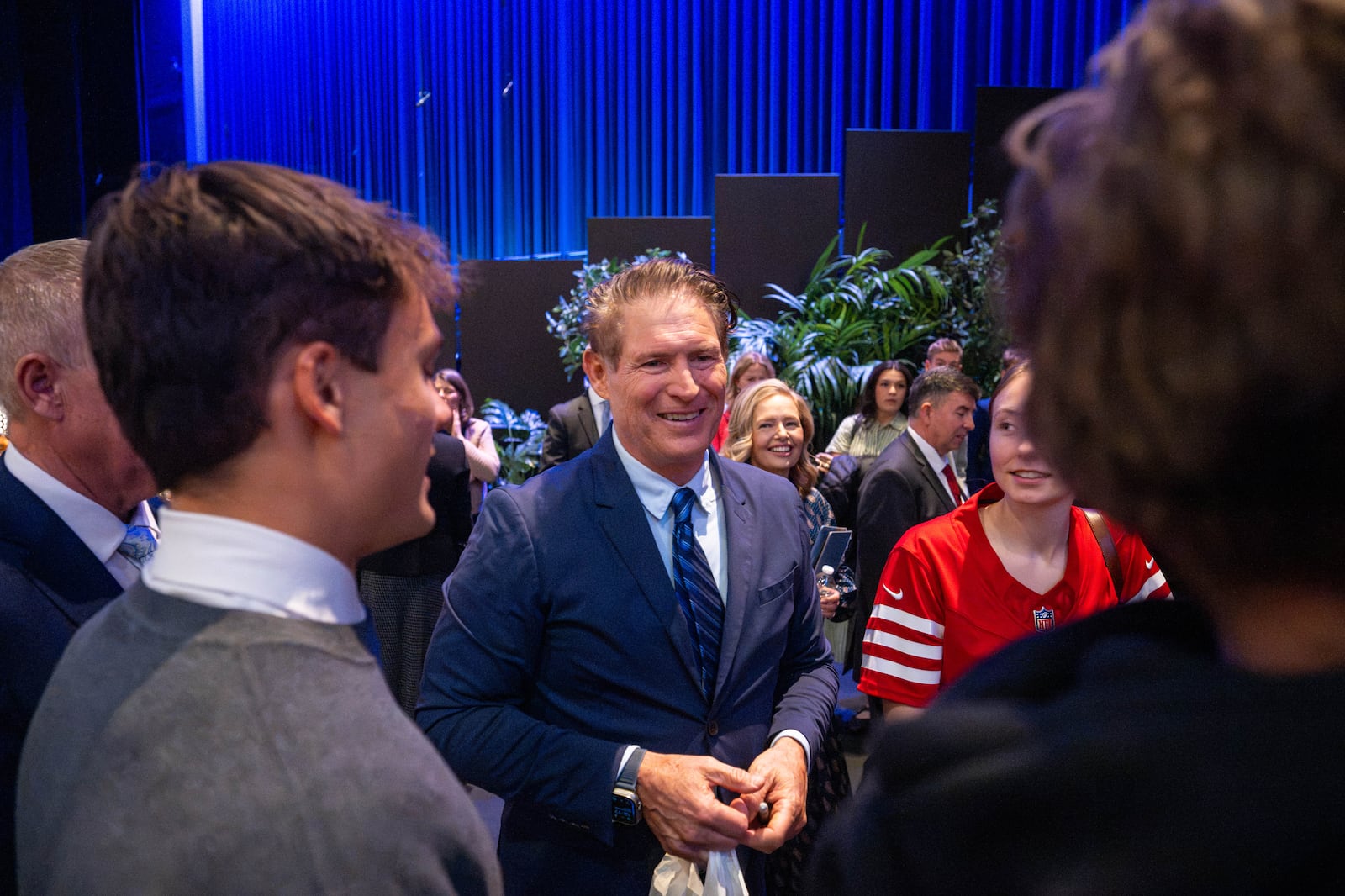
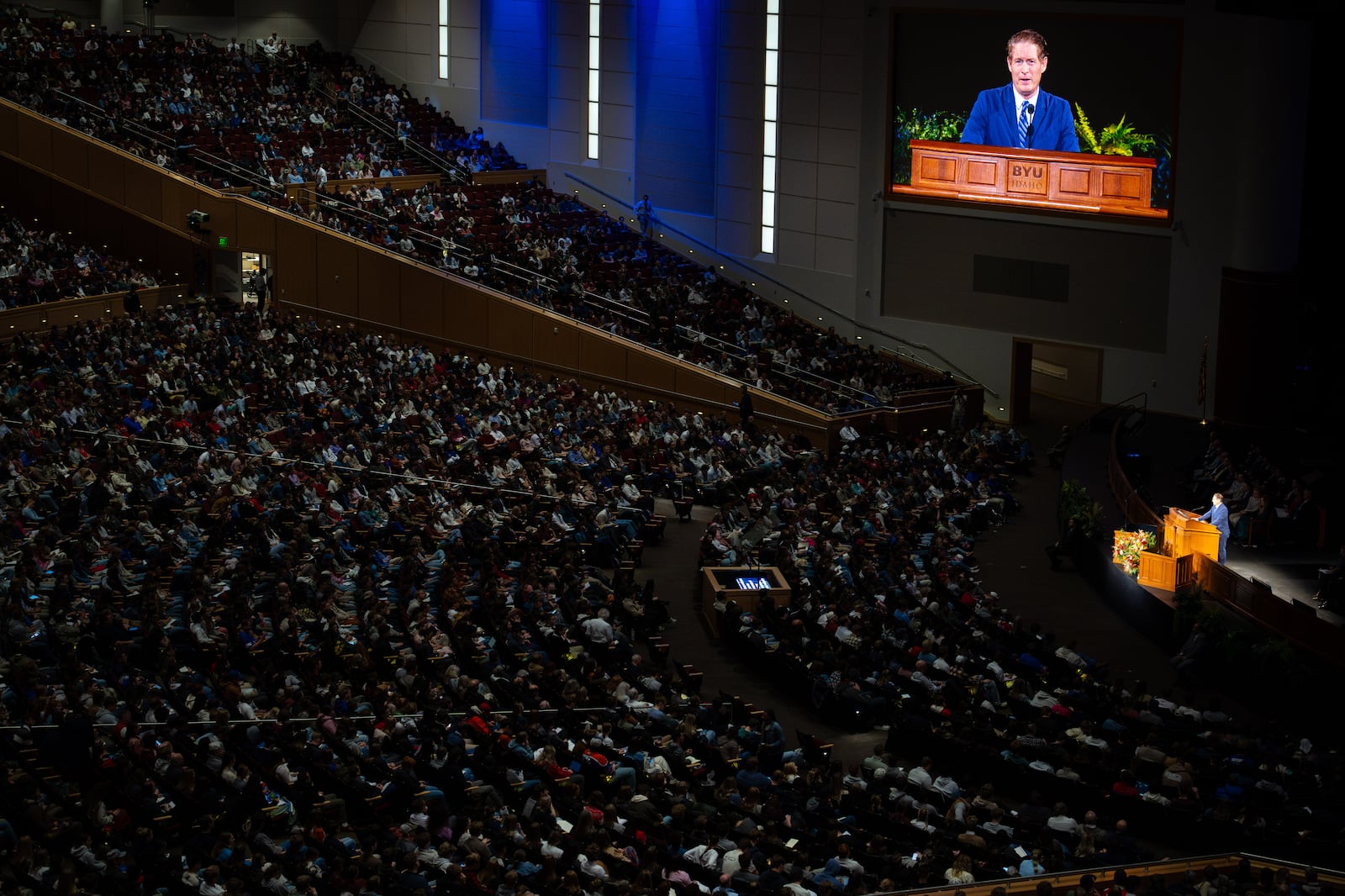
“A wave of anxiety came over me unlike anything I have experienced in my adult life,” the Super Bowl champion said Tuesday at a BYU-Idaho devotional in Rexburg, Idaho.
Young has openly shared the lifelong separation anxiety that stalked him even as he was winning two NFL MVP awards and playing so well that he retired with the highest quarterback rating in league history.
He chronicled the childhood fears, the throwing up before football games, the sleepless nights of worry in a book, “QB: My Life Behind the Spiral.”
The former San Francisco 49ers star thought he’d finally outgrown it all. Then it returned with a vengeance over the past year.
“This was deeper, and it caught me completely off guard,” he said.
The College Football Hall of Famer thought he’d set it all aside, but it had simply migrated within him.
The worst part may have been that while he had spent the past 15 years passionately asking others to follow Jesus Christ’s example of unconditional love, he was unwittingly stuck in exactly the kind of transactional mindset the former BYU star was asking others to fight.
“I tried to unravel it,” he said of his anxiety. “I sat with it, prayed through it. I talked to people that I trust. What I found shook me because it was not new. It was something old in me, a pattern I had carried since I was a little kid, hiding underneath everything that I had built.
“Growth was the offer. Opposition was the offer. The Atonement of Jesus Christ — the Savior’s power to transform every bruise and heartache into something purposeful — was the offer.”
— Steve Young
“Here’s what I discovered: The deepest transaction in my life was fear, and I had been living in it the whole time I was preaching against it.”
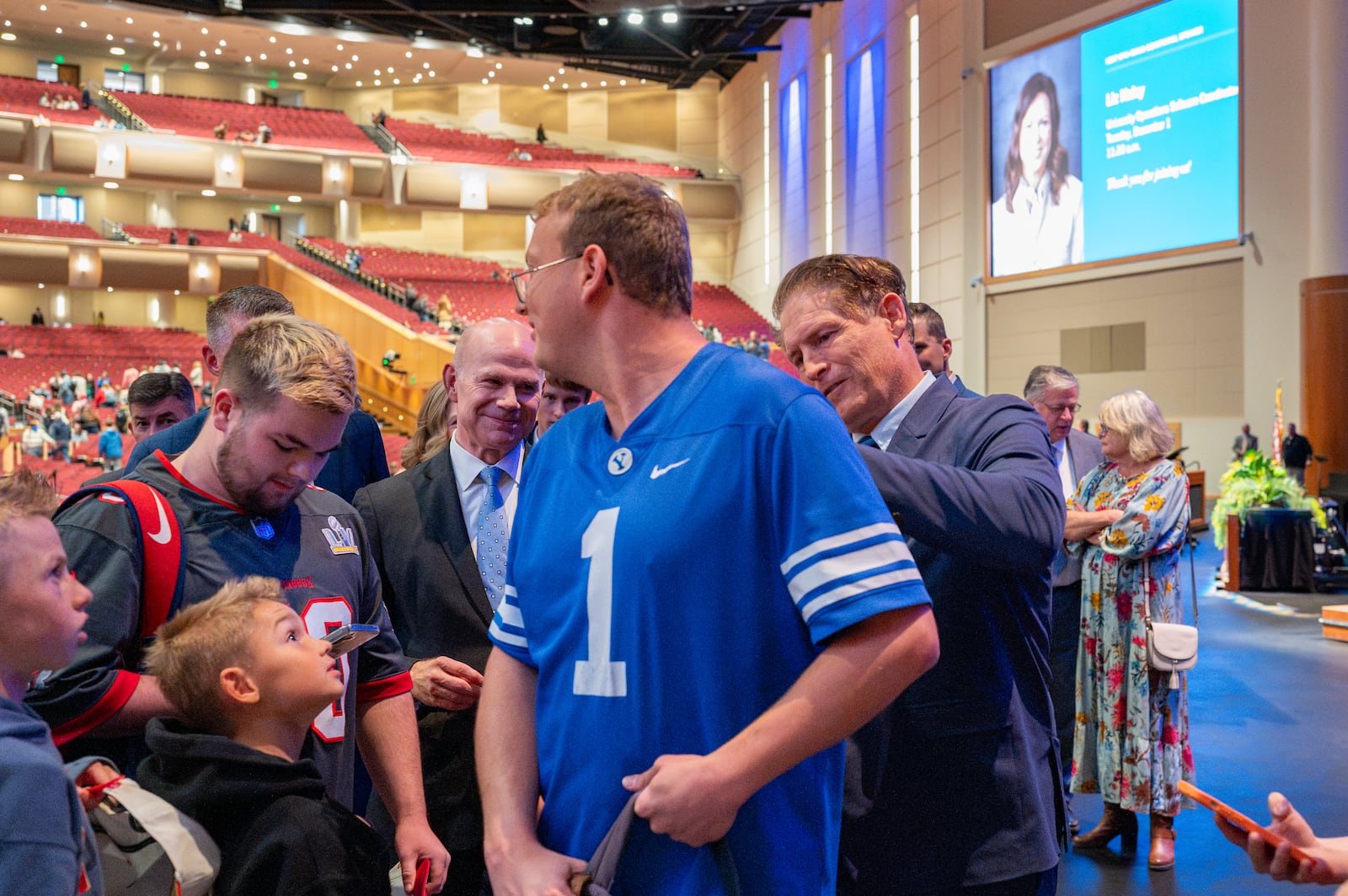
The 65-year-old Pro Football Hall of Famer is glad he unearthed the truth before he dies, he told 10,107 students assembled at the I Center and others watching online.
How fear and anxiety hid from Steve Young
“I found success using fear as fuel,” he said. “I won games, I built a career, but that pattern could not carry me the full distance.”
He did it based on a false belief, that worrying was caring.
After football ended, Young worried about his standing with heaven, about being a good member of The Church of Jesus Christ of Latter-day Saints, being a good son, husband and friend, and being successful in business, where he is the chair of HGGC, a private equity firm that manages over $10 billion in assets.
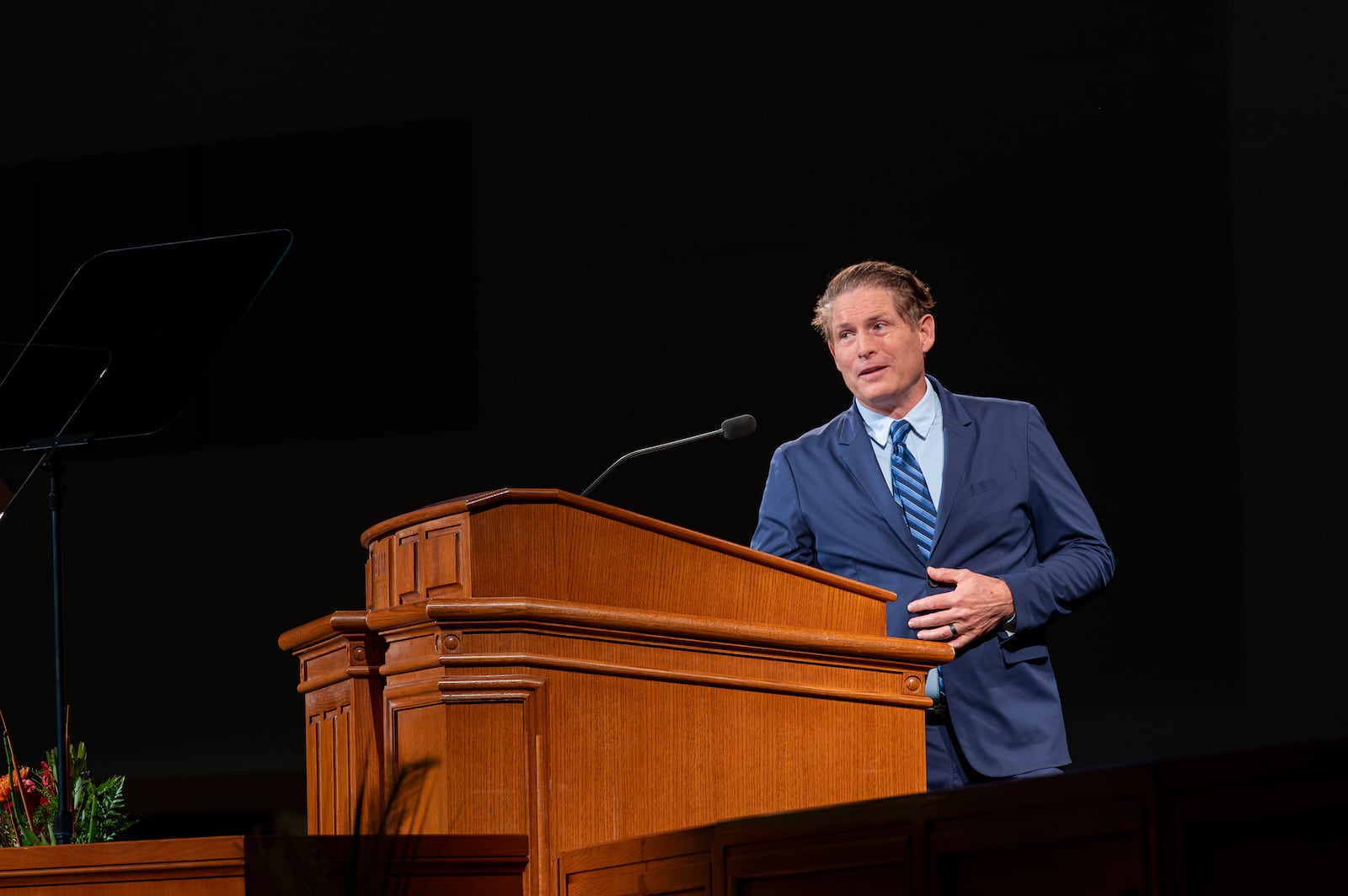
“These were honorable things to care about,” he said, “but I pursued them the way I had pursued safety as a kid — through vigilance, through worry, through the feeling that if I stayed anxious enough, I could make it happen.”
He finally realized that was a transaction, the same one he made as a child who wanted to be close to home. Only now it was dressed up in “grown-up clothes.”
Young said he actually believed that if he worried about something hard enough, he could control it. His mindset was, “If I stay vigilant enough, I will be safe.”
That was a fiction, he said in his 21-minute talk.
“That is magical thinking, and magical thinking, no matter how noble the goal, is a transaction,” he said. “This is the thing I had to sit with for a long time before I could say it out loud: Fear-based thinking is transactional thinking.”
Jesus Christ’s teaching to ‘fear not’ is not cheerleading
And transactional thinking is what he long has called “merit badge theology.” He has spoken against it in countless talks and two books — “The Law of Love” and “The Law of Love in Action.”
Of course, Jesus Christ frequently taught his followers to “fear not.”
“In fact, I think it’s what he talks about the most,” Young said. “I had always heard that as encouragement, like a coach telling you to toughen up.”
But Christ wasn’t cheerleading. He was teaching a fundamentally important doctrine about mindset, said the former BYU star.
“When Jesus says, ‘Fear not,’ he is not asking us to be braver,” Young said. “He is inviting us out of the transactional pattern.”
He said that fear-based anxiety doesn’t feel like a transaction. Lying awake at 2 a.m. running an internal audit feels like being responsible, like caring for others and protecting one’s family, but it carries a hidden bargain — that one’s anxiety is the price that must be paid to keep bad things at bay.
“The worry itself becomes the offering — my sleepless sacrifice on the altar of outcomes that I cannot control,” he said.
God offers growth, not a storm-free life
Young repeated the Book of Mormon doctrine that there is opposition in all things.
“Opposition is part of the design,” he said. “God created an environment for growth, not comfort.”
The scriptures promise safety in Christ, but that is not the same as a storm-free life, Young said.
“Safety from suffering was never the offer,” he said. “Safety in Christ through suffering is the whole promise. Safety doesn’t mean avoiding all of the hard things. It means experiencing them and still making your way through them, held by the one who walks with us.
Young said he has found a new, deeper peace in sacred surrender, a choice to give up the illusion of control “and trust Jesus Christ to carry what I cannot.”
He said his worry never held anything together. God did.
“It is letting go of the fiction that my vigilance stands between my family and disaster and trusting the Savior, who descended below all things to succor me and the people I love in ways my anxiety never could,” he said.
He is learning that this surrender is not passivity.
“For me, it is the most active, courageous choice I can make,” Young said. “I still work, I still pray, I still serve, but I do it from trust instead of fear. I’m not trying to earn safety anymore.”
He paused for a significant moment and admitted he is still working on that.
Shifting from fear to trust
His message to the students was to shift from fear to trust.
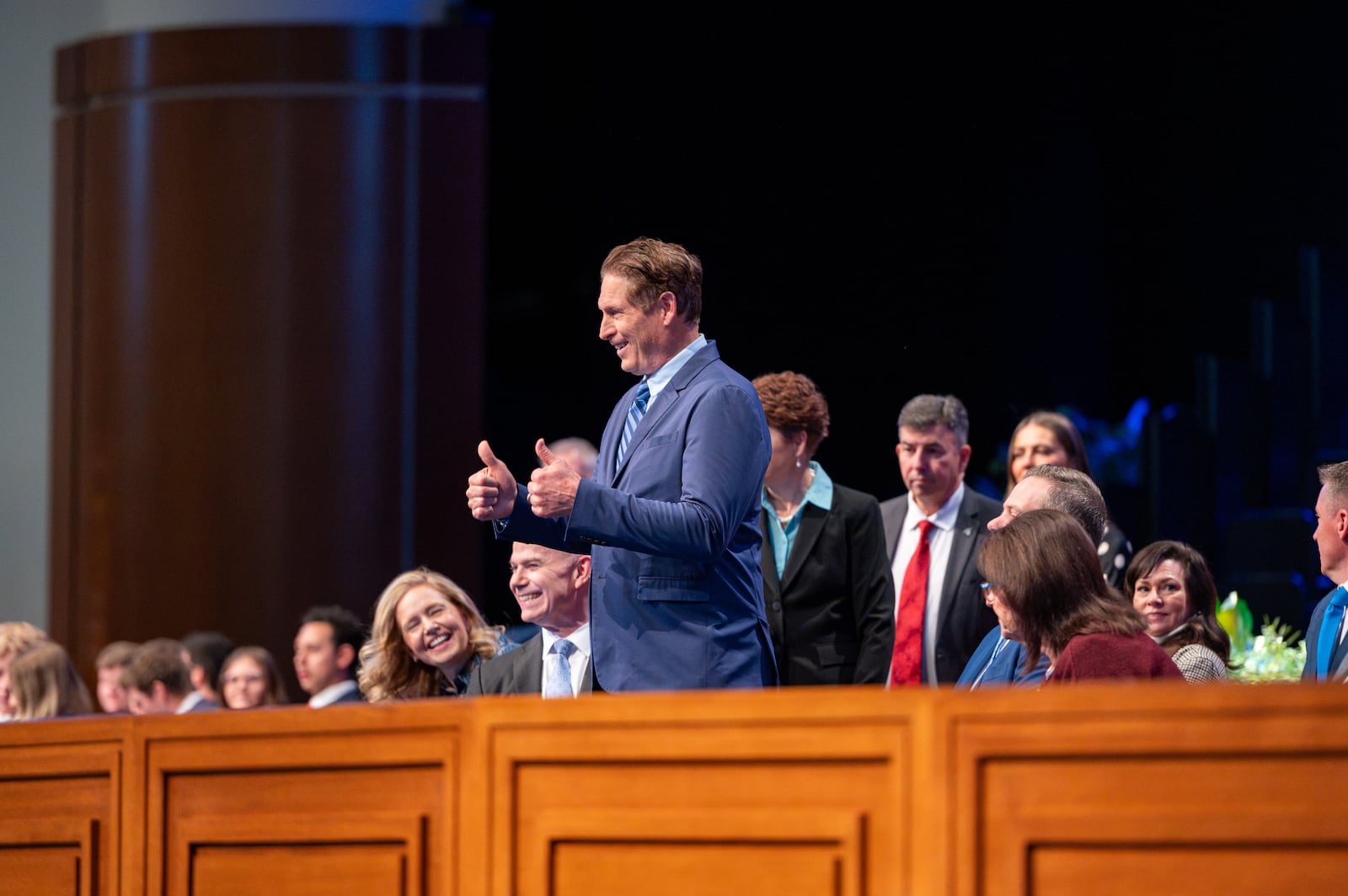
“Trust is where love leads,” he said. “I’m trying to bring healing,” he added.
The goal is to trust God and be loving in relationships.
“I’m not asking you to stop caring. Caring is love, and love is the whole point,” he said. “What I’m asking is this: Can you separate the caring from the magical thinking? Can you love someone fiercely without believing your anxiety is what keeps them afloat? Can you face a hard season fully engaged without the hidden belief that your worry earns God’s help?”
Love does not make a person naive, Young said.
“It connects you to a power that fear could never access — the Savior’s Atonement and Resurrection, and a God who has promised that all things can work together for your good,” he said.
He said surrendering fear has given him a peace he cannot fully describe.
“It is the peace Christ promised, and it is available to every one of us,” Young said.
“You can start today. You do not need a perfect understanding. You just need to be willing to name the fear, see the transaction hiding inside it and hand it to the Savior. He knows what to do with it. He always has.”

Source: www.deseret.com
