

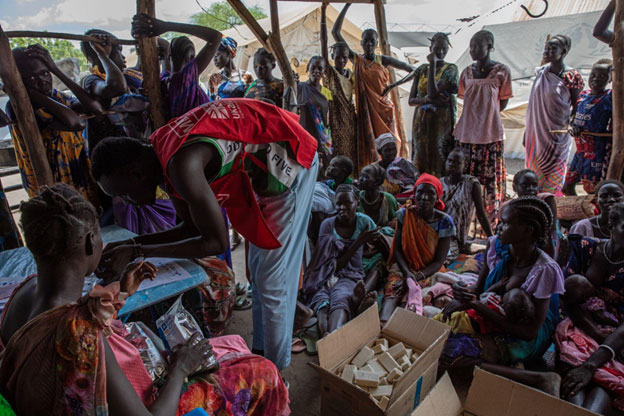
United Nations, May 1 (IPS) – In 2026, the humanitarian situation in South Sudan has worsened, with widespread food shortages, persistent disruptions to food production systems and rising rates of malnutrition affecting more than half the population. Due to the sheer scale of needs and severe lack of access to basic services, humanitarian experts have warned that hunger levels across the country are projected to worsen to catastrophic levels if urgent intervention is not ensured.
On 28 April, the United Nations Children’s Fund (UNICEF), the Food and Agriculture Organization (FAO), and the World Food Program (WFP) published a. joint statement Underscoring the escalation of the hunger crisis in South Sudan, noting that about 56 percent of the population, or about 7.8 million people, are projected to face acute food insecurity by July. They emphasize that the main drivers of food insecurity are climate shocks, floods, large-scale displacement and protracted armed conflicts, all of which hinder effective agricultural yields and reduce food availability for hundreds of thousands of families.
“Hunger in South Sudan is increasing, not plateauing,” said Ross Smith, WFP’s director of emergencies and preparedness. “Between April and July this year, more than half the population is projected to face crisis levels of hunger or worse, including people already living in devastating conditions, where starvation and the collapse of livelihoods are a daily reality. This is one of the highest proportions of any country’s population facing crisis levels of hunger today.”
latest figures The Integrated Food Security Classification (IPC) level shows that by the end of 2025, more than 280,000 additional citizens have been pushed into acute food insecurity, including 73,000 citizens facing catastrophic levels of hunger (IPC Level 5). This represents an increase of 160 percent from last year’s figures. An additional 2.5 million people face emergency levels of hunger (IPC Phase 4), and 5.3 million are reported to rely on unsustainable coping mechanisms to survive.
Children have been particularly badly affected, with UNICEF reporting that about 2.2 million children aged six months to five years suffer from severe malnutrition, an increase of more than 100,000 cases compared to the previous year. More than 700,000 children are projected to face highest levels of hunger by July. Approximately 1.2 million pregnant and lactating women are severely undernourished, which has dangerous, long-term consequences for both mothers and children.
“Every day of delay in humanitarian access and supply delivery is a day that a child’s life and future hangs in the balance,” said Lucia Elmi, UNICEF’s emergencies director. “We are calling on all parties to provide timely, safe access and scale up nutrition interventions to those affected by conflict, including in areas of displacement. We must act now if we are to save the lives of children.”
Large-scale displacement continues to hinder South Sudan’s recovery, with widespread insecurity, overcrowding and shortages of critical supplies in displacement shelters complicating humanitarian relief efforts. UN agencies say some 300,000 people have been displaced this year in Jonglei state alone, with many communities completely cut off from humanitarian aid. Many households report that they are unable to access food services due to rising prices, disrupted markets, and the economic downturn, which has significantly reduced household purchasing power.
Additionally, displaced communities are at increased risk of contracting infectious diseases due to persistent overcrowding and unsanitary conditions. The agencies reported a sharp increase in cholera, malaria and measles infections, especially among “vulnerable and already severely malnourished children”. Additionally, treatment of malnutrition has been severely compromised over the past several months, with a large portion of the country’s health care and nutrition assistance facilities damaged or completely closed due to the conflict. Life-saving medical interventions are largely unavailable due to continued shortages of medical supplies.
In April, the IPC conducted a detailed risk of famine analysis, assessing the hunger situation in seven counties to determine which areas were at higher risk of developing famine. The analysis identified four counties where famine is projected to occur in the coming months, a significant increase from only one county identified last year. The Upper Nile and Jonglei regions are particularly vulnerable, as the renewed escalation of armed hostilities has increased displacement and reduced humanitarian access to the communities most at risk.
The risks are particularly evident in Akobo, where the IPC is currently planning the return of more than 100,000 South Sudanese civilians displaced to Gambella and Ethiopia. This large-scale withdrawal could further exacerbate the hunger situation, as humanitarian and health care workers face severe shortages of supplies, funding and staffing to assist already stressed communities.
The IPC also warns that hunger could increase to catastrophic levels (IPC Phase 5) in the coming months in several areas, including Doma and Yomding in Ulong County; Pulturuk, Wat and Thol Lankien in Nyirol County; and Kuerenge and Mading in southern Nasir County. All of these areas remain largely inaccessible due to the ongoing conflict, with humanitarian access limited.
In response, the United Nations has called for an end to the isolation of these communities in relief efforts, stressing the urgent need for close monitoring and a strong humanitarian response.
“Now, more than ever, we cannot afford to lose the hard-won gains in recent years, especially as South Sudan works to strengthen its agri-food systems and builds on encouraging signs of local agricultural production,” said Rene Paulsen, FAO Director, Office of Emergencies and Resilience. “These gains remain highly vulnerable to conflict, insecurity and climate shocks – the same forces giving rise to today’s food crises. We must act urgently and collectively to protect livelihoods, sustain food production and prevent millions of people from falling prey to hunger.”
IPS UN Bureau Report
© Inter Press Service (20260501083736) – All rights reserved. Original source: Inter Press Service
