

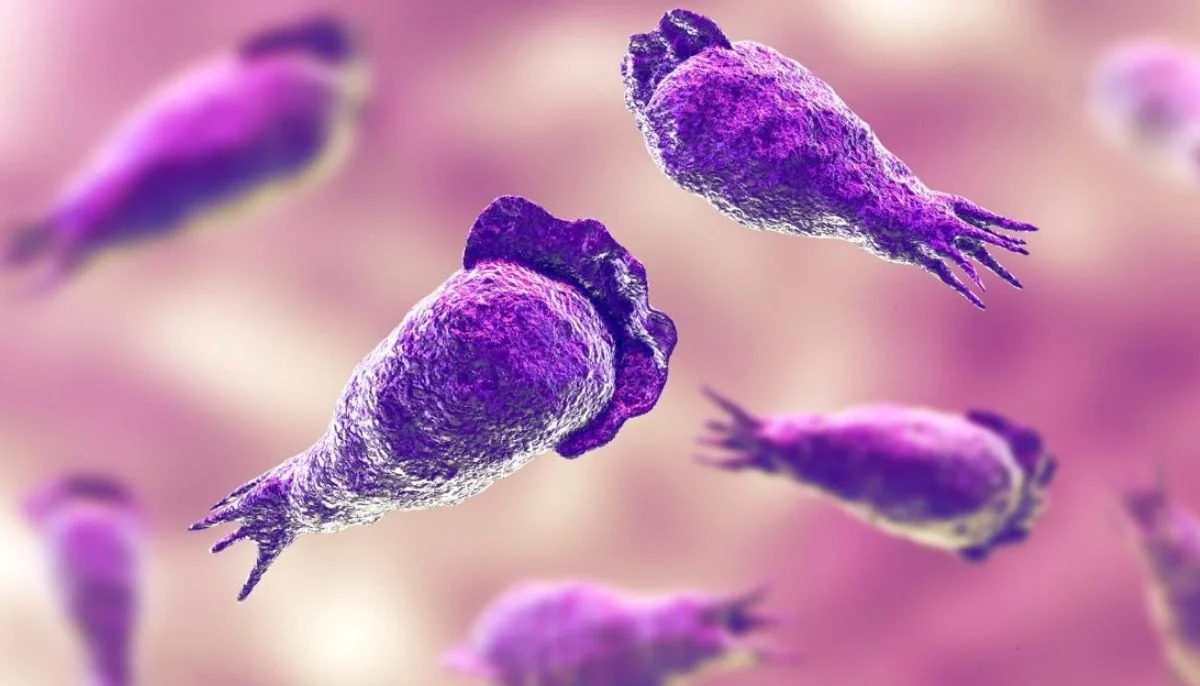
The global health landscape is often ruled by drug-resistant bacteria or super bugs. To someone’s dismay, another deadly threat is emerging in the form of “free-living amoeba”.
These organisms are microscopic in nature and thrive in soil and water, surviving disinfection processes such as chlorination. Most species are harmless and play important roles in natural ecosystems.
But some species can cause infections, which can prove fatal to humans. is the most notorious naegleria fowleriWhich travels through the nose to the brain, which almost always causes fatal infections.
What makes amoeba life-threatening, according to researchers, is their ability to withstand harsh conditions that can kill other microorganisms because they can tolerate high temperatures, strong disinfectants and can even live within water distribution systems that people consider safe, according to corresponding author Longfei Shu of Sun Yat Sen University.
Additionally, the amoeba acts as a “Trojan horse,” protecting harmful bacteria from water treatment and potentially promoting antibiotic resistance.
According to the researchers’ findings, rising temperatures and global warming are responsible for the spread of amoeba as many species thrive in warmer conditions. As a result, there is a real possibility that they may expand into new areas where they were once uncommon.
“Amoebas are not just a medical issue or an environmental issue. They sit at the intersection of both, and addressing them requires integrated solutions that protect public health,” Xu said.
Researchers are calling for a “One Health” approach to improve surveillance and upgrade water infrastructure to tackle this invisible threat. This approach will facilitate collaboration between experts from health, water management and environmental sciences.
