

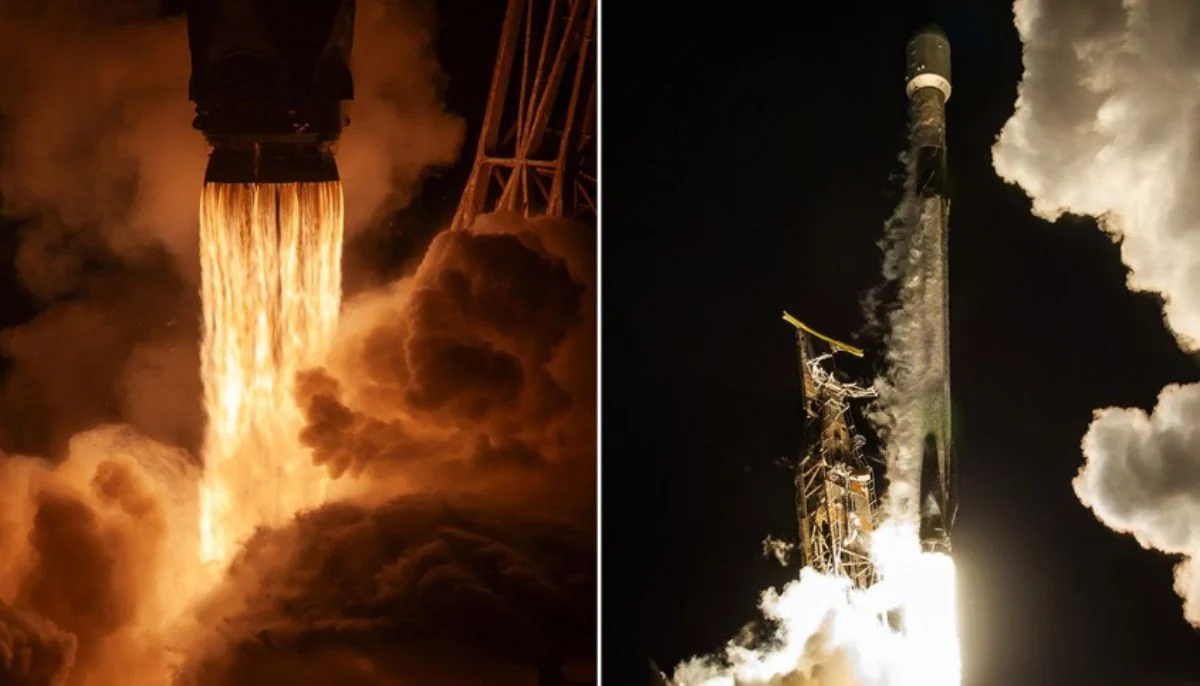
Foxconn recently announced on Sunday that its second generation of low-Earth orbit LEO satellites were launched from California via a SpaceX Falcon 9 rocket, marking the electronics maker’s latest foray into space technology.
It said the Taiwanese company’s PEARL-1A and PEARL-1B satellites have entered their intended orbits and will conduct in-orbit missions for five years.
Foxconn has said that both these satellites are designed to verify payload technologies in the fields of communications and space science.
These satellites operate by maintaining their presence in low Earth orbit, which refers to Earth’s central altitude of 2,000 km (about 1,200 miles) or less.
Low Earth Orbit (LEO) satellites operate at altitudes up to 2,000 km above Earth. They enable fast, low-latency communications and high-resolution Earth observations by operating in an area just above the Earth’s atmosphere, where they can maintain strong and stable connections.
These satellites often operate in interconnected constellations consisting of hundreds or even thousands of units to provide global coverage and such networks allow satellites to coordinate with each other; For example, if one satellite goes offline, others can take over its functions.
They can also send signals between satellites, ensuring uninterrupted service.
Major telecommunications and aerospace companies leveraging this technology include Starlink, Eutelsat OneWeb, Amazon and Telesat Lightspeed.
Additionally, Arianespace successfully deployed 32 satellites on an Ariane 6 rocket from Europe’s spaceport in French Guiana on April 30.
A few days ago, Project Kuiper crossed the 300 satellite mark after two launches in different continents within the same week.
The named missions marked a significant uptick in the company’s constellation deployments following the Atlas V launch earlier that week.
