

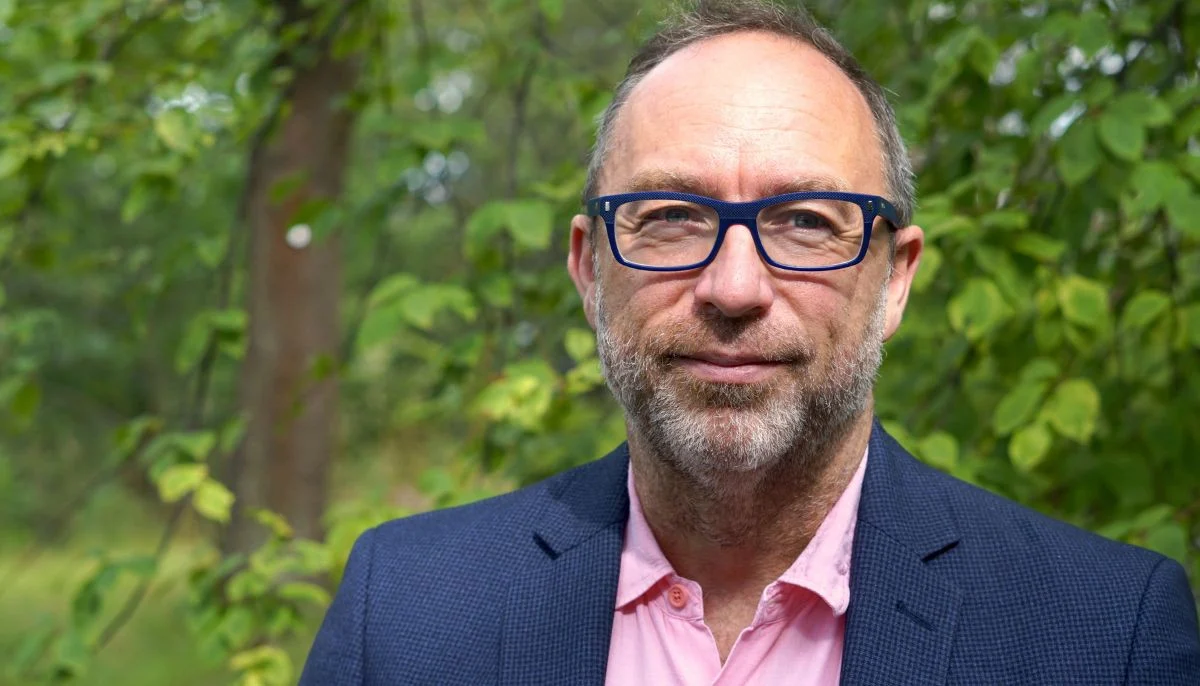
Wikipedia’s founder, Jimmy Wales, has called Australia’s ban on social media for people under 16 an “unmitigated disaster”, not because he defends social media platforms, but because of what he says the policy is teaching children to do.
In Wells’s view, age verification systems that require young people to turn on cameras or submit identification documents are normalizing surveillance behavior that will follow them into adulthood.
“It’s crazy and it’s really unsafe,” Wells told Guardian Australia during a visit to the country for the Writers Festival Tour. He cited gaming site Roblox, where children as young as five play, which recently introduced facial age verification that divides users into age group silos.
Their proposal is practical and ready to go; According to Wells, it’s easy to set up parental control settings for Android and Apple products, but it’s not common knowledge among parents.
He has called on governments to require retailers to sell phones pre-configured as child-safe devices, thereby placing the responsibility for safe defaults on the industry rather than individual families. “Why don’t we have a regulation requiring retailers to sell phones that are already configured as child phones?” He said.
He sees today’s ecosystem as one in which users are “just slaves on the owner’s property”, bound by terms of service decided from above, operated by nameless enforcers, and governed by software that rewards provocative posts.
Wells is currently touring Australia to promote his new book, “Seven Rules of Trust”, which explains how the principles that make collaborative editing possible on Wikipedia, including transparency, courtesy, and direct conversation, can help create a roadmap for overcoming political polarization.
He knows the history of the Internet well; Long before Wikipedia existed, and long before Twitter existed, there were Usenet message boards, which he recalls as “incredibly toxic”. He says that people never needed software to behave badly towards each other.
Wells sees the growing debate over the impact of social media on youth as a “moral panic” that has not been adequately investigated. The politicians and parents who are pushing for restrictions do not understand that they are making an implicit tradeoff between surveillance and censorship.
“Most people who are in favor of this kind of thing are not in favor of that surveillance state,” he said. “I just think they haven’t really thought about it.”
