

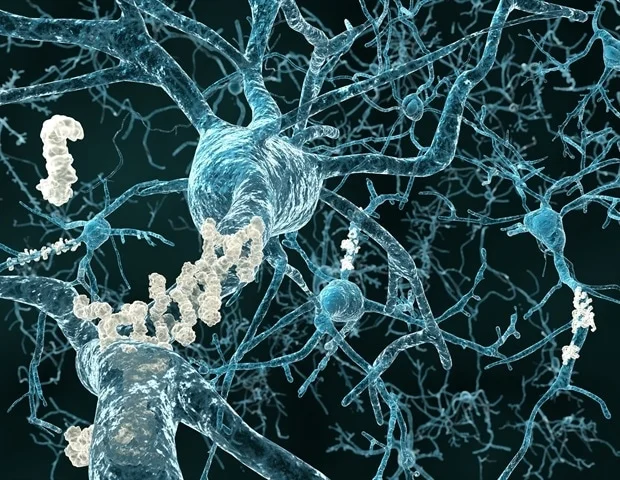
A new study suggests that symptoms of neurodegeneration in individuals with Down syndrome may begin as early as birth, a critical stage of brain development. Research from investigators at the Wiseman Center, University of Wisconsin–Madison, provides an atlas of early brain development in Down syndrome that may inform potential targeted therapies to address developmental and degenerative aspects of the condition.
Down syndrome, caused by an extra copy of the 21st chromosome, is the most common genetic cause of intellectual disability. Most individuals with the condition – more than 90 percent – develop Alzheimer’s disease in adulthood, but research shows that their brains begin to undergo neuroinflammation and neurodegeneration years before symptoms of dementia appear. The new study, published in ScienceTurns out this process begins as early as ages zero to three, and involves extensive regulation of genes.
Neuroinflammation is the activation of the immune response in the brain. Chronic inflammation can cause neurons to die, or degenerate, and this is a hallmark of neurodegenerative diseases such as Alzheimer’s.
“It was known that these neuroinflammatory processes could be seen in people in their early 20s, but we’re showing in our paper that at birth you can already see this very clear signature of neuroinflammation and neurodegeneration, while the brain is still developing,” he says.
Andre Sousa, assistant professor of neuroscience at UW–Madison and principal investigator of the study
Sousa and Wiseman’s colleagues are interested in understanding the molecular mechanisms that underlie early brain development that is disrupted in Down syndrome. The first few years of life are a critical period for neurodevelopment, with processes such as the maturation of brain cells and the formation of synapses – connections between neurons – at their peak. “If we can identify the processes that are disrupted[in this period]that will hopefully open the door to eventually trying to treat them,” Sousa says.
The focus of the study were cells in an area of the brain involved in cognition and working memory called the dorsolateral prefrontal cortex.
Looking inside the nuclei of these brain cells in individuals with Down syndrome, they found changes in gene expression that extended beyond the gene on the 21st chromosome. “Normally, when we think about Down syndrome, we focus on the gene in chromosome 21, because that chromosome is tripled,” says Ryan Rysgaard, a neuroscience graduate student in Sousa’s lab and the study’s first author. But they also found disruption in genes that are not located on chromosome 21. “I think it really expands our perspective beyond chromosome 21 to think about other pathways and other chromosomes,” Rysgaard says.
“The root is entirely in chromosome 21, but downstream, it affects many other chromosomes that we need to investigate,” explains Sousa.
A deeper look revealed that some of the genes dysregulated in Down syndrome are involved in metabolism, inflammation, cell death and aging. Specifically, these genes appeared to be more active than normal. “I think there’s a cycle of neuroinflammation, altered metabolism, and apoptosis (cell death) that all come together to create a nasty mix,” Sousa says.
On the other hand, they found that genes important for cell maturation and communication were less expressed in individuals with Down syndrome than in controls.
After identifying patterns of gene dysregulation, they began to identify specific types of cells that were affected through neurodevelopment. Most notable were glial cells, brain cells that provide support to neurons. All three types of glial cells – oligodendrocytes, astrocytes and microglia – showed pro-inflammatory patterns, including cross-talk between them that creates a loop of neuroinflammation.
“The neuroinflammation is very severe at this point,” says Risgaard. Many neuron-to-neuron connections are forming during this early postnatal period. He explains that inflammation can affect the way these synapses form and break down. “And of course, chronic neuroinflammation at this onset leads to all kinds of neurodegenerative problems,” Sousa says.
These results open the door to future research into the root cause of this inflammation, and the Sousa lab is already looking into this. “We don’t know yet whether the first signal comes from microglia or from astrocytes or from neurons,” says Sousa. “What’s the first trigger? We still need to work on that.” Sousa mentions that this signal is probably occurring in utero.
Identifying the early neuropathology of Down syndrome may lead to specific therapeutic targets against neuroinflammation and neurodegeneration. “We are really hoping that our study will serve as a starting point for other important studies in the Down syndrome field,” says Rysgaard.
