

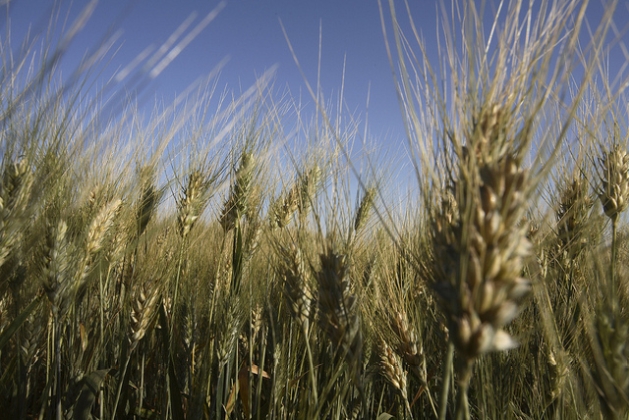
Rome, April 17 (IPS) – The headlines about food prices are wrong — but they’re right to be scared, very scared. Walk into a supermarket in Chicago, Berlin, or Mumbai today, and you won’t find shelves empty or prices dramatically higher than last month. Despite several weeks of worrying headlines about commodity markets, food inflation in most major economies has risen only modestly – by one-tenth or two-tenths of a percentage point between February and March this year. In the United States, food inflation rose to 3.1 percent from about 2.9 percent. In Germany from 0.8 to 0.9. In India from 7.8 to 8.0.
This is not a crisis at the checkout counter. not yet.
But here’s what the headlines are getting wrong, and what they’re getting terrifyingly right at the same time: The stagnation you’re seeing today is real, and it’s also beside the point. What is coming – if the world does not act quickly and maintain the ceasefire – will be a food price shock of a different order, which will hit not in March but in the markets for the late 2026 crops and 2027 crops.
To understand why, you must first understand what commodity price indices actually measure and what they do not measure. The FAO food price index – which rose slightly in March, driven mainly by vegetable oil and sugar amid higher crude prices – tracks the international price of raw agricultural commodities: wheat, corn, rice, oilseeds, dairy.
It doesn’t keep track of how much you pay for a baguette or a box of pasta. By the time wheat becomes bread, the grain represents only 10 to 15 percent of the final retail value. The rest is energy, labor, processing, packaging, logistics and retail margins.
This cost structure is the reason grocery bills don’t go up when commodity markets fluctuate. This is why current peace is not a reliable indicator of future stability, especially due to the significant share of energy costs.
The markets of major grains are currently sending reassuring signals. Wheat and corn prices remain stable. Rice prices actually declined. Global grain stocks remain high, and markets are correctly reflecting ample near-term availability. If you are reading commodity price movements as evidence that the Strait of Hormuz has been closed without consequences, you are reading the right data for the wrong time horizon.
The strait carries about 35% of crude oil exports – but its disruption reaches agri-food systems through less obvious channels, the logistics and energy costs for food processing. In addition, the strait contains 20% natural gas that cannot be replaced from any other source, and which is essential for nitrogen fertilization (especially urea), accounting for 20–30% of fertilizer exports depending on the specific type and a major input to produce about 50% of sulfur phosphate fertilizer. All this is still not reflected in this month’s price index.
According to an FAO analysis, the closure of the Strait of Hormuz has blocked 30 to 35 percent of global urea trade. Urea prices have already jumped by 40 to 60 percent. The feedstock that makes nitrogen fertilization possible – natural gas – has increased in price by 70 to 90 percent. Brent crude is up 60 percent just before the fire stops.
These are not abstract figures. These are the inputs farmers in the United States, Europe, South Asia and throughout the Northern Hemisphere are facing right now, as the planting season is either beginning or approaching.
The decision they face is not a comfortable one: pay double for fertilizer when commodity prices are already low, and hope prices will recover, or cut application rates and accept lower yields. Some will turn to nitrogen-fixing crops like soybeans. Others will turn to crops destined for biofuel production, further reducing the food supply.
The results of those decisions won’t appear on store shelves until the harvest arrives, or the market decides to incorporate them into future prices. When they do, the combination of disrupted yields, increased energy costs running through every link of the supply chain, and ongoing trade disruptions will drive commodity prices higher, and food prices even higher due to additional energy cost increases – not by a tenth of a point per month, but meaningfully, which will be felt most acutely by those households who can least afford it.
Short-term stability is not medium or long-term security. The time between fertilizer shock and crop failure is measured in months. The time between crop failure and food price increases is measured in months. We are already inside that window.
The world’s reaction cannot wait for the price index to confirm what agricultural science and economic data are already making clear.
Governments, development institutions and the private sector must act now on three fronts: ensuring fertilizer access for small farmers and countries dependent on inputs and food imports, before their planting decisions become irreversible; Securing and diversifying trade routes so that disruption at one chokepoint does not become a global supply crisis; Avoid export restrictions on fertilizers and energy products and pursue diplomatic solutions that are currently within reach.
The shelves of supermarkets and retail stores are packed to the brim. The silos are full. And the window to keep them that way is closing.
So keeping the Strait of Hormuz open is not just about preventing food inflation – it is about preventing a broader rise in overall inflation that would directly undermine economic growth, while also protecting every other sector dependent on energy and input prices flowing through this strategic chokepoint.
© Inter Press Service (20260417120633) – All rights reserved. Original source: Inter Press Service
