

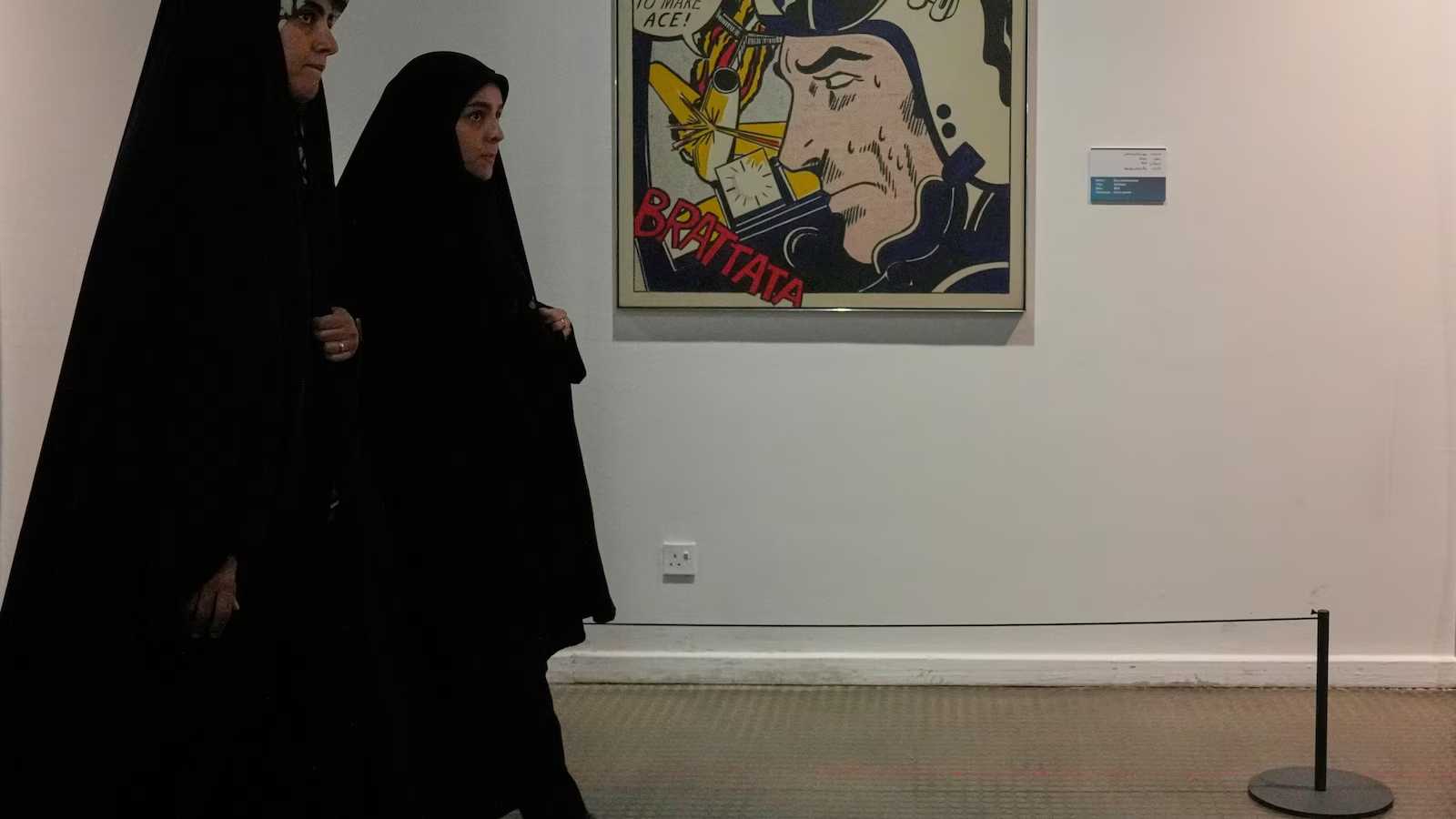
Tehran, Iran — The artworks are distinctly American – famous creations in vivid colors with themes of war, violence, pop culture and commercialism. What is shocking is where they are displayed: in a museum in the Iranian capital, at a time when the two countries are embroiled in conflict.
While the city’s streets are littered with anti-American billboards and posters, Tehran’s Museum of Contemporary Art this week opened an exhibition of six works by three American pop artists of the 1960s – Roy Lichtenstein, Robert Indiana and James Rosenquist – chosen primarily for their anti-war themes.
The works come from the museum’s large collection of masterpieces of American and European modern art that was acquired by the former Shah’s wife in the 1970s. Much of it has been kept out of view since the 1979 Islamic revolution ousted the Western-backed monarch.
After living under American-Israeli bombardment for weeks, the young men and women strolling through the gallery felt the resonance of the works.
Some considered Rosenquist’s “F-111”, a collage of the era of the American bombing of Vietnam that criticizes America’s military-industrial complex with images of a warplane’s torso, a nuclear mushroom cloud and a child’s face.
Nearby was “Bratata,” one of Lichtenstein’s signature paintings based on a comic book panel, of a fighter pilot shooting down an enemy plane.
“American artists have always had an interesting way of ridiculing war, and that’s always attracted me to their work,” said Ghazaleh Jahanbin, a Tehran artist visiting the show. “Maybe part of it, I don’t know, comes from their geographic distance from the war.”
Reza Dabirinjad, head of the museum, said the museum wanted the exhibition, titled “Art and War”, to respond to “the events happening around it”. So it selected pieces “that were either shaped by war experience or were created as reactions to wars,” he told Iran’s semi-official ISNA news agency. The museum is run by the government and comes under the jurisdiction of the Ministry of Culture.
The museum’s collection has a storied history. The government of Shah Mohammad Reza Pahlavi built the museum and purchased treasures of Cubist, Surrealist, Impressionist, Abstract and Pop art in the 1970s, when rising oil prices were filling Iran’s coffers and the country was America’s closest ally in the region.
The Shah’s wife, former Empress Farah Pahlavi, extensively selected works by artists ranging from Pablo Picasso and Vincent Van Gogh to Mark Rothko, Francis Bacon and David Hockney.
But just two years after the museum opened, the Shah was overthrown and religious rule was established by Shia clerics. The collection was kept untouched for decades in a museum vault to avoid giving the impression of offending Islamic values or catering to Western sensibilities.
Since 2012, the museum has occasionally taken out some pieces for temporary display. It is believed that this collection is worth several billion dollars. Despite Iran being short on cash under Western sanctions, museum officials have ensured that the collection is not sold. In 1994, Iran traded a Willem de Kooning painting from the collection for a prized manuscript of the Persian epic Shahnameh, or Book of Kings, from an American foundation.
Museums and many other cultural activities have been closed in Iran during the current war. The unstable ceasefire that has been in place since the beginning of April has allowed for reopenings, although Dabirinzhad said only a few pieces were put on display and the works had to be moved back into secure storage in case the war resumed.
For Iranian art lovers, the reopening brought a reprieve from the anxiety of war and a chance to reconnect with culture.
“It was a huge thing to happen. I was talking with my friends a few weeks ago and everyone was talking about how much they missed seeing the museum,” Jahnbin said.
There remains a fear that war may break out again. Iran and the US remain locked in a military standoff, with Iran sealing off the Strait of Hormuz and the US blocking Iranian ports as they tussle over talks for a resolution.
Mohammad Sadegh Abbasi, one of the visitors who observed the exhibition, said, “This state of indecision leaves you stunned and confused, everything is up in the air.” “I hope everything will be fine soon and we will have a safe and peaceful life.”
He said, “Some of the works remind me of scenes I saw (during the war).”
The six works will remain on display until May 10, but the director said that each week new works related to the theme will be brought out of the collection for display.
