

Democrats approved a new congressional map in Virginia on Tuesday, the latest skirmish in the redistricting arms race that will help determine which party wins control of Congress in the midterm elections.
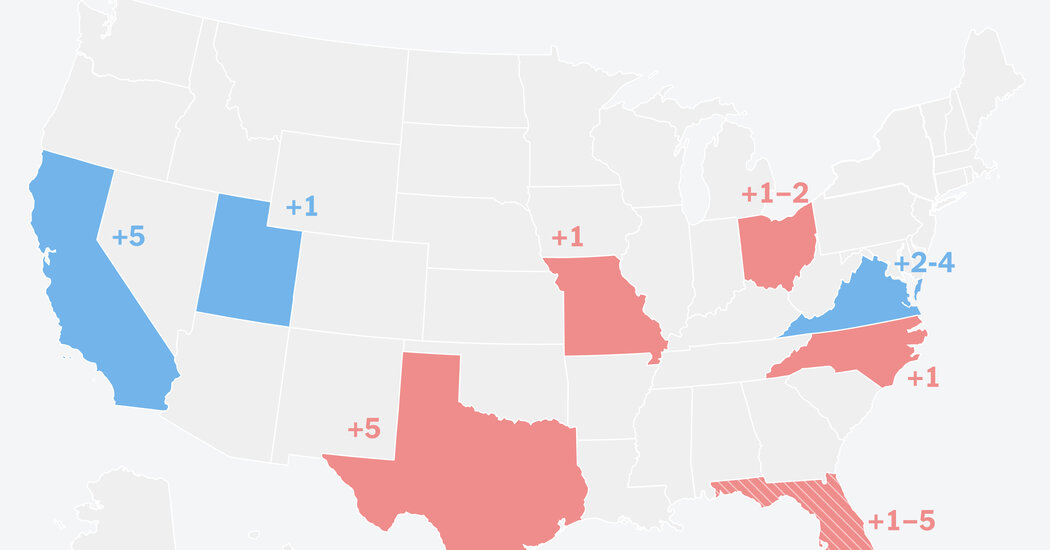
Leading up to the Virginia vote, Republicans had gained a large share of newly drawn Republican seats through gerrymandering in Texas, North Carolina, Missouri, and Ohio. Democrats in California countered with a gerrymander of their own, and Utah’s courts gave Democrats an unexpected new district in the deep red western state.
This means that as of Tuesday night, there were eight to nine new Republican-leaning districts, and six new Democratic-leaning districts, giving Republicans a two to three seat lead.
But that advantage could be erased if Virginia approves its new map, creating four new Democratic-leaning seats. This leaves the national redistricting war roughly tied, with Democrats currently holding a small advantage. But if Florida opts for redistricting (as Governor Ron DeSantis has said it will) Republicans could gain a slight edge.
The gerrymandering drama is hanging in the Supreme Court over a key provision in the Voting Rights Act. the court could rule in the next few weeks and eliminate a part of the civil rights law that effectively bans racial gerrymandering. If that happens, several Republican states, primarily in the South, will have the opportunity to push for new maps before the midterms.
Any slight lead in November could be crucial for either party. Campaigning in swing congressional districts can cost millions of dollars, and Republicans control the House of Representatives by only a handful of seats.
