

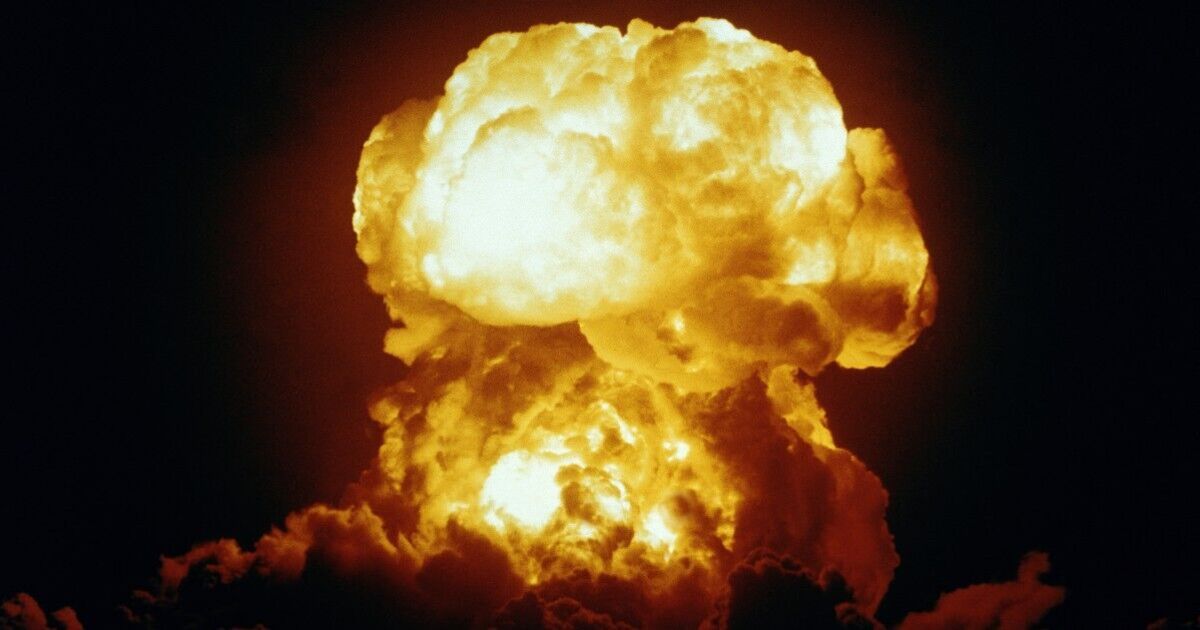
The world may be on the brink of nuclear disaster as the United Nations begins planning for radiation leakage caused by conflict between Israel, the United States and Iran in the Middle East. It is reported that the World Health Organization (WHO) is already monitoring the possible fallout from US-Israeli air strikes on Iranian nuclear sites.
Both Iran and Russia allege that a projectile fell on the grounds of the Bushehr nuclear power plant in the Islamic republic, raising fears of a radiological incident as Tehran’s war with Israel and the United States rages. And although there were no reports of the release of nuclear material following Tuesday evening’s incident, it again underlined a long-standing concern of Iran’s neighbors – that the power plant on the Persian Gulf coast could be affected by an attack or a natural disaster such as an earthquake.
“The worst-case scenario is a nuclear incident, and that’s the thing that worries us the most,” WHO Director Hanan Balki told POLITICO.
He further said: “As much as we prepare, there is nothing that can stop the damage to come… The path to the region – and globally if it ultimately happens – and the consequences will last for decades.”
The Atomic Energy Organization of Iran later issued a statement saying, “There was no financial, technical or human damage and no part of the plant was damaged.” Tass later reported that Iran blamed the US and Israel for the incident.
But Rafael Mariano Grossi, head of the UN’s International Atomic Energy Agency (IAEA), told reporters in Washington that “any attack on any nuclear facility must always be avoided”.
The IAEA has restricted its inspections of Iran following years of tensions over Tehran’s program after Trump unilaterally withdrew the US from the 2015 nuclear deal with world powers.
Bushehr, as an operational, civilian nuclear power plant, was left untouched during the 12-day war between Israel and Iran in June last year.
During that war, the US bombed three Iranian nuclear enrichment sites, destroying centrifuges and possibly trapping 60% of Tehran’s underground reserves of highly enriched uranium. Since then, Iran has blocked IAEA inspectors from visiting those sites.
A possible attack on a nuclear power plant could result in leakage of radiation into the environment. This has been a major concern in the years since Russia launched a full-scale invasion of Ukraine in 2022. Nuclear plants in Ukraine, when the country was part of the Soviet Union, have come under attack and they have found themselves on the front lines of that war.
A radiation leak in the Persian Gulf would be an existential crisis for the Gulf Arab states, which depend on desalination plants in the Gulf for their water supplies.
