

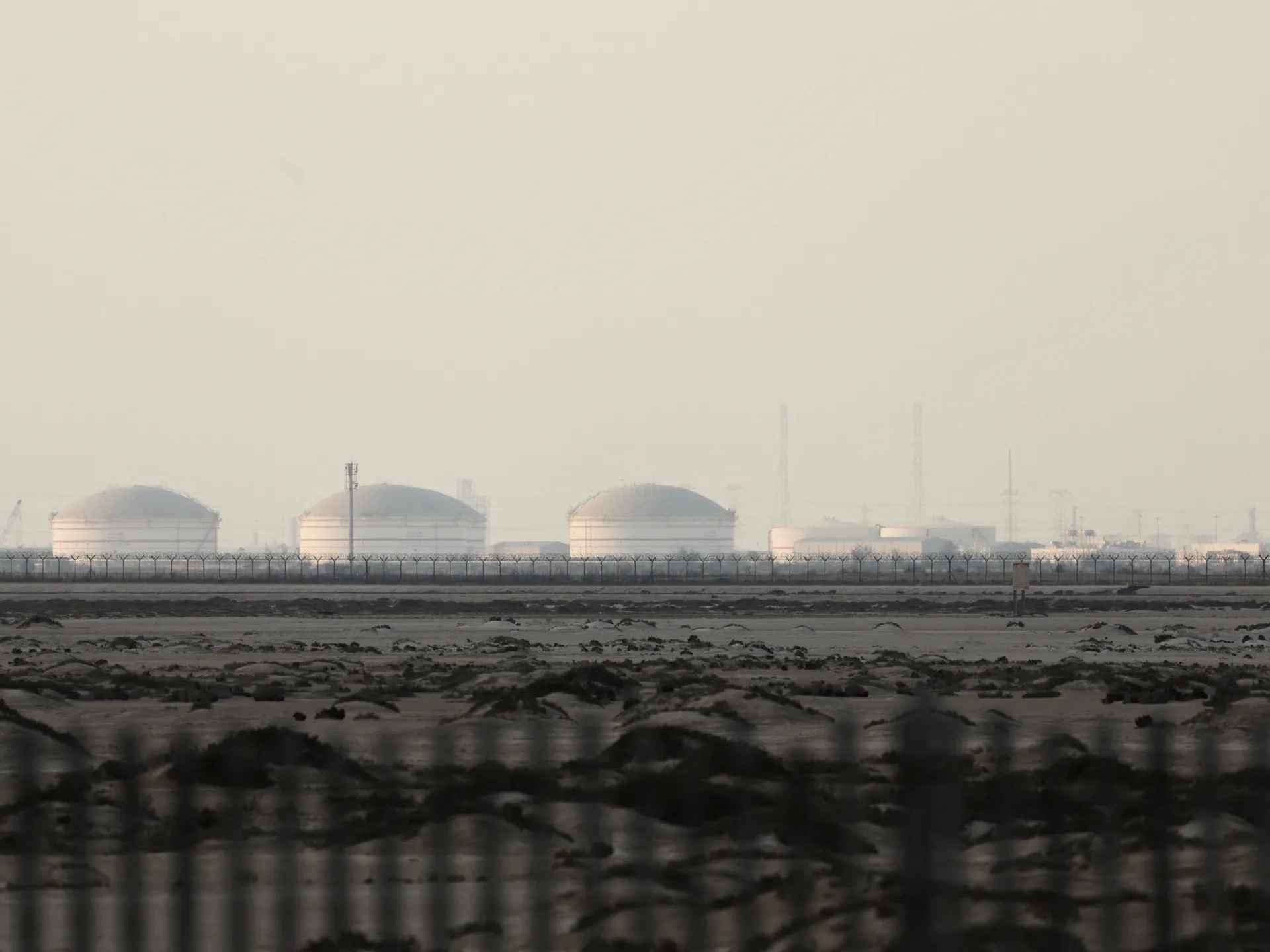
Iran has stepped up pressure on several Gulf states by attacking their energy facilities in retaliation for an Israeli attack on its South Pars gasfield, as the war threatens to engulf the entire region in an even more ominous phase, a complete firestorm.
Iran attacked Qatar’s Ras Laffan liquefied natural gas (LNG) facility on Thursday morning in a dangerous new development in the war, amid a broader campaign that also included attacks on energy infrastructure in the United Arab Emirates and Saudi Arabia, raising serious concerns about global energy supplies.
Recommended Stories
list of 3 itemsend of list
The strikes, launched by both countries on February 28, amid the United States-Israel war over Iran, followed Israel’s assassination of Iranian Intelligence Minister Ismail Khatib and its attack on the South Pars LNG facility on Wednesday.
As Iran attacks its Gulf neighbours, whom it has repeatedly targeted since the beginning of the conflict due to the presence of US facilities and assets on its soil, US President Donald Trump threatened in a social media post that the entire South Pars would be “massively blown up” if Iran continued to target Qatar.
Trump said, “I do not want to authorize this level of violence and destruction because of its long-term impact on Iran’s future, but if Qatar’s LNG is attacked again, I would not hesitate to do so.”
At the same time, Trump tried to distance the US from Israel’s attack on South Pars, describing its strongest Middle East ally as carrying out a “violent attack” on the facility and promising it would not happen again if Tehran refrained from attacking Qatar.
Trump said the US had “nothing to do” with the attack on offshore gasfield facilities in Iran’s Bushehr province.
Qatar, the world’s second-largest LNG exporter, said on Thursday an Iranian ballistic missile attack on its Ras Laffan gas complex sparked three fires and caused widespread damage, with the interior ministry later saying the fires had been brought under control with no casualties.
Qatar’s Foreign Ministry asked Iran’s security and military allies to leave the country within 24 hours and declared them “persona non grata”, condemning the attack on Ras Laffan as a “direct threat” to the country’s national security and accusing Iran of adopting an “irresponsible approach”.
Separately, UAE officials said they were responding to incidents caused by debris from intercepted missiles at Habshan gas facilities and the Bab oil field. The Abu Dhabi Media Office said the facilities were closed and no injuries were reported.
Saudi Arabia said it intercepted and destroyed four ballistic missiles launched toward Riyadh on Wednesday and an attempted drone strike on a gas facility east of it. On Thursday, Iran targeted Saudi capital Riyadh.
Attacks were also reported on Kuwait and Bahrain.
Will the Gulf countries retaliate?
The question now is whether the Gulf states will launch retaliatory attacks on Iran, a potential development that would usher in a new phase of the war.
Attending a meeting of foreign ministers of 12 Muslim-majority countries in Riyadh on Wednesday, Saudi Foreign Minister Prince Faisal bin Farhan Al Saud said, “We reserve the right to take military action if deemed necessary”, warning Iran that pressure could be “politically and morally counterproductive”.
On Thursday, he warned Iran that its tolerance for attacks on his country and neighboring Gulf states was limited, calling on Tehran to immediately “recalibrate” its strategy.
Qatar’s Emir Sheikh Tamim bin Hamad Al Thani spoke to French President Emmanuel Macron on Thursday, with the former office saying the leaders considered Iran’s attack “a dangerous escalation that threatens the security and stability of the region and undermines the security of global energy supplies”.
Reporting from Dubai in the United Arab Emirates, Al Jazeera’s Zein Basravi said Iran’s attacks had “shattered any sense of diplomacy” between the Gulf neighbours.
“The government of Qatar has repeatedly said that no matter what happens, they will continue to emphasize the idea of diplomacy, of dialogue, as a way to resolve this and any other conflict,” he said. “But this is really a test of their ability.”
Political scientist Mehran Kamrava told Al Jazeera that Iran’s increasing attacks on Gulf countries have put their governments “in a diplomatic bind.”
“On the one hand, there is a clear desire to respond in some way to what is being openly called Iranian aggression,” said the government professor at Georgetown University in Qatar.
“On the other hand, the states are well aware that if they enter a war with Iran, what is to stop Donald Trump from going tomorrow and declaring an American victory – and then these states will be left to fight a neighbor?” He said.
While Israel has not claimed the South Pars gasfield attack, Defense Minister Israel Katz has promised more “surprises” as his country seeks to “destroy” the Tehran government leadership.
Among other developments on Thursday, the United Kingdom Maritime Trade Operations (UKMTO) Center reported that a ship was hit by an “unknown projectile” 4 nautical miles (about 7 km) east of Ras Laffan in Qatar.
