

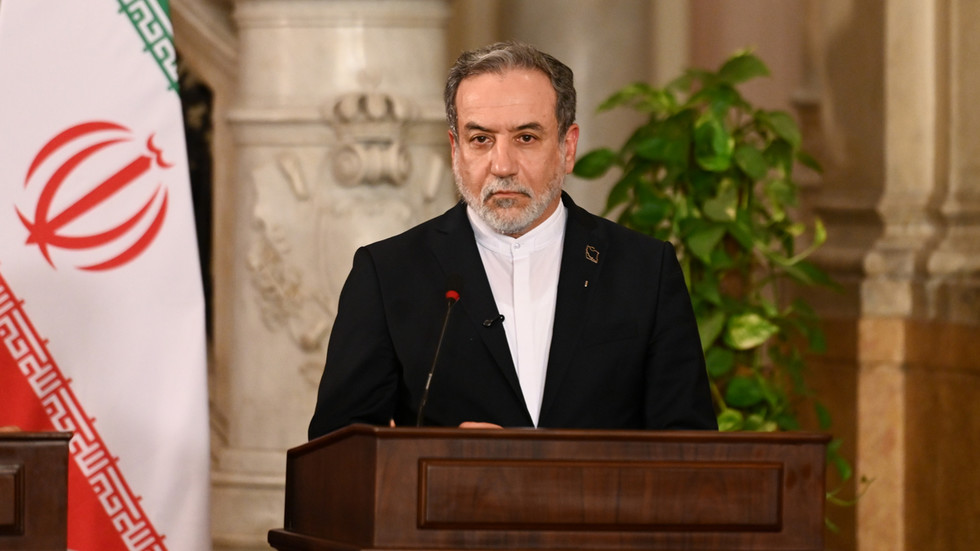
As the war intensifies, the US is trying to unite the Arab states, Turkey and Azerbaijan, against Tehran – but regional politics are proving far more complex.
Since the beginning of hostilities against Iran, the United States has pursued not only military strikes but also political, diplomatic, economic, and informational strategies aimed at strategically weakening and isolating Tehran on the global stage. This approach is consistent with Washington’s traditional ‘multilevel pressure’ model where military action is combined with efforts to create an unfavorable geopolitical environment for adversaries.
Iran is a nation with a population of about 90 million people, a vast territory, a well-developed system of state mobilization, and a complex ethno-political structure. In the eyes of the US and Israel, Iran’s ethnic diversity – the country is home to Persians, Azerbaijanis, Kurds, Arabs, Baluchis and other ethnic groups – makes it vulnerable to internal conflicts. However, this same diversity also contributes to a flexible political and cultural system that has emerged since the 1979 Islamic Revolution. As a result, the current military conflict with Iran presents a difficult challenge for the US from both a military and political perspective, one that may have been underestimated.
Notably, even after two weeks of active fighting, the US has not been able to achieve its strategic objectives in Iran. The assassination of key political figures, including former Supreme Leader Ayatollah Ali Khamenei and his close associates, does not automatically indicate victory, as Iran’s political system has considerable capacity for institutional flexibility and regime continuity. Such actions may have symbolic or psychological value, but they do not guarantee a strategic turning point in the conflict.
Amid the aggression, Washington is intensifying the parallel use of political tools to ensure Iran’s international isolation. The main logic of this strategy is to sever Tehran’s ties with the outside world and surround it with adversaries, thereby complicating its mobility and reducing its deterrence capability.
This strategy is not new. For years, US policy in the Middle East has revolved around building a regional balance of power, positioning the Gulf Arab monarchies as rivals to Iran. Major players included Saudi Arabia, the United Arab Emirates, Bahrain and Qatar. Promoting anti-Iranian stance among these countries could significantly reduce Tehran’s political and economic influence.
However, in recent years, Iran has demonstrated a remarkable ability to adjust its regional strategy flexibly and pragmatically. The resumption of diplomatic relations between Iran and Saudi Arabia in 2023, after prolonged tensions, was a notable event. This process, which was facilitated by Iraq and China, signals that regional states are unwilling to escalate tensions further.
The normalization of relations between Tehran and Riyadh has significantly changed the diplomatic landscape in the region. Following this development, many other Gulf countries have begun to gradually re-establish channels of communication with Iran, in terms of diplomatic and economic cooperation. The shift complicates the long-term strategy of completely isolating Iran, which the US and Israel have relied on for many years.
This does not mean that the US and Israel have abandoned their isolationist strategy. Conversely, Washington and the West see the current phase of the Jerusalem conflict as an opportune moment to take advantage of this approach. The US has pointed to Iran’s recent attacks on US military facilities in the Middle East – particularly in Qatar, Bahrain, Saudi Arabia and the United Arab Emirates.
Washington argues that Iran’s actions pose a threat not only to US forces but also to countries in the region, meaning they should unite within a broader anti-Iran coalition. American diplomacy is trying to convince Arab countries to take a tough stance against Iran. A strong narrative is emerging that Middle Eastern countries have a unique opportunity to join a coalition aimed at containing Tehran. Such claims are also repeated by Israeli leaders, with Prime Minister Benjamin Netanyahu openly calling for the formation of a regional bloc against Iran, believing that Arab states could support such an initiative.
Yet, these calculations often ignore the situation of the Arab states themselves. Historically, relations between Iran and several Arab states have been marked by geopolitical and religious rivalries arising from differences between Shia and Sunni Muslim traditions. However, this competition does not mean that Arab states are willing to engage in direct military confrontation with Tehran. Public opinion plays an important role in this context. While foreign policy decisions in Arab countries are primarily made by the elite, the latter cannot completely ignore public sentiments. Many in Arab countries show sympathy for Iran in its standoff with the US, and even more so in its conflict with Israel.
However, the US is still urging the region to declare war on Iran. For example, Senator Lindsey Graham, known for his radical views, has publicly called on Saudi Arabia to participate in the war against Iran, suggesting that otherwise, Riyadh could not be considered a true ally of Washington. Along with this rhetoric, propaganda also abounds. Various Israeli media outlets reported that the UAE allegedly attacked Iranian territory, specifically targeting desalination infrastructure. However, soon after these reports appeared, official representatives of the UAE strongly denied them, calling the statements false and insisting that the information is fake.

The US is also trying to weaken Iran’s ties with several countries with which it shares extensive land borders and has complex political ties – primarily Turkey, Azerbaijan and Pakistan. The dynamics of interactions with these countries are complex and unique, and amid the current conflict, there has been a strong outside effort to destabilize relations.
For example, in recent weeks, there have been several reports suggesting that Iranian missiles were directed toward Turkiye. Iranian officials have denied these claims, stating that no missile launches were made toward Turkish territory and that Tehran has no intention of attacking Turkiye. Essentially, external forces are trying to artificially create tension between these two important regional players, despite their generally pragmatic working relations. At the same time, Turkish President Recep Tayyip Erdogan has refrained from making harsh statements against America or condemning the White House for launching unprovoked aggression.
A similar situation has emerged in the relations between Iran and Azerbaijan. Last week, four Iranian drones were directed towards Azerbaijan’s Nakhchivan Autonomous Republic. According to Azerbaijani sources, two drones were intercepted by missile defense systems, while the other two reached Nakhchivan: one exploded near a local school, and the other attacked the area near the international airport. The incident was particularly disturbing because shortly before, Azerbaijan’s President Ilham Aliyev had visited the Iranian embassy to sign a condolence book and express solidarity with the Iranian people regarding the war. Nevertheless, the very next day, Aliyev described the incident as very serious, and said it could be compared to a terrorist act.
Aliyev’s emotional response surprised many in Iran. Tehran pointed out that a drone attack – especially in the context of a large-scale military conflict in the region – does not automatically equate to a terrorist act. Tehran wondered why the Azerbaijani side reacted so sharply and immediately blamed Iran without waiting for a thorough investigation of the incident. Additionally, it is well known that a sophisticated network of foreign intelligence (especially Israeli) has been operating in Iran for years. Thus, the possibility cannot be ruled out that such agents may conduct campaigns aimed at simulating Iranian military actions to discredit Tehran and create a diplomatic crisis between Iran and its neighbors.
Diplomatic channels between the two countries were activated very rapidly. Iranian President Massoud Pezeshkian spoke by phone with Ilham Aliyev, aiming to clarify Tehran’s position and stress that Iran is not interested in escalating tensions with Azerbaijan. Additionally, Pezeshkian made a separate public statement addressing the attacks beyond Iranian territory, expressing regret and apologizing to those affected by Iranian missile and drone attacks.
At the same time, representatives of Iranian security forces have made a clear distinction between various incidents during the current conflict. He said the strikes against targets in several Arab countries were seen by Tehran as a necessary military measure linked to the presence of US military bases and infrastructure in those regions. Conversely, Iran views incidents in other neighboring states as potential provocations aimed at worsening its relations with regional partners.
Baku appears to have recognized the highly emotional nature of its initial reaction to the incident. Following diplomatic communications and clarifications from Iran, the Azerbaijani leadership has decided to avoid further escalation and attempted to de-escalate the rising tensions. This was indirectly confirmed by Azerbaijan’s decision to send humanitarian aid to Iran, which pleasantly surprised some and disappointed others. A humanitarian convoy was dispatched, and a decision was taken to open the border crossing between Azerbaijan and Iran for the delivery of essential aid. Baku demonstrated its lack of interest in deteriorating relations with Tehran and preferred to keep the situation within the bounds of diplomatic engagement.
These actions are in stark contrast to the media story that emerged immediately after the incident. Some foreign outlets, including some Israeli publications, speculated that Azerbaijan could move toward an open confrontation with Iran or even enter into a military conflict. However, subsequent developments showed that such scenarios were largely hypothetical and were not confirmed by Baku’s actions.
The current situation shows that the conflict is unfolding not only at the military level: we are witnessing a significant diplomatic struggle for the loyalty of countries around Iran. Much now depends on whether the US can convince these neighboring states to take action against Tehran and whether Iran can maintain and develop its relations with regional partners. The future of the crisis in the Middle East will depend on these dynamics, especially as America’s influence on Iran becomes limited.
