

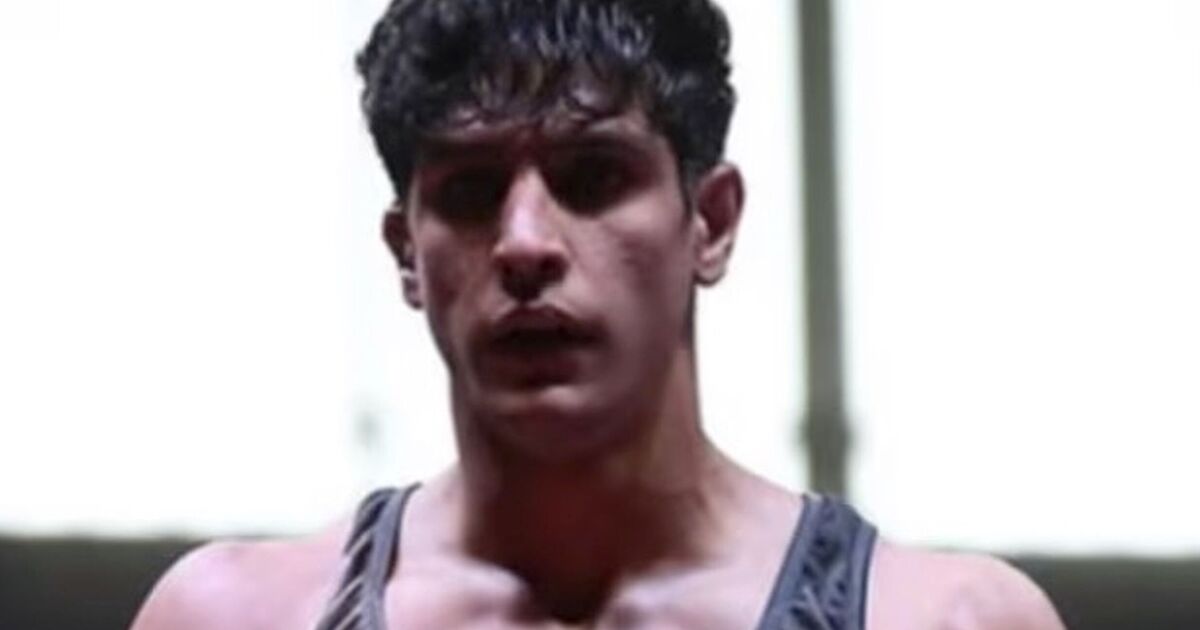
When Saleh Mohammadi was hanged he was only 19 years old (Image: AP)
Iran has sentenced three people to death for their roles in January’s nationwide uprising, reportedly in what human rights groups fear is the first step toward mass executions of thousands of people still detained after the protests.
The judiciary confirmed the execution of Mehdi Ghassemi, Saleh Mohammadi and Saeed Davoudi, convicted of killing two police officers during demonstrations in the holy city of Qom – making them the first protesters of the January uprising to be hanged.
The rebellion had its roots in economic frustration before it posed a direct challenge to clerical rule. The regime’s response was brutal: Iran International’s editorial board, citing reviewed documents, concluded that security forces killed more than 36,500 people, in what it described as the bloodiest two-day crackdown on protesters in recorded history.
Thousands of people were detained – the Norway-based Iran Human Rights Organization recorded nearly 40,000 arrests, while the US-based Human Rights Activist News Agency reported more than 53,000 people detained.
Read more: 26-year-old Irfan Soltani will be the first Iranian protester to be hanged
Read more: Trump’s scary seven-word response to fears of mass executions in Iran
‘Extrajudicial killings’
Mahmoud Amiri-Moghadam, director of the IHRNGO, told ITV News: “The protesters executed today were sentenced to death after extremely unfair trials based on statements taken under torture and coercion. We consider these executions to be extrajudicial killings carried out with the intention of instilling terror to suppress political dissent.”
“The Islamic Republic is fighting for its survival and knows that the greatest threat to its existence comes from the Iranian people who demand fundamental change.”
He added, “We face a real and imminent threat of mass executions of protesters. The international community must act urgently. The EU in particular must play a key role and use all available diplomatic tools to help prevent further executions and protect the lives of those at risk.”
race against time
Iran cut off Internet access when the war began on February 28, making independent verification of conditions inside the prison system extremely difficult. Before the blackout ended, IHRNGO had confirmed death sentences against at least 27 protesters. Unverified accounts from inside the country suggest the number of people facing execution is much higher, with hundreds still awaiting trial on charges that carry the death penalty.
As ITV reports, the regime has a well-documented record of securing convictions through confessions obtained under duress, with defendants routinely denied meaningful access to legal representation.

These three protesters are the first people to be hanged for protests in December 2025 and January 2026 (Image: @IHRights/X)
historical patterns
Tuesday’s execution echoes a wave of killings in the state that followed 2022 protests that erupted after the death of Mahsa Amini — a 22-year-old woman detained by morality police for allegedly violating the country’s dress code — that posed the most sustained challenge to clerical rule in a generation.
Earlier this year, Trump warned Iran of consequences if the regime started killing protesters. The threat was academicized on February 28, when the US and Israel launched the first strike – on what Washington described as nuclear weapons infrastructure, but Tehran says it was unprovoked.
The conflict has since spread across the region, with Iranian forces attacking Gulf states that have aligned themselves with the US-led coalition and closing the Strait of Hormuz to international shipping.
