

key points
- More than 1,000 people have been killed and 2,584 injured in Lebanon since March 2
- Attack on Iran’s nuclear plant
- UN agencies have warned that 45 million people could face extreme hunger if the war against Iran continues
“Almost one child has died or been injured in a classroom every day due to recent tensions,” said Ted Chaiban, deputy head of the UN Children’s Fund.UNICEF).
31 health workers among those killed in Israeli strikes in Lebanon as per latest flash update Issued by the United Nations Office for the Coordination of Humanitarian Affairs (OCHA).
Meanwhile, ongoing displacement orders are prompting repeated population movements, with oSee 1.2 million people displacedThere are 134,439 internally displaced people housed in 636 collective shelters, primarily in Beirut and Mount Lebanon, amid growing shelter shortages and security risks.
attack on health care
According to the latest reports, attacks on health care and humanitarian workers are on the rise. Dozens of people have been injured amid repeated attacks on hospitals, ambulances and medical transport.
Five hospitals and 49 health centers are now out of operationAccess to life-saving care has been severely limited due to mass casualty incidents in several governorates.
Humanitarian workers have also been affected by a recent strike in Baalbek, which killed a local humanitarian worker and two children. These attacks raise serious concerns over respect for international humanitarian law, which clearly protects medical personnel, facilities and humanitarian personnel, OCHA said.
growing hostilities on the ground
Hostilities on the ground are also escalating, OCHA said, pointing to increased military activity south of the Litani River with exchanges of fire along the Blue Line, indicating growing security threats to communities in high-risk areas.
Attacks in Zakak al-Blat and Basta resulted in further casualties, including the killing of a journalist and his wife, the first reported killing of a journalist in Lebanon since the March 2 tensions.
OCHA said the deaths raise serious concerns about the safety of civilians and media workers.
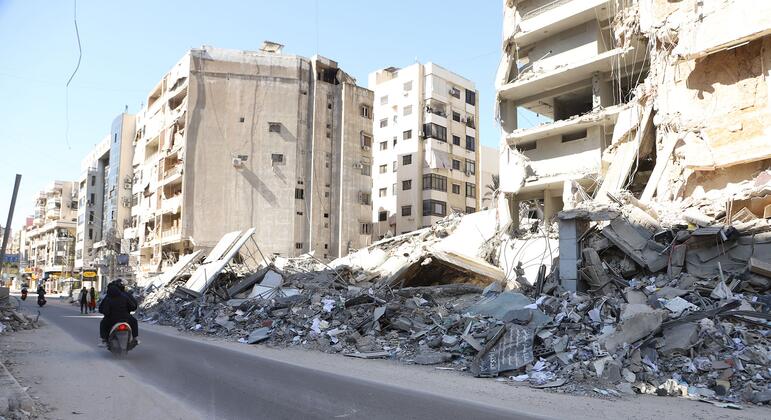
Some residents of Beirut who have been displaced by the conflict are now living on the streets of the Lebanese capital.
displacement increases
OCHA reported that displacement dynamics remain highly fluid and complex.
Repeated and extended displacement orders now cover southern Lebanon, parts of Beirut, border villages and significant parts of the Bekaa and are triggering multiple, secondary and tertiary displacements.
Displacement orders in areas such as Beirut’s southern suburbs, widespread displacement orders affecting villages, as well as orders localized to buildings or neighborhoods are forcing people to flee.
overburdened shelter
According to the latest flash update, mass shelters have been reported to be overcrowded, limited electricity, lack of heating and inadequate privacy.
Schools are being heavily affected, with a total of 472 educational buildings being used as mass shelters, limiting access to education for thousands of students.
Some children have returned to the same schools they previously sheltered in during the 2024 surge, adding to Lebanon’s economic collapse, the Beirut port explosion and long-term disruption caused by the COVID-19 pandemic.
Air strikes destroy infrastructure
Damage to critical infrastructure is hampering humanitarian access.
Israeli airstrikes have destroyed or damaged roads, crossings and bridges, water pipelines, and at least five fuel stations in southern Lebanon. The UN relief agency warned that these disruptions further hamper the delivery of essential humanitarian aid.
Humanitarian actors reiterated respect for international humanitarian law. Civilians, including journalists, must be protected at all times. Medical personnel, health facilities, ambulances, patients and civilians are clearly protected under international law and should not be targeted.
OCHA said the protection of civilians and unhindered humanitarian access are essential to prevent further loss of life and reduce human suffering.
Iran: attack on nuclear facility
The Natanz facility for Iran’s nuclear enrichment has been bombed amid ongoing attacks by Israel and the United States across the country and retaliatory strikes by Tehran around the Gulf, the head of the UN-backed nuclear agency said Saturday morning.
Rafael Grossi, head of the International Atomic Energy Agency (IAEA)IAEA) reiterated its call “for military restraint to avoid any risk of a nuclear accident.”
The UN-backed agency is tasked with ensuring cooperation in the nuclear field and promoting the safe, secure and peaceful use of nuclear technology.
“The IAEA has been informed by Iran that the Natanz nuclear site was attacked today,” the agency posted.No increase in off-site radiation levels has been recorded“
The bombing was the fourth targeted attack on nuclear facilities in Iran since the beginning of the US–Israeli offensive.
UN agencies warn of rising hunger, displacement
UN agencies are warning that millions of people have been displaced by the ongoing war.
World Food Program (WFP)wfp) Said If the war continues and fuel prices continue to rise, 45 million people could face extreme hunger.
Meanwhile, the UN refugee agency, unhcrIt said the wider consequences of the war have already seen large-scale displacement, as people flee the violence spreading across the region.
“Amid increasing hostilities in Iran, thousands of Afghans are returning to Afghanistan,” the UNHCR said on Saturday.
“For many families, this is another cycle of displacement, but the country they return to is already facing multiple crises.,” the agency said, stressing that “they need immediate support.”
In fact, the effects of the war are already being felt both within the region and beyond, UN agencies said.
Read our story on how the war is affecting countries in Asia Here.
