

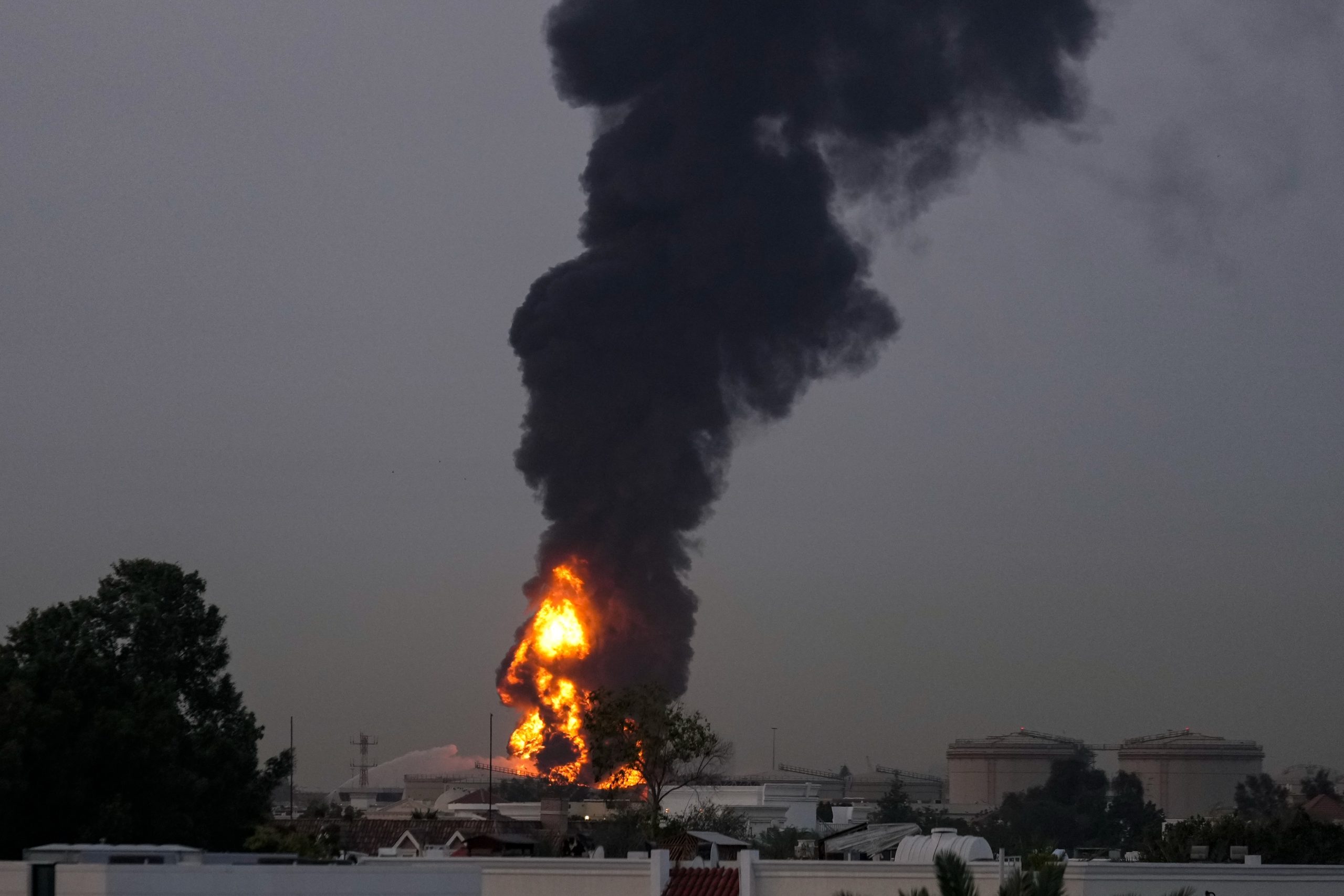
The Trump administration is sending its top energy officials to Houston this week to meet with oil industry executives and foreign dignitaries — and they may be hoping to get a better idea of the war in Iran that has thrown their industry into turmoil.
Energy Secretary Chris Wright, Interior Secretary Doug Burgum, EPA Administrator Lee Zeldin, National Energy Dominance Council Executive Director Jarrod Eggen, FERC Chair Laura Sweat and other administration officials will be among the largest gathering of energy industry executives in the world this week.
The annual CERAWeek confab comes about a month after the US-Israel-Iran war and the near-complete closure of the Strait of Hormuz, one of the world’s main routes for oil to the Middle East, fuel shortages in Asia and the destruction of large portions of the region’s natural gas fields and export plants.
According to interviews with a half-dozen energy industry executives and foreign diplomats planning to attend the event, if there’s one message the industry wants to convey to the administration, it’s this: People need to know when a conflict that is already causing major damage to their world order will end.
“Typically in an elevator pitch, people are going to say, ‘Look, we need to know duration, and we need to know infrastructure prospects. We need to make sure that the uncertainties are limited as much as possible,’ said Frank Maisano, a senior principal at the energy law firm Bracewell. “The events in Iran have kind of overwhelmed what anyone was thinking about this year.”
Wright met with a group of energy industry executives outside a conference hall Sunday evening, two people familiar with the meeting said. A DOE representative did not immediately respond to a request for comment. The CEO of Saudi Arabia’s state-owned oil company Saudi Aramco did not attend the conference this year due to the chaos caused by the war. Reuters reported. Exxon Mobil CEO Darren Woods, who has also been a featured speaker at the conference in past years, also will not attend this year, a person familiar with the planning said.
When a White House spokeswoman was asked about the administration’s timeline for the war, she referred to a post by White House press secretary Carolyn Leavitt on Friday.
“The President and the Pentagon had predicted that it would take approximately 4-6 weeks to achieve this mission,” Leavitt said in the post. “Day by day, the Iranian regime is becoming more paralyzed, and their ability to threaten the United States and our allies is significantly weakened.”
President Donald Trump himself said on Friday that the United States is “very close to meeting our objectives as we look to end the Iran war”, but left the issue of Hormuz open.
“The Strait of Hormuz must be defended and monitored by other nations that use it – the United States does not!” Trump said in a Truth Social post.
Oil prices have risen sharply in decades and Trump has said several times that they have increased wildly considers the war won or, more recently, that America can fire missiles at Iran’s power plants!. Fuel has become scarce in some countries, while rising gasoline prices domestically are raising concerns about survival ahead of midterm elections.
Todd Staples, president of the Texas Oil and Gas Association, said the companies are hoping for a “quick resolution” to the conflict.
“Market volatility and short-term price fluctuations create challenges for industry planning, which depends on stability to drive future investment,” Staples said in a statement.
The war, even less than a month away, has the potential to fundamentally upset the energy map that was returning to a new normal following the COVID-19 pandemic and Russia’s 2022 invasion of Ukraine. Europe, where natural gas is running short due to a shortage of LNG tankers sailing through Hormuz and the destruction of a major gas export plant in Qatar, is now debating whether to withdraw Russian gas following the invasion of Ukraine or redouble efforts to develop wind and solar energy projects.
“We want to know what the plan is to reopen the Strait,” said one industry executive who attended, adding that that was his main question for White House officials.
Near the Pentagon The number of war planes and helicopters was increased Attack on Iranian forces in the strait, but it may take several weeks for the operation to fully open the waterway. Meanwhile, US oil prices were around $99 a barrel on Sunday evening, about 50 percent higher than when the shooting began on February 28. Meanwhile, motorists in the United States are paying an average of $3.94 per gallon.
Foreign officials attending the conference in Houston would also say the same thing. As disruptive as the war on energy has been in the United States, it is becoming debilitating in Europe and Asia, which are heavily dependent on imports of oil and natural gas. Natural gas supplies are dwindling in European countries, while China has stopped exporting its own fuel to protect its reserves due to the oil shortage.
Vietnam, Bangladesh and the Philippines will run out of oil in three weeks, a US-based Asian diplomat said. Prices in the region are already rising, the diplomat said, and if countries ran out of fuel it would lead to a decline in the broader economy and could lead to recession.
“ASEAN countries are losing confidence in the US, especially under Trump,” said the person, who was granted anonymity to discuss sensitive matters. “This is 100 percent America’s own goal and China is just watching and waiting.”
“When will it end?” Another Washington-based Asian diplomat pointed to Iran and said this is the main question foreign officials will ask Trump administration officials.
White House spokesman Taylor Rogers pointed to several agreements being signed by Japan and other countries to invest in energy projects in the United States as evidence of his confidence in the administration.
“Our allies have already turned to the United States as a reliable partner and supplier of crude oil and natural gas, as evidenced by the billions of dollars of energy deals signed last week,” Rogers said. The Iranian terrorist regime’s attacks against our Gulf allies underscore the importance of eliminating this threat to our partners in the region and beyond.
In the short term, Iran’s destruction of a major natural gas export plant in Qatar and closure of Hormuz have been a boon for U.S. companies shipping natural gas to Asia. Shares of LNG exporters Cheniere Energy and Venture Global rose more than 30 percent on Friday after the military strikes.
But companies are also concerned that this could ultimately lead to lower sales in the future as countries facing gas shortages focus on developing gas sources closer to home. Hungary and Slovakia are already seeking exemption from sanctions imposed on Russian natural gas for the invasion of Ukraine, and other countries are taking a close look at renewable and nuclear energy projects.
The war presents “a good situation” in the short term for U.S. exporters looking to compensate for cargoes lost from the Middle East to Asia, a U.S. LNG executive said on condition of anonymity because he was not authorized to speak to the press. But “I think it’s a destruction of long-term demand,” this person said.
Chris Traynor, executive director of the Partnership to Address Global Emissions, said the pro-natural gas coalition wants the Trump administration to continue allowing reform amid the ongoing war in the Middle East.
“I hope one conclusion as we go through this part of this emergency response is that recovery permitting needs to be taken seriously by the administration,” Treanor said. “The more we can efficiently and effectively move molecules and electrons from where they are produced to where they are needed… the more secure and reliable our system becomes.”
Sophia Cai and Carlos Anchondo contributed to this report.
