

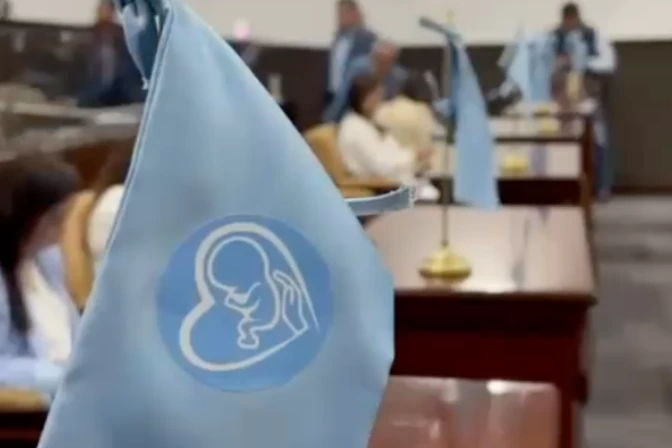
The state of Aguascalientes in Mexico set a milestone in the defense of life by becoming the first state to establish a specific date as the “Day of the Unborn Girl and Boy”, with the aim of promoting public policies in support of maternal health and child development.
Passed by the unicameral state legislature on March 19, the measure was introduced by state legislator Humberto Monteiro de Alba of the National Action Party in collaboration with the citizen signature-gathering platform Activación (“Get Activated”).
Pro-life legislator speaks at the Aguascalientes Legislature. | Credit: Activate
The declaration designates March 25 as a day dedicated to promoting “early initiation of prenatal care” as well as improved maternal nutrition and “shared parental and familial responsibility.”
In a statement, the state legislature said the law is not symbolic but “a strategic instrument of preventive public policy, aligned with the constitutional mandate for progressive protection of human rights and international best practices in providing health care information.”
The state also noted that the declaration represents “a positive action for maternal health” and seeks to promote “preventive measures for the benefit of early childhood development” in addition to “institutional recognition of the dignity of motherhood.”
Protecting life ‘will never be a mistake’
During the debate, National Action Party representative Arlette Muñoz stressed that “Becoming a mother is not just a role in life; it is a profound transformation” and stressed that each life is “unique, irreplaceable and highly valuable.”
Muñoz urged that the issue be approached with sympathy for women facing adverse circumstances conceiving, saying “they don’t need judgment; rather, they need love.”
Furthermore, he argued that the declaration does not impose any particular approach, but rather calls for the development of public policies focused on support: “It’s not about pointing fingers; it’s about offering support.”
National Action Party representative Jadesabel Sanchez said that speaking up for human rights “involves including those who have no voice” and called for the date to be made “not just a commemoration but a commitment to life, women and our future generations”, while emphasizing that “it will never be a mistake to protect girls and boys.”
this story was first published By ACI Prensa, the Spanish-language affiliate of EWTN News. It has been translated and adapted by EWTN News English.
