

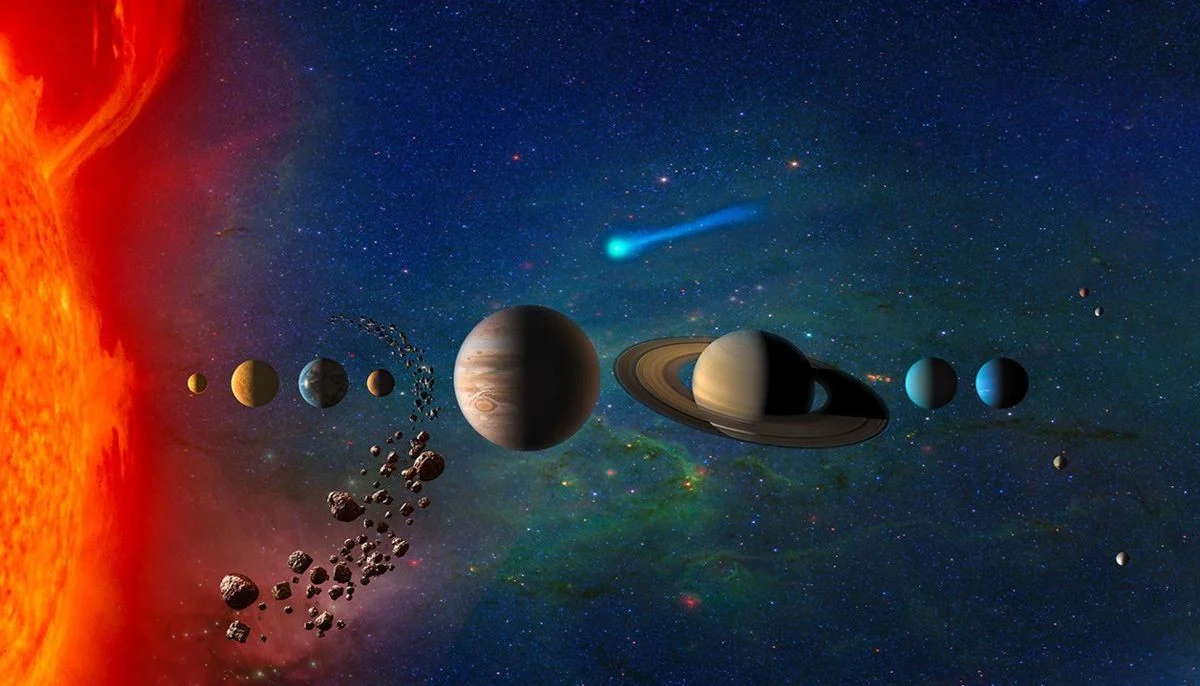
A rare planetary system has been discovered that mirrors our solar system’s structure, exoplanet formation and gas giant impacts, providing astronomers a window into cosmic history.
Located 87 light years from Earth, the system orbits the young star AF Leporis, which is 24 million years old, only a small fraction of our Sun’s 4.6 billion years.
The researchers used the European Southern Observatory’s Very Large Telescope to capture the system, which showed a layout that closely resembled our solar system.
Gas giants reflect on Jupiter and Saturn
The AF Leporis system hosts two gas giants:
- AF Lap B: Located like Saturn, with a cold, dense atmosphere
- AF Lap C: An outer giant that mirrors Jupiter’s gravitational role
The two planets form two debris belts that serve as our counterpart to the asteroid and Kuiper belts. The planet’s gravitational forces create gaps between the disks, creating system stability that enables the growth of small rocky planets.
Unlike the traditional method of transit, the direct imaging method using the SPHERE instrument has helped scientists observe the reflected light of the planets. This method also allows measuring the composition of planetary atmospheres.
AF Leporis is providing scientists the opportunity to observe the live formation of planets, including the migration of the Jupiter-Saturn model, which may be the universal formula for the formation of planetary systems.
