

Iran has agreed to allow 20 Pakistani-flagged ships to pass through the Strait of Hormuz, in what Islamabad described as a meaningful step towards easing one of the worst energy crises in modern history.
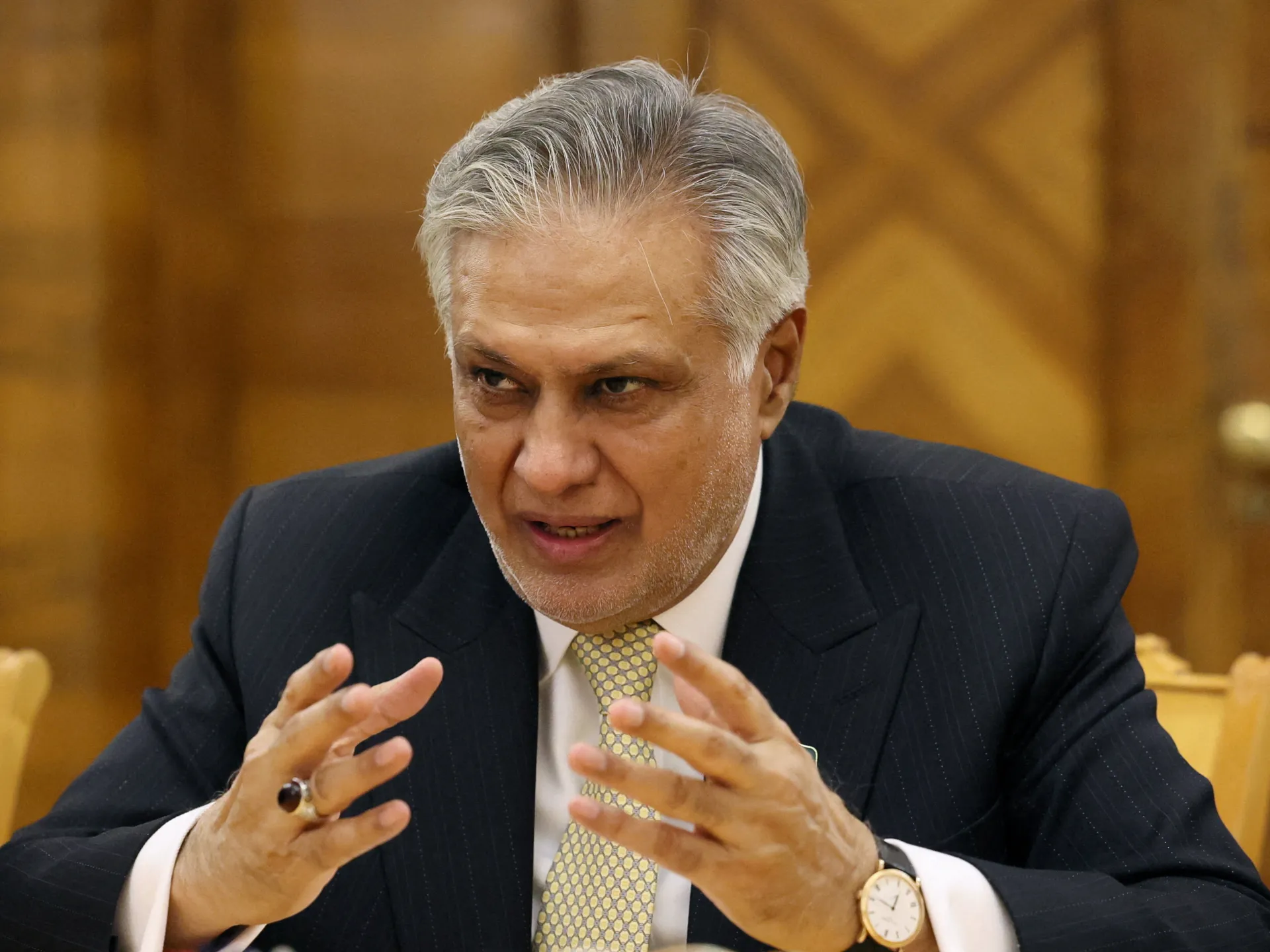
Announcing the move on Saturday, Pakistan Foreign Minister Ishaq Dar posted on Twitter that two ships would transit daily under the arrangement.
Recommended Stories
4 item listend of list
He described Iran’s decision as a “harbinger of peace” that could help restore stability in a region on the edge, calling it a “welcome and constructive gesture.”
Notably, he addressed his post directly to US Vice President JD Vance, Secretary of State Marco Rubio, US Ambassador Steve Witkoff and Iranian Foreign Affairs Minister Abbas Araghchi, a sign that Islamabad, which has been engaged in diplomatic efforts to end the war, views the deal as more than a bilateral shipping agreement.
The strait has been effectively closed since the United States and Israel launched a coordinated attack on Iran on February 28, killing Supreme Leader Ali Khamenei and sparking a war that has killed nearly 2,000 Iranians and more than 1,100 in Lebanon and sent shock waves through global markets.
“The Strait of Hormuz is not an oil choke point,” former Qatari minister Mohammed al-Hashemi wrote in a column for Al Jazeera this week. “It is the aortic valve of global production – and like any valve, when it fails, the entire circulatory system collapses.”
An estimated 2,000 ships are stuck on either side of the narrow waterway, with oil rising nearly 40 percent to more than $100 a barrel.
Meanwhile, Iran’s Islamic Revolutionary Guard Corps (IRGC) has turned the strait into something of an outpost. Ships seeking passage must submit their cargo details, crew lists, and destinations to IRGC-approved intermediaries, obtain a clearance code, and transit through Iranian territorial waters.
At least two ships have paid for the privilege, reportedly $2m crossing, settled in Chinese yuan.
Iran’s parliament is now moving toward legalizing this system as a potential source of revenue.
Malaysian Prime Minister Anwar Ibrahim said on Friday that Malaysian ships were allowed to transit the strait as he thanked Iranian President Massoud Pezeshkian.
Only about 150 ships have passed through here since the war began, which is about a normal day’s traffic. Maritime traffic through waterways has reduced by 90 percent.
World Trade Organization chief Ngozi Okonjo-Iweala said global trade was experiencing “the worst disruption in the last 80 years.”
Saturday’s announcement is the fruit of an intense week of Pakistani diplomacy. Army Chief Field Marshal Asim Munir spoke to US President Donald Trump on Sunday.
Dar also held talks with his Iranian and Turkish counterparts.
Pakistan shares a 900 km (560 mi) border with Iran.
“If the parties wish, Islamabad is always ready to host talks,” Foreign Ministry spokesman Tahir Andrabi told Al Jazeera last week.
Meanwhile, Trump is making the filibuster famous in his own way.
Speaking at a Miami investor forum, he referred to it as “Trump’s straitjacket” before catching himself. He told the crowd, “Sorry, I’m so sorry. Such a terrible mistake.”
Iran has demanded formal international recognition of its rights over the strait as a condition for ending the war. Its parliament is drafting legislation to permanently codify toll collection.
Emirati minister Sultan Al Jaber said this is “economic terrorism”, warning that “every country pays the ransom at the gas pump, at the grocery store, at the pharmacy”.
Trump said Washington had eased attacks on Iranian power plants for five days, which will end on Saturday. Israel has said that its own attacks will continue at any cost.
