

Emergency Relief Coordinator, briefing the ambassadors of Beirut Tom Fletcher He said he came to find”Anxiety and stress levels I haven’t seen in years”, as the capital and surrounding areas are being shaken by air strikes and drone activity.
“The situation on both sides of the Blue Line demands not only the closest attention of the Council, but also Your collective action to avert an even worse crisis,” he stressed, calling the discussion “urgent.”
Mr Fletcher said the humanitarian loss had increased rapidly. “In the last four weeks, More than 1,240 people died… and another 3,500 were injured“ he said, noting that the dead included women, children and first responders.
‘Forced Displacement’
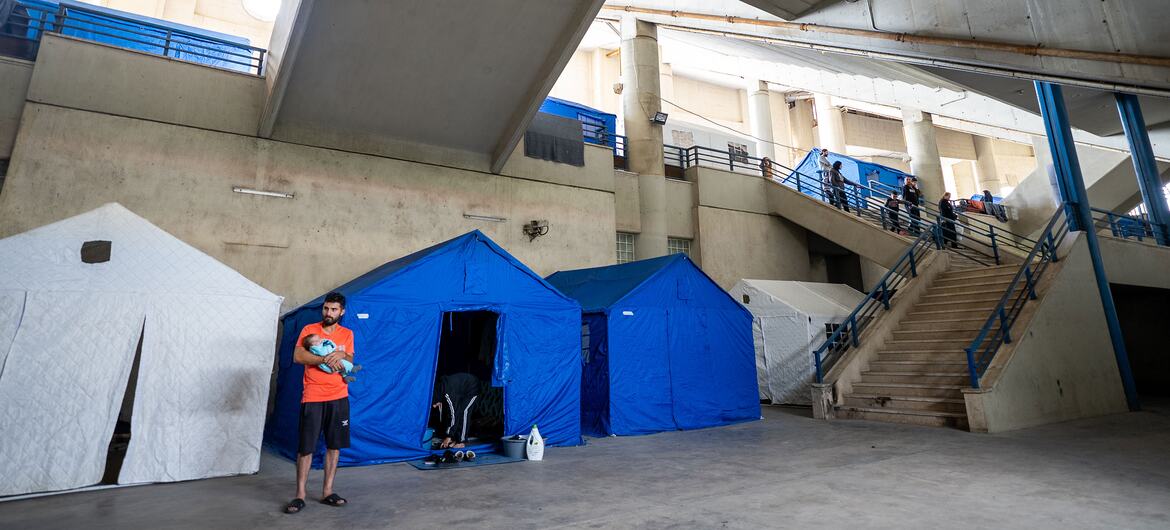
More than 1.1 million people were displaced at that time, including hundreds of thousands of children. “A cycle of forced displacement is underway,” he warned, adding that families are being forced to flee again and again. “Displacement is not a solution, but a painful last resort… a temporary way to maintain dignity.”
He said civilians on both sides of the line are living in fear, as rockets are fired into northern Israel while Israeli attacks devastate parts of southern Lebanon, Beirut’s southern suburbs and the Bekaa Valley. Entire villages have been devastated, and critical infrastructure destroyed, including most of the bridges south of the Litani River.
“Civilians, wherever they are, in Israel and Lebanon, must be protected,” Mr Fletcher said. He stressed that international humanitarian law requires distinction, proportionality and caution. “Health care, water and electricity… must also and always be spared.”
Isolation increases
The impact on basic services has been severe, with hospitals and clinics having to close and schools turned into shelters. “The entire community is becoming increasingly isolated,” he said.
Despite the crisis, humanitarian aid agencies have stepped up operations, delivering millions of meals and essential supplies. But there remains a shortage of funding. Of the $308 million emergency appeal, only $94 million has been received so far.
Above all, Mr Fletcher delivered a direct message on behalf of those affected: “They want security. They want respect. they want it to stop“
He urged Council members to act decisively, raising tough questions about how civilians will be protected, how the international community should respond to mass displacement, and how to prevent further political instability.
Turning to the Lebanese people, he delivered a message of solidarity and resolve: “Don’t give up on the idea of Lebanon. If coexistence fails here, it will fail everywhere.”
He concluded, “We have often said that we cannot let Lebanon fail.” “Now is the real test of that promise.”
Peacekeeper killings ‘should not happen’
The emergency meeting was called by France after three Indonesian peacekeepers served with the UN Interim Force in Lebanon.unifil) were killed, and several others were seriously injured, in two separate incidents that occurred within a 24-hour period this week and amid widespread fighting in the region.
“This tragic incident should not have happened,” Said UN peacekeeping chief Jean-Pierre Lacroix, who briefed alongside Assistant Secretary-General Khaled Khyari and the UN relief chief.
UNIFIL is investigating to determine the circumstances of “two despicable incidents”, but peacekeepers are also facing “one”. Denial of freedom of movement and worrying increase in aggressive behaviour.” Mr. Lacroix said.
He stressed, “We say it clearly, and it has needed to be said often: peacekeepers must never be targeted.”
“All actions endangering peacekeepers must cease immediately…the inviolability of United Nations entities must be respected.”
In the interim, UNIFIL continuously reevaluates its deployment to minimize risks and strengthen force protection. The mission remains in constant contact with the parties “to avoid misunderstandings, reduce conflict and reduce tensions where possible”.
Council’s support ‘indispensable’
They underlined the critical need to support the Parties in fully implementing security councilresolution 1701 (2006), which ended hostilities between Israel and Hezbollah two decades ago.
“In this exceptionally dangerous period, the Council’s strong and unified support for UNIFIL and its peacekeepers is not only vital – it is indispensable,” he said.
“The women and men serving under this mandate should know that this Council stands firmly with them.”
To watch all our live coverage of the crisis in the Gulf from today, go hereAnd for full speaker-by-speaker coverage of this important emergency meeting on the Middle East crisis, Visit our UN meeting coverage site here.
