


Three men have been charged over arson attacks on Jewish Volunteer ambulances in Golders Green, north London.
Four ambulances of the volunteer-led ambulance service, Hatzolah, were destroyed in the early hours of 23 March.
Hamza Iqbal, 20, and Rehan Khan, 19, both British nationals from Leyton, have been charged with arson with reckless disregard of whether it would endanger life. Metropolitan Police Said in a statement.
A 17-year-old boy from Walthamstow, a dual British and Pakistani citizen, who cannot be named for legal reasons, has also been charged with the same offence.
The group, who were arrested at various locations in east London on Wednesday, are due to appear at Westminster Magistrates’ Court on Saturday.
While an investigation was launched by Counter Terrorism Policing (CTP), the incident has not been declared terrorism.
When four ambulances were set on fire, the resulting fire caused gas canisters in the vehicles to explode, and nearby homes were evacuated as a precaution.
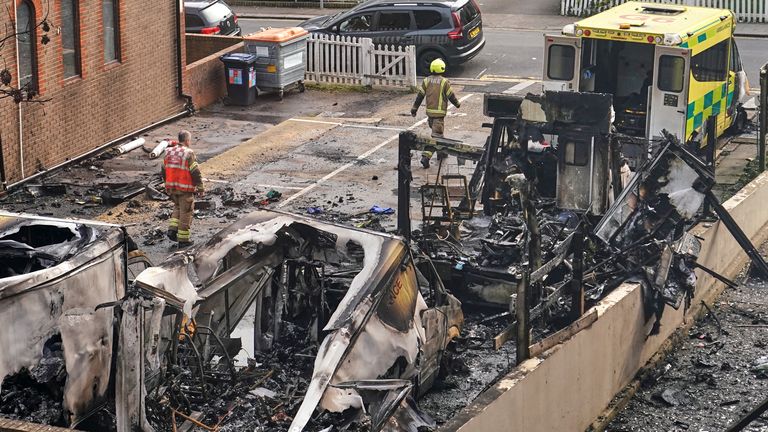
Photo: AP
Local residents say they were woken up by noise, with the intensity of the explosions blowing out windows, including those in a nearby synagogue.
The government loaned four ambulances to the charity to replace the destroyed vehicles and said it would cover the cost of new vehicles.
Read more from Sky News:
14 year old boy shot dead in London
M&S boss issues crime warning
Focus on faith this Easter, says Starmer
An appeal has raised more than £3.2m To find new, secure premises for the Hatzolah Ambulance Service in Golders Green.
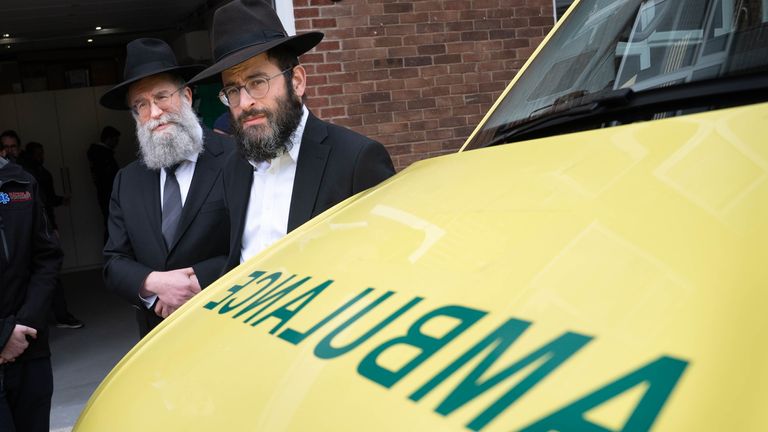
Ambulances to replace those destroyed at Golders Green. Photo: PA
Separately, two men, aged 45 and 47, were arrested last Wednesday, both of whom have been released on bail until the end of April.
Detective Chief Superintendent Luke Williams, who leads policing in north-west London, said a “bespoke policing plan” had been deployed in sensitive areas across London, including Golders Green.
“This includes a large number of extra officers on the ground. This is also being supported by highly visible armed police patrols to act as a deterrent to anyone trying to cause harm to our communities.”
