

Tehran says it will respond ‘in kind’ to any attack on its infrastructure, with Trump threatening ‘incitement to war crimes’
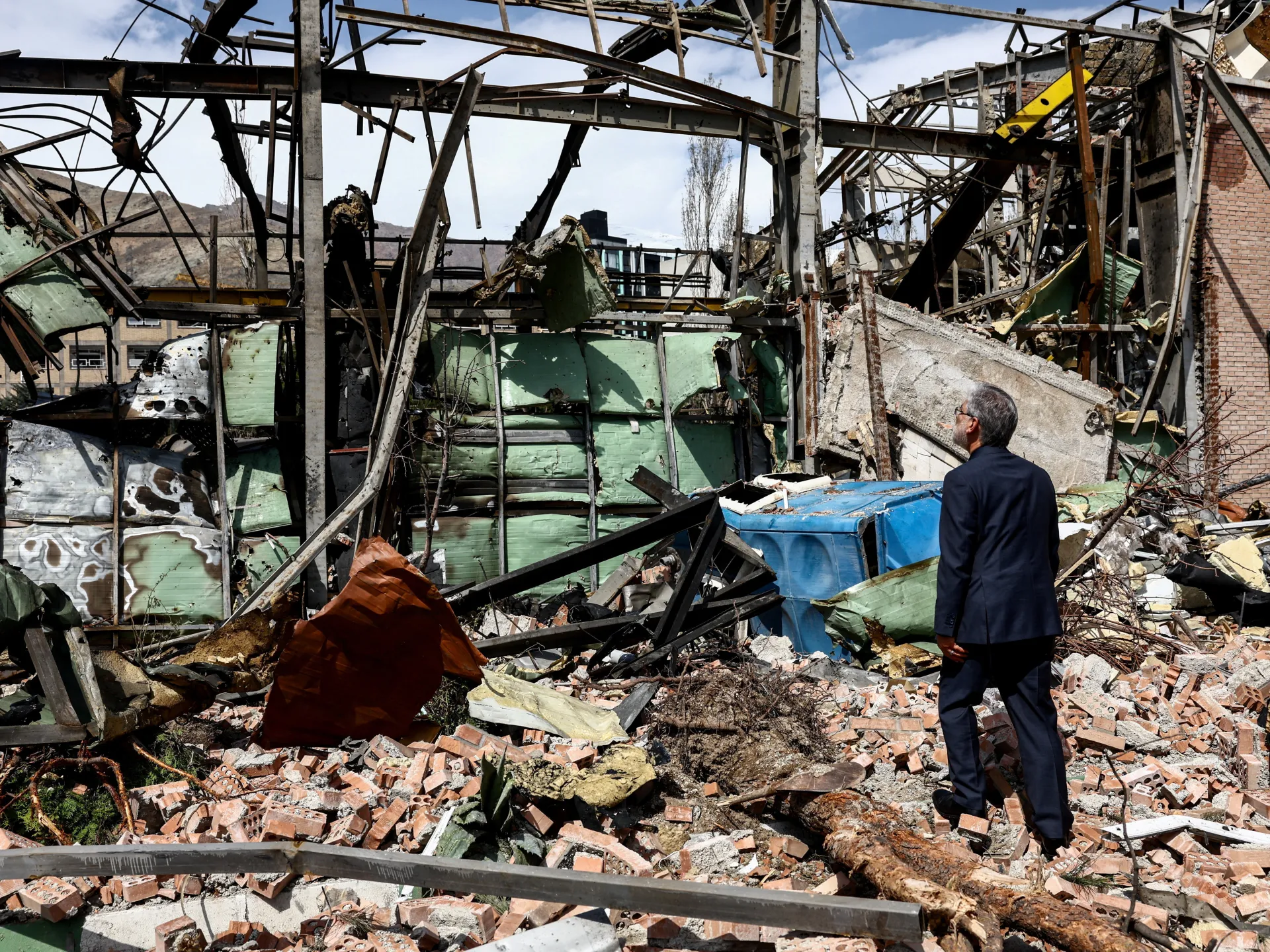
After US President Donald Trump set a Tuesday deadline for Tehran to fully reopen the Strait of Hormuz or face attacks on its power plants and bridges, the United States and Israel launched massive attacks across Iran, targeting a top university as well as residential areas, killing at least 34 people, including six children.
An airstrike in Baharestan county in Tehran province killed 23 people, including four girls and two boys under the age of 10, Fars news agency reported on Monday.
Recommended Stories
list of 3 itemsend of list
At least five people were killed in the attack on a residential building in the city of Qom, according to Morteza Heydari, political and security deputy to the governorate. Six other people were killed in Bandar-e Langeh in southern Iran, officials said.
At least a dozen cities across Iran were affected, including Bandar Abbas, Ahvaz, Mahshahr, Shiraz, Isfahan and Karaj.
The US-Israeli attacks also affected Sharif University in Tehran, one of Iran’s leading scientific universities, often compared to America’s Massachusetts Institute of Technology (MIT). Al Jazeera’s Tohid Asadi, reporting from Tehran, said the facility was badly hit, with extensive damage reported in the complex’s mosque and laboratories.
“There have been other attacks in the Sharif area, including one on a gas facility,” Asadi said. He said other civilian facilities, including roads, power plants and bridges, were also targeted across Iran.
“Iran’s Ministry of Science and Technology told us that at least 30 universities have been affected since the beginning of the war on February 28,” he said.
Iran has vowed to retaliate
The attacks follow Trump’s profanity-laced threat to Truth Social, demanding that Iran reopen the Strait of Hormuz or face “hell.” Iran has warned of retaliatory attacks, saying it will respond “in kind” to any attack on its infrastructure, with senior officials condemning the president’s comments as “incitement to war crimes.” The strait, through which about 20 percent of global oil and gas passes, is subject to an effective blockade by Iran in response to the war.
Foreign Ministry spokesman Esmail Baghai said the Iranians were not intimidated by Trump’s threats and would not be forced into any adverse agreements. He said Trump’s statements were “indicative of a criminal mentality” and tantamount to “inciting war crimes and crimes against humanity.”
Baghai also warned that Iran would respond to any attack on its infrastructure with similar attacks in the region.
Ali Akbar Velayati, an adviser to Iran’s supreme leader Mojtaba Khamenei, said a single wrong move by any country could seriously disrupt global energy flows and international trade.
Velayati said that although the US has learned some lessons from Iran’s history, it “has yet to understand the geography of power”.
Meanwhile, Israel also faced several missile attacks, with some parts of the country sounding alarms. Four volleys of Iranian missiles were fired early Tuesday morning, according to the official Israeli radio station.
Rescue workers pulled out two bodies from the debris of a building in Haifa, while two residents remained missing.
Ambulance and civil defense services reported multiple injuries, some serious, in more than 20 locations, including Tel Aviv, Petah Tikva and Ramat Gan.
Ynet news outlet said a 34-year-old woman was “seriously injured” by interceptor missiles in Petah Tikva.
The Channel 2 broadcaster published photos of smoke rising over Gush Dan and Bnei Brak, as well as video of minor damage to a building in Tel Aviv.
