

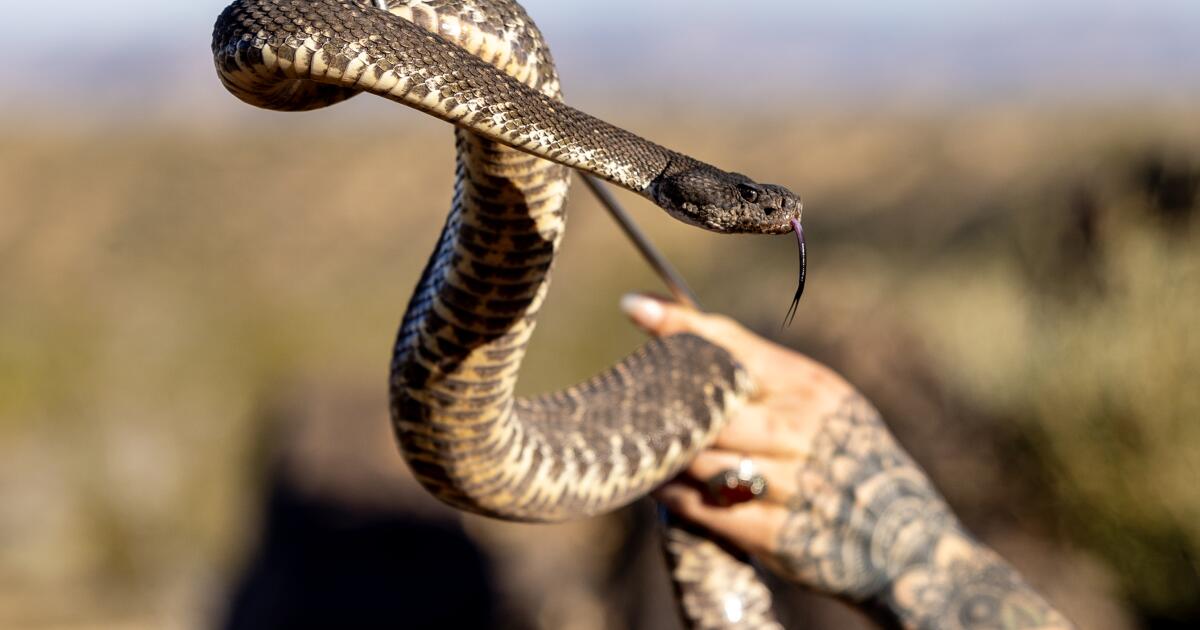
Recent rattlesnake bites near Cal State Channel Islands’ campus have raised concerns about an increase in snake encounters in Ventura County this year.
According to Andrew Dowd, public information officer for the Ventura County Fire Department, the incident is the sixth rattlesnake bite incident in the county since March 14. In 2025, the county recorded nine incidents of snake bites in the year.
According to Dowd, the latest incident of snake bite occurred around 4 pm on Sunday when the victim was attending a meeting near Cal State Channel Islands and accidentally encountered the snake.
Few details about the victim have been released by authorities, including whether the man is a Cal State student.
After the bite, an acquaintance immediately drove the victim to the hospital and called 911 while driving. Paramedics along the way coordinated with the couple, meeting near the intersection of North Lewis and Las Posas streets to provide medical assistance, according to Dowd.
The victim suffered minor injuries and was taken to a nearby hospital and was reported in stable condition. Officials do not have any updates on the current condition of the patient.
Dowd emphasized that all rattlesnake bites in Ventura County this year have been the result of accidental encounters.
“This is an important reminder that we live and recreate in rattlesnake habitat,” Dowd said. “It’s important to be aware and take precautions whenever you’re outside.”
Rattlesnake season is a misnomer in California because they are active year-round, experts say.
But they’re less active during the winter so you’re less likely to see them, said Emily Taylor, who runs Central Coast Snake Services, a snake consulting business, and directs the Physiological Ecology of Reptiles Laboratory at Cal Poly San Luis Obispo.
Still, snakes may come out to sunbathe during the warmth of winter, said Greg Pauley, curator of herpetology at the Natural History Museum of Los Angeles County.
“As temperatures warm in the spring, we see a dramatic increase in daytime surface activity,” Pauly said. “After eating nothing or very little during the winter months, rattlesnakes become actively looking for food and also mates in the spring.”
Rattlesnakes perform their best in warm temperatures, especially in the high 70s to low 80s. Experts say rattlesnakes usually Do not bite unless they feel threatened and use their bite as a defense mechanism.
“We had good rain at the beginning of winter and then unusually warm weather,” Pauly said. “With good plant growth, the rodent population is doing well, so the snakes have good food sources and the warmer temperatures are triggering more surface activity.”
If bitten, Dowd advises snake bite victims to remain calm, limit movement to slow the spread of the venom, and call 911 immediately.
More safety tips recommended by Dowd include:
- Stay on clearly marked trails and avoid tall grass or dense bushes where visibility is limited.
- Avoid placing your hands or feet in places where you cannot see.
- Wear protective clothing, including hiking boots and long pants.
