


Gen Z are born with smartphones in their hands, yet the generation most equipped to lead the AI revolution is in a psychological tug of war right now.
Although they are the fastest to integrate AI tools into their academic and business workflows, their adoption and convenience is being increasingly impacted by existential “AI skepticism,” creating an AI-driven paradox.
Gen Z believes that AI proficiency is a necessity for tech-driven future careers and education. However, this recognition is still accompanied by restlessness, anger, and worry.
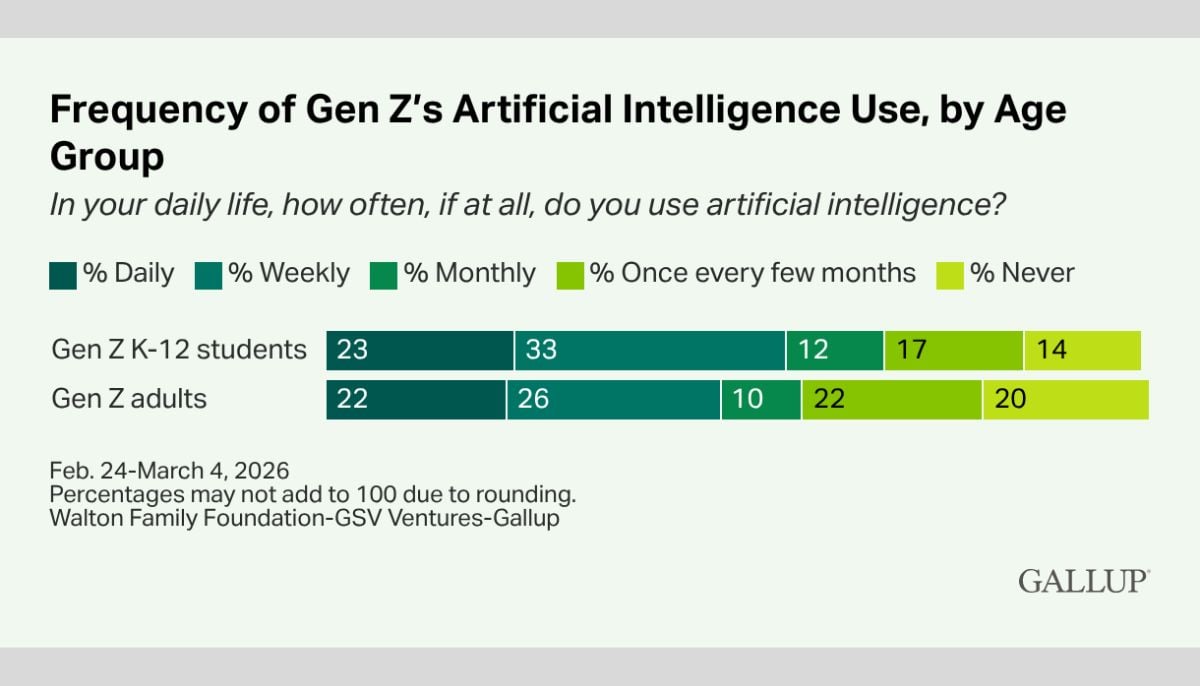
According to a 2026 Gallup survey conducted by the Walton Family Foundation and GSV Ventures, 51 percent of Gen Z in the US are using generative AI tools weekly for various purposes.
AI adoption rate
From March 2025, Gen Z engagement with AI has remained stable, with 51 percent of 14-29 year olds currently using the tool on a frequent basis, with 22 percent daily and 29 percent weekly engagement. The remaining population uses devices occasionally.
Growing anger and negative sentiments about AI
In addition to heavily using AI for daily tasks, Gen Z is increasingly having negative feelings towards artificial intelligence with a variety of emotions. For example:
- Anger: 31 percent of respondents feel angry about AI (up 9 points from 2025).
- Enthusiasm: Only 22 percent feel excited, down 14 points
- Hope: Only 18 percent feel hopeful
- Anxiety: remains high at 42 percent
Even those who use AI daily, the super-users, report being less excited and more frustrated than they were a year ago.
AI skepticism is growing
Among Gen Z, there is also growing AI skepticism regarding the efficacy of tools in improving and increasing productivity and efficiency.
Now, only 56 percent of Gen Z believe AI is helpful in speeding up work, representing a 10-point decline from 2025. : Only 46 percent believe AI helps them learn faster, down from 53 percent.
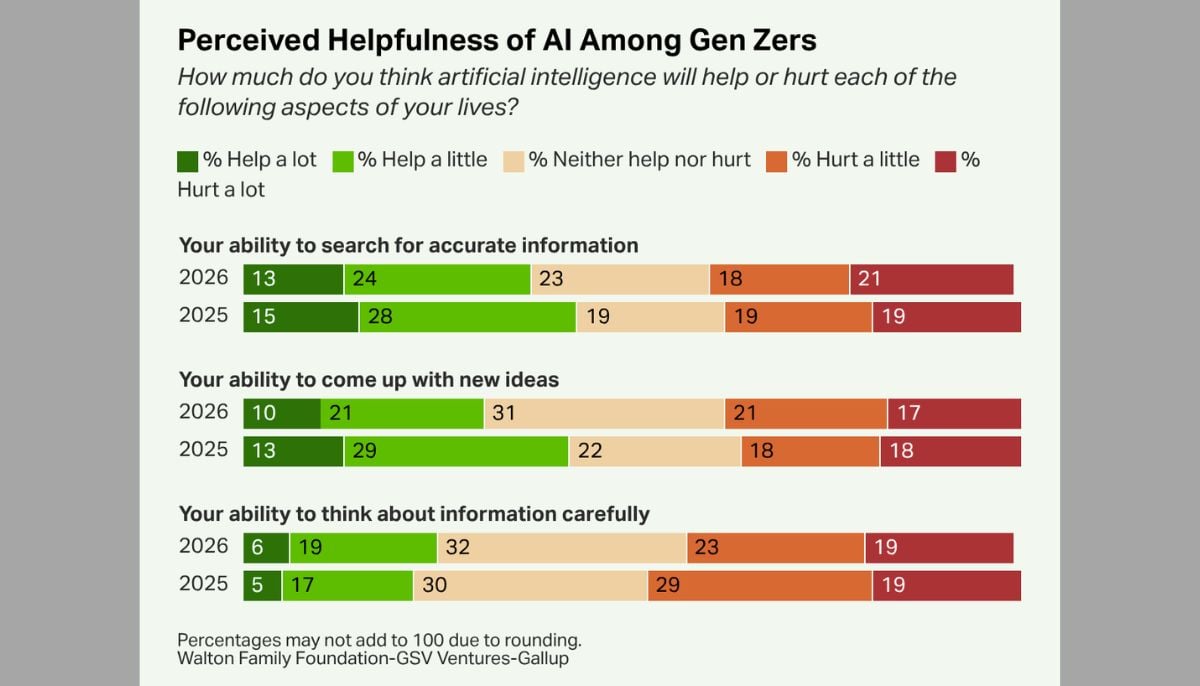
Only 37 and 31 percent of users trust AI tools for accurate information and creativity, respectively.
Academic and professional concerns
42 percent of undergraduate degree students have reconsidered their college major due to AI’s ability to disrupt industries.
Similarly, many older Gen Z, such as college seniors and recent graduates, fear that AI is “taking their jobs” as they enter the workforce after investing heavily in their education.
The growing AI concern among Gen Z primarily stems from the harmful effects of artificial intelligence on cognitive abilities, creativity, and learning outcomes. Additionally, threats posed by social media and the digital landscape have deepened Gen Z distrust of the use of AI.
