

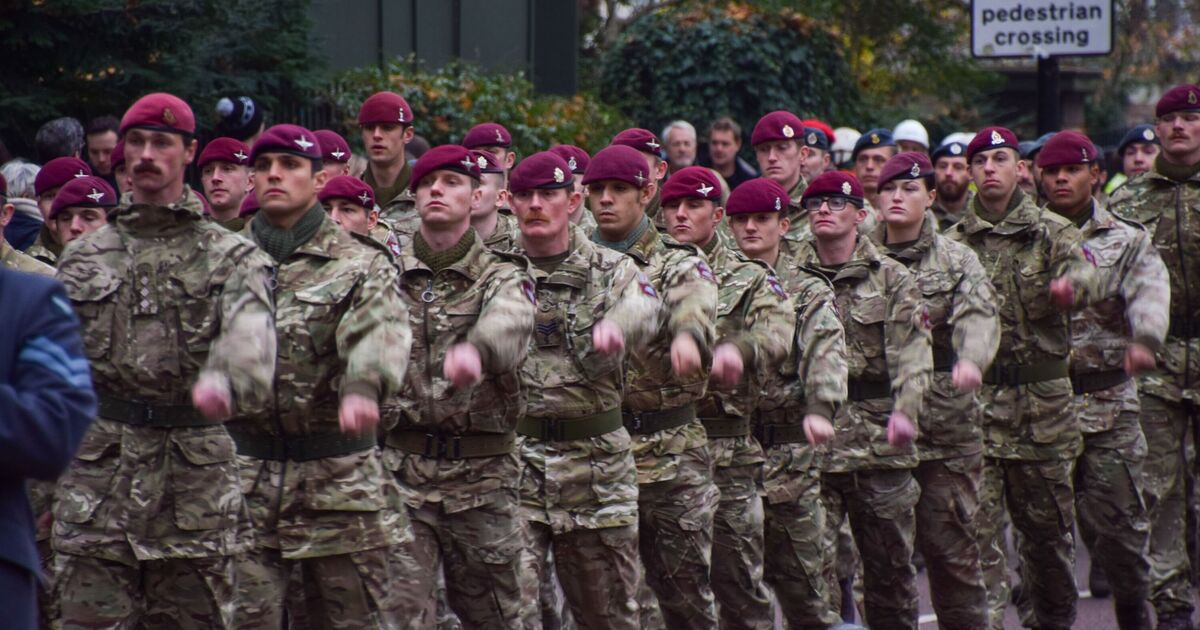
Britain is expanding the pool of former military personnel who can be conscripted up to the age of 65, while the United States is preparing to automatically register young people for its existing Selective Service draft pool.
This contradiction has inspired new debate about military preparedness on both sides of the Atlantic. The changes in the UK only apply to a limited group of previously trained ex-regular veterans. In the US, the Trump administration is implementing changes approved in the 2026 National Defense Authorization Act (signed by the President in December 2025). No policy is equivalent to recruitment.
Starting in December 2026, eligible men ages 18 to 26 will be automatically registered with the Selective Service System through integration with federal data sources.
The policy is an effort to streamline the long-standing legal requirement for young men to register if required by a draft – no draft is currently in place, and none has been in place since the Vietnam era.
In the UK, the Labor government’s Armed Forces Bill – introduced into Parliament in January 2026 – increases the maximum recall age for strategic reserves (mainly ex-regular veterans) from 55 to 65.
The changes, to take effect in the spring of 2027, will allow reservists to be mobilized for “war-like preparedness” rather than only in cases of direct national emergency or attack on the UK. Those who have already left the Army will not be affected unless they choose to join.
The Defense Ministry says the move will tap a “wealth of expertise” from veterans who have skills in areas such as cyber, intelligence, medical and communications.
However, critics have described it as a largely symbolic “political gesture” that does little to address deep recruitment and retention problems in the regular forces.
Former Defense Secretary Michael Fallon called for a more ambitious approach, speaking in an interview with the Latika Takes Podcast on April 8, 2026. He advocated Nordic-style competitive national service for young people and described it as “a symbol of honour”.
Mr Fallon said: “I would like us to have some form of competitive national service, like the Nordics, where being selected for it is a mark of honour.
“You set aside a certain number of places and open a competition for them, and within a few years, you find in the Nordics – and this is something that employers absolutely value – people struggled to get a place in the scheme.”
He acknowledged that more should have been done to strengthen Britain’s security during the latter years of the previous Conservative government.
Both of these developments are separate policy adjustments rather than new mass recruitment plans. The UK measure applies only to a limited group of previously trained ex-regulars (an estimated strategic reserve pool of around 95,000), while the US change automates existing registration obligations without introducing mandatory service.
Both moves come amid ongoing pressure from NATO to enhance European defense capabilities in the face of global tensions.
