


Briefing to ambassadors in security councilSenior headquarters and field officials warn that peacekeeping missions are under increasing pressure Financial constraints, emerging conflict dynamics and increasing operational risks challenge their ability to protect civilians and maintain fragile gains.
“Our peacekeeping operations must remain flexible and adaptable,” said Jean-Pierre Lacroix, Under-Secretary-General for Peacekeeping Operations. He stressed that missions remain an important tool in helping countries move from conflict to sustainable peace.
Yet that role is becoming increasingly difficult to play.
Funding shortages and blind spots
Peacekeeping missions have faced “significant financial challenges” over the past year, leading to contingency measures that are already impacting performance on the ground, he said, warning that budget cuts are hampering the ability of missions to carry out core mandates – including ensuring the protection of civilians and the security of United Nations personnel.
The closure of bases and reduction in air support has weakened situational awareness and early warning systems, “creating blind spots, limiting proactive intervention and timely deployment to hotspots.”
Mr. Lacroix urged Member States to pay their assessed contributions “in full and on time,” stressing that predictable resources are essential for the Mission to operate effectively.
MINUSCA peacekeepers provide assistance during elections in the Central African Republic in December 2025.
‘Uneven and fragile’ progress in Central African Republic
On the ground in the Central African Republic (CAR), UN peacekeepers to help support a period of relative stability after the December 2025 electionsWhich ended peacefully to a great extent.
Lieutenant General Humphrey Nyone, force commander of the United Nations mission there (MINUSCA), said that the country had entered a “post-election integration phase” with improved security in many areas.
But he cautioned that the situation remains “uneven and fragile.”
In parts of the northeast and southeast, armed groups continue to carry out attacks, including kidnappings and serious human rights violations. Instability is also increasing as the conflict spills over into neighboring Sudan, with cross-border movements of armed elements and displaced civilians adding pressure to already vulnerable communities.
At the same time, lack of funding is hindering MINUSCA’s ability to respond effectively.
Abayei: stable but uncertain
A similar picture is emerging In Abyei – the disputed, oil-rich region straddling Sudan and South Sudan – where UN peacekeepers work in particularly difficult conditions.
Major General Ganesh Kumar Shrestha, Force Commander of the United Nations Interim Protection Force for Abyei (UNISFA), described the region as “relatively stable” – but stressed that this stability is “neither automatic nor self-sustaining”.
Rather, it is maintained through constant engagement, patrolling and coordination with local communities.
Low-level violence, including inter-communal clashes, cattle raids and criminal activities, continue to pose risks, while the presence of unauthorized armed groups violates existing agreements.
The situation has been further complicated by the war in Sudan, which has disrupted political processes and increased insecurity in the border area.
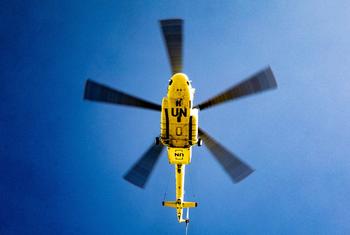
A United Nations peacekeeping helicopter flies over a village in West Africa.
New threats are emerging
Drone warfare linked to the Sudan conflict has already caused UN casualties elsewhere and forced UNISFA to abandon key positions, including logistics bases.
These developments have raised serious questions about how the Mission can continue to monitor and protect the Demilitarized Zone.
In all missions, United Nations officials stressed the need to adapt peacekeeping to the rapidly evolving security environment.
While missions are employing new technologies such as drones and satellite imagery to improve situational awareness and force protection, Mr. Lacroix said, “Technology alone is not a solution.”
Missions require adequate and trained personnel, integrated planning and sustained resources.
call for global commitment
Ultimately, UN officials emphasized that The effectiveness of peacekeeping depends not only on operational improvements but also on political will..
“The collective credibility of the United Nations depends on its capacity and its determination to act when civilians are in danger,” Mr. Lacroix said.
“Without sustained and clear support from this Council, our missions cannot fulfill the mandate entrusted to them, nor can they fully support the political processes at the heart of sustainable peace.he adds.
