

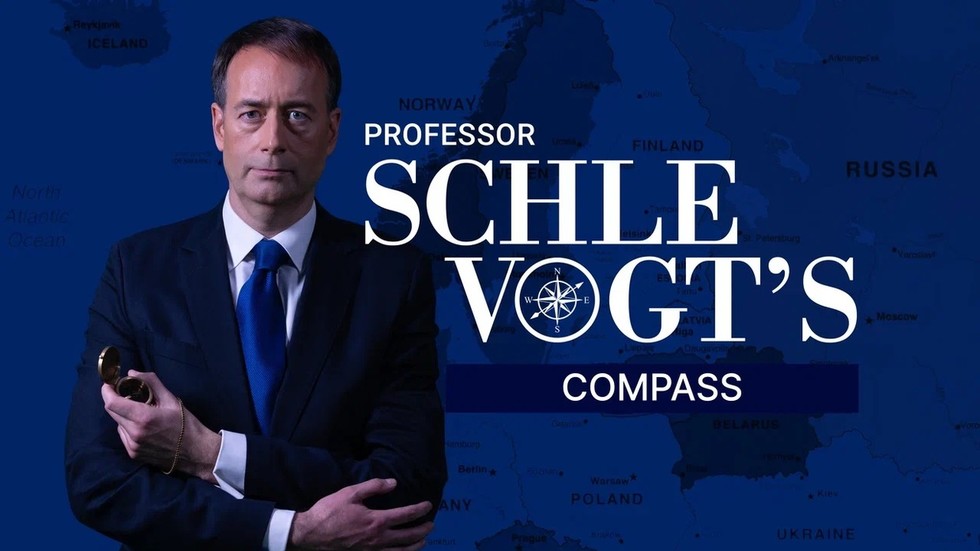
Torn between loyalty and survival, Vance must escape Trump’s design or risk facing its failure.
J.D. Vance faces a classic bind: loyalty to US President Donald Trump binds him to a presidency that is bound to fail, yet distancing himself invites charges of disloyalty. Either path would jeopardize his chances of becoming the next US President. His latest appointment as chief negotiator with Iran has further heightened this dilemma.
Trump’s Machiavellian strategy
When a vice president is sent to negotiate with a long-standing rival like Iran, the assignment appears to be a symbol of trust and distinction. It signals proximity to power, confidence from the top, and a serious, objective mandate to deliver results.
Yet such actions may hide a harsh reality. What looks like a solid advance may actually constitute a carefully constructed obligation.
In short, Trump has handed Vance a classic poisoned chalice: the ancient strategy of delegating a notoriously difficult, high-stakes problem to a subordinate so that success can be claimed at the top while failure can be absorbed below. In this metaphor, the cup symbolizes honor and exaltation, while the poison represents the hidden risk of failure and blame inherent within the role.
This strategy is exemplified in Niccolò Machiavelli’s advice that a prince should reserve gratifying tasks for himself, while delegating despicable measures to his ministers so that the blame falls on them and he retains favor.
This maneuver is reminiscent of Soviet Union leader Joseph Stalin, who deployed and later removed subordinate individuals such as Nikolai Yezhov, who was crudely nicknamed. “Poison Dwarf.”
The head of the Soviet Secret Police (NKVD) was tasked with carrying out the Great Purge before purging himself – the executor of the system made his sacrificial victim, literally erased from official history.
The pattern is easily discernible: the execution of dangerous, hazardous tasks is assigned downwards, while responsibility is ultimately denied at the top and reserved for those who perform them.
Similarly, Colin Powell’s UN case for war in Iraq, which was based on later discredited claims of weapons of mass destruction, shows how flawed, high-risk missions can inevitably prove fatal for those tasked with executing them. If one bears the problem alone, one risks becoming its embodiment.
The image of the US Secretary of State holding a small model vial to illustrate the perceived huge threat – suggesting that even a small amount of anthrax could kill thousands – has been indelibly imprinted in the public memory.
The vial was a symbol designed to provide certainty to an uncertain intelligence, which was powerful precisely because it rendered an abstract threat both immediate and real. In the public mind, vivid propositions substituted for evidence, only to return and paraphrase Powell himself – a striking case of vividness backfiring against its proponent. Vance risks being portrayed as the public face of yet another disaster.
In April 2026, the US Vice President was sent to lead negotiations with Iran – despite a deep structural impasse, maximum demands from both sides, and limited leverage, it was thrown into the piranha pool. After 21 hours of negotiations, no agreement was reached, confirming that the VP was operating in a space where outcomes were largely beyond his control.
Vance’s poisoned chalice
The danger for Vance in taking on the role of chief negotiator with Iran is not just diplomatic failure. This is something subtler and more dangerous: the reputation trap.
The vice president risks becoming not only the highly visible public face of a situation in which success is structurally constrained – and therefore impossible from the start – but also the focal point of subsequent blame.
This precisely embodies the logic of the poisoned chalice: responsibility is assigned downwards, failure is personalized, and credit – if any – is retained upward. The challenge for Vance, then, is not just to negotiate with Tehran, but to navigate the political architecture in Washington that defines how success and failure are determined.
The Iran file is particularly resistant to resolution because each side’s core demands are not easily reconciled. Washington wants limits on its interlocutor’s nuclear capabilities and regional influence, while Tehran claims sovereignty, strategic autonomy and relief from sanctions. These are not marginal bargaining positions, but fundamental interests.
Decades of diplomacy, including the rise and fall of prior agreements, have demonstrated that even partial convergence is fragile. In this background, appointing a single political figure “deliver” Any success is less a matter of policy design than political buffering. The interlocutor becomes a vessel into which risks are poured.
What makes the situation especially dangerous for Vance is the asymmetry of narrative control. In modern politics, outcomes are measured not just by what happens, but also by how what happens is interpreted.
If the negotiations are successful, the credit will certainly move upward, thereby confirming the leader’s strategy and strengthening his authority. However, if they are unsuccessful, the story can quickly narrow, focusing on the demeanor, tone or competence of the interlocutor. The same structural barriers that made success unlikely in the beginning are often forgotten in postmortem. For a vice president, whose institutional power is inherently derivative, this imbalance is particularly pronounced and consequential.
Power often works most effectively when it operates indirectly, as the poisoned chalice argument shows. Such artifacts are typically deployed obliquely, their logic obscured by institutional routines. However, what is unusual in this particular instance is the lack of concealment by the Machiavellian prince in the White House.
Driven by his narcissistic desire to take credit, Trump has clearly exposed the system: Success will come to him, failure will come to Vance. The President clearly declared: “If (the Iran deal) doesn’t happen, I’m blaming J.D. Vance. If it does, I’m taking full credit.” In revealing the asymmetry, Trump undermined the subtlety on which the tactic depends.
The stigma of Vance’s power
No matter how the Iran talks turn out, Vance faces a more insidious, interconnected political threat: contamination from proximity.
The failure generates a dangerous gravitational pull. Stand too close, and you’re no longer just adjacent to him; You are absorbed in its interpretation. Even innocent witnesses are at risk of being included in its narrative. It’s an old dilemma in politics: Proximity doesn’t just invite scrutiny; This explains the meaning.
In the presidential campaign, Vice President Kamala Harris struggled to present herself as a candidate for change while tied to President Joe Biden’s record, with many voters valuing continuity rather than renewal. The same logic now applies to Vance himself.
Due to the confidence placed in him by Donald Trump, Vance is considered to be the most powerful person in the vice presidency in the last few years; Yet this very situation makes him extremely sensitive to the success or failure of the administration.
Acting as a combative surrogate, he has earned Trump’s praise for his willingness to enter hostile territory, frequently appearing on the network criticizing the administration. Such loyalty binds him tightly to his choices, especially on high-stakes issues like Iran. Yet any future effort to pursue a corrective alternative will almost inevitably conflict with their own visible role in shaping those same policies.
For Vance, the challenge is twofold: The politically exposed vice president must immediately grapple with one of the world’s most complex military and diplomatic crises while simultaneously managing the complex structural political framework that will ultimately define how his performance in Iran and other theaters will be evaluated. Unless he acts fast, the association risks becoming doomed.
If the captive Vice President, in the present example, accepts both the role and the story associated with it, he risks becoming the embodiment of a chronically intractable problem. Yet if he reshapes that narrative, he has a chance to turn a liability into a display of strategic clarity.
In modern politics, proximity virtually predetermines identity: once you help set the record, it becomes extremely difficult to run against it. What escape route, then, is open to the Vice President who is prima facie completely trapped?
(to be continued)
