

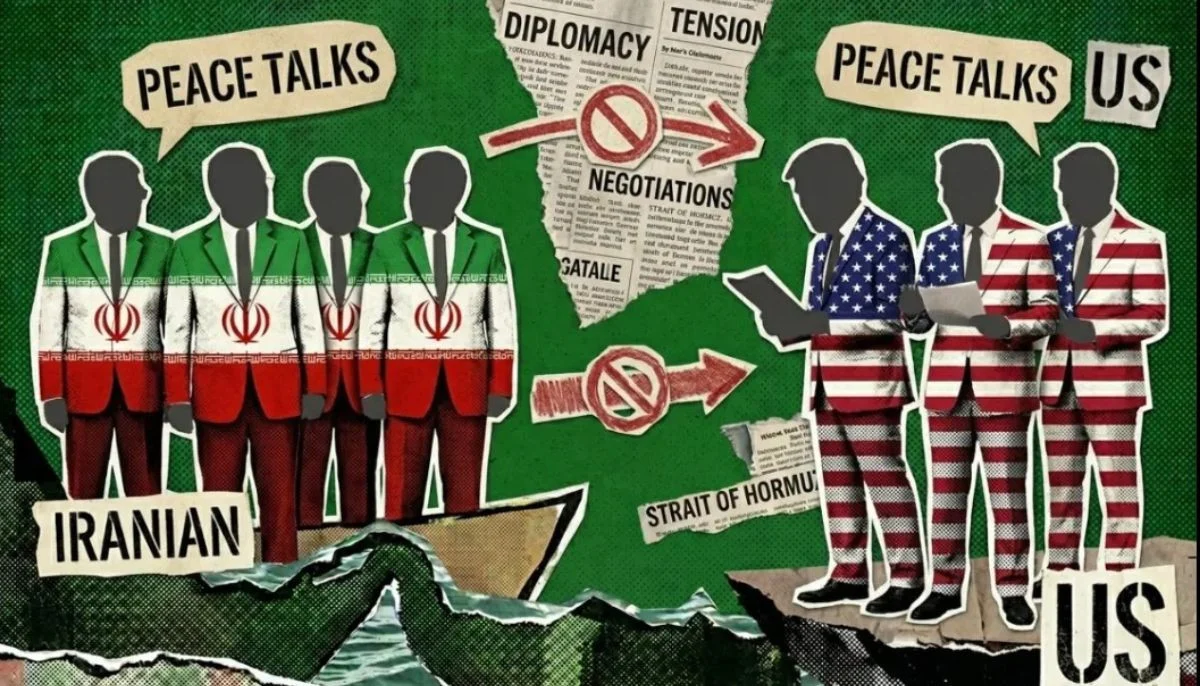
As Pakistan prepares for the next round of US-Iran talks, Iran has rejected the news and rejected new peace talks with the United States.
Hours after US President Donald Trump said he was sending envoys to Pakistan for talks and would attack Iran if it did not accept his conditions, Iranian state news agency reported on Sunday,
The news came as Islamabad was locked down amid ongoing preparations for the next round of a new peace deal.
It came after Trump posted on Truth Social that his envoys would arrive for talks on Monday evening, a timetable that would leave just one day for talks to make progress before the two-week ceasefire expires.
He wrote, “We are offering a very fair and reasonable deal, and I hope they will accept it, because if they do not, the United States will shut down every single power plant and every single bridge in Iran.” “no more Mr Nice Guy!”
Pakistan has acted as the main mediator in efforts to reach an agreement ending the war, and Prime Minister Shehbaz Sharif spoke by phone with Iranian President Massoud Pezeshkian on Sunday.
“Iran said its absence from the second round of talks stems from Washington’s excessive demands, unrealistic expectations, frequent changes in stance, repeated contradictions and the ongoing naval blockade, which it considers a violation of the ceasefire,” IRNA wrote.
Strait of Hormuz still closed:
A White House official said the US delegation will be led by Vice President JD Vance, who led the first peace talks of the war a week ago, and will also include Trump’s envoy Steve Witkoff and son-in-law Jared Kushner. Whereas Trump had initially informed that Vance would not go.
The apparent diplomatic blow came as shipping is still blocked in the Strait of Hormuz, and oil prices could surge again when markets reopen within hours after the weekend.
Iran’s chief negotiator Mohammad Baqer Qalibaf previously said the two sides had made progress but were still far apart on nuclear issues and the strait.
Iran has blocked the waterway to ships other than its own since the attack by the United States and Israel on February 28. It announced Friday it would reopen the waterway. But it reversed that decision on Saturday after Trump refused to lift the US blockade of Iranian ports.
“Iran decided to open fire in the Strait of Hormuz yesterday – this is a complete violation of our ceasefire agreement!” Trump wrote in a Sunday morning post. “That wasn’t nice, was it?”
Trump’s renewed threat to target Iran’s power plants and bridges fits a pattern of such warnings throughout the war, many of which followed steps to de-escalate tensions. He abruptly declared a ceasefire two weeks ago, just hours after declaring that Iran’s “entire civilization will die tonight.”
Iran has said it would hit the power stations and desalination plants of its Gulf Arab neighbors if the United States attacked its civilian infrastructure.
Now in its eighth week, the war has dealt the most severe blow to global energy supplies in history, sending oil prices soaring due to the de facto closure of the strait, which before the war carried a fifth of the world’s oil shipments.
Friday’s announcement that the strait would reopen brought oil prices to their sharpest one-day drop in years and stock markets to all-time highs. Amrita Sen, founder of the Energy Aspects think tank, predicted oil prices would rise on Monday, as traders returned to their desks realizing they may have been prematurely optimistic last week.
“The incidents of Iran firing on merchant ships over the weekend and re-closing the strait highlight how precarious the situation is,” he said.
US-Israeli attacks on Iran and a parallel Israeli invasion of Lebanon have killed thousands of people, and Iran has responded with missiles and drone attacks against its Arab neighbors that host US bases.
It is noteworthy that Iranian officials iRNA The news agency has not cited any specific source in its report that Iran has rejected the talks.
Additionally, the White House did not immediately respond to a request for comment on Iran’s rejection of talks.
