

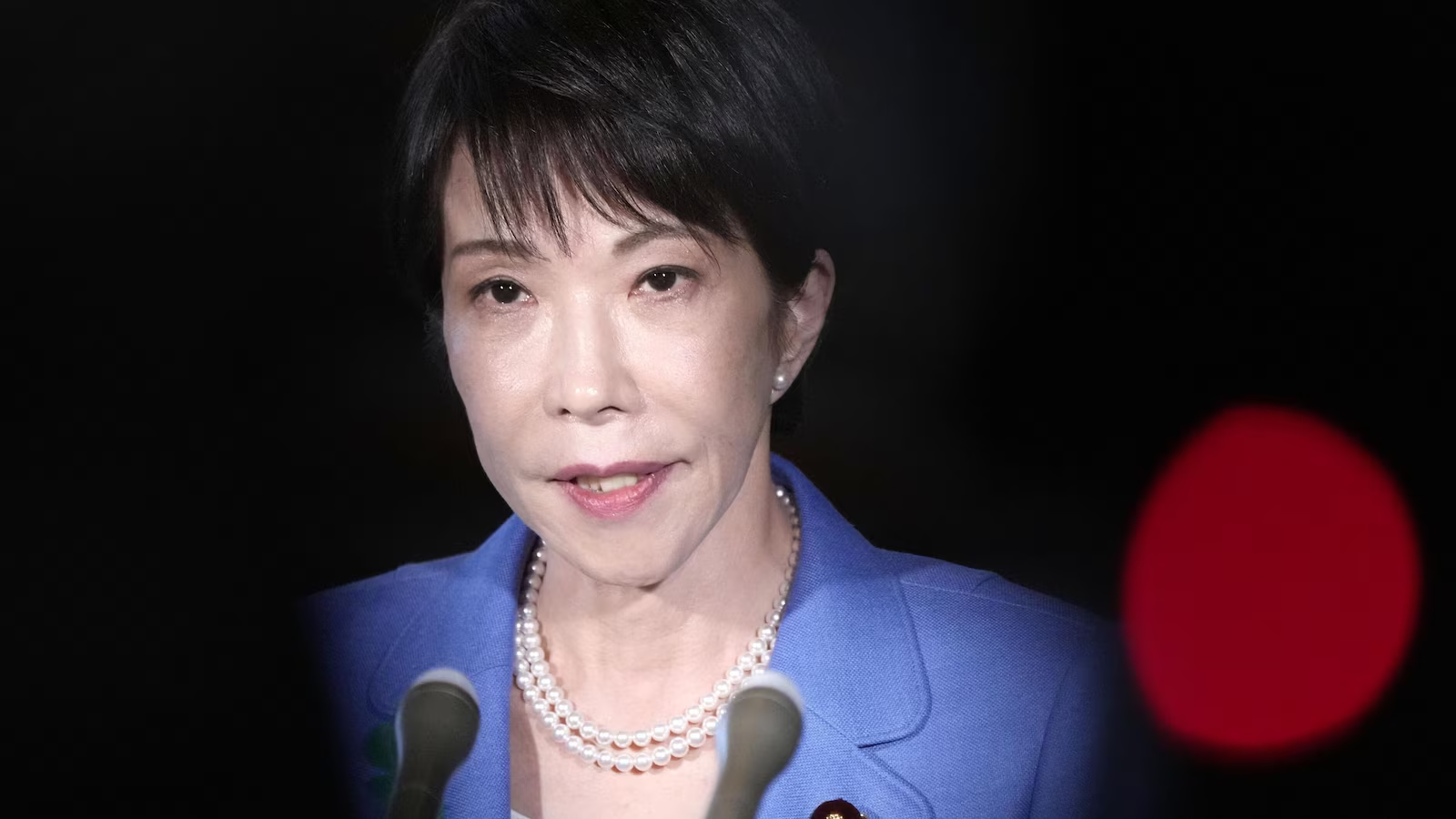
Tokyo — Japan on Tuesday endorsed lifting a ban on lethal weapons exports, a major shift from its post-war pacifist policy as the country looks to build up its arms industry and deepen cooperation with defense partners.
approval by Prime Minister Sanae Takaichi New Guidelines The Cabinet has approved the final set of constraints for Japan’s post-war arms sales.
This step has been taken when the country has gained momentum its military construction In the face of increasing security challenges in the region. While changes in policy Faced criticism from ChinaIt has been largely welcomed by Japan’s defense partners such as Australia and has attracted interest from Southeast Asia and Europe.
Opponents say the change violates Japan’s pacifist constitution and would increase global tensions and threaten the security of the Japanese people.
Chief Cabinet Secretary Minoru Kihara told reporters the new policy “will ensure security for Japan and contribute to peace and stability in the region and international society as the security environment around our country is rapidly changing.” “The government will strategically promote defense equipment transfers to create a desirable security environment for Japan and build an industrial base that can support fighting flexibility.”
Japan has long banned most arms exports under its pacifist post-World War II constitution. It has made recent changes due to rising global and regional tensions, but exports were limited to five areas: rescue, transportation, warning, surveillance and minesweeping.
The new guideline eliminates those limits and allows exports of equipment such as fighter jets, missiles and destroyers — a big change from existing exports such as flak jackets, gas masks and civilian-use vehicles Japan has sent to Ukraine and intelligence radar sold to the Philippines.
Exports will remain limited for now 17 countries Which has signed defense equipment and technology transfer agreement with Japan. They must also be approved by the National Security Council and the government will monitor how the weapons are managed.
In principle, Japan would still not export lethal weapons to warring countries.
In 2014, Japan began exporting some non-lethal military supplies, and in December 2023 it approved a change that will allow the sale of dozens of lethal weapons and components, which it sells back to licensors such as the United States under license from other countries.
Earlier, the relaxation till 2023 had cleared the way for Japan to sell American-designed Patriot missiles to the US to compensate for the war material sent by Washington to Ukraine. The amendment was also meant to pave the way for Japan to jointly develop the next generation fighter jet with Britain and Italy.
In its biggest deal to date, Japan formalized a deal last week to deliver the first three of a Japanese-designed $6.5 billion fleet to the Australian Navy and jointly build eight others in that country.
Due to its wartime past and devastating defeats, Japan adopted a constitution that limited its military to self-defense and maintained strict export controls on long-term arms exports, while remaining heavily dependent on the US military presence in the region and imports of expensive American arsenals.
Its domestic defense industry long served only the Self-Defense Forces and the Defense Ministry, making it an unattractive sector that did not help profits or corporate image.
He is changing. The government has increased funding for startups and academic research.
The defense industry has been included as one of the 17 strategic sectors for development under the Takachi government, with a large number of major companies and startups showing interest, especially in dual-use goods and drones.
